
Recent from talks
Nesser brothers
Knowledge base stats:
Talk channels stats:
Members stats:
Nesser brothers
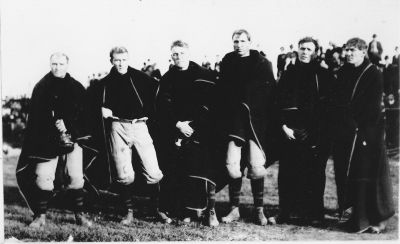
The Nesser brothers were a group of American football-playing brothers who helped make up the most famous football family in the United States from 1902 until 1931. The group consisted of seven brothers who worked for Panhandle Division of the Pennsylvania Railroad in Columbus, Ohio, and who were later used as the foundation for the Columbus Panhandles of the Ohio League, and later the National Football League, when the club was founded by future NFL president Joe Carr in 1907.
The brothers' father, Theodore, was born on January 20, 1850, in a small town in Germany called Kirsch, near Trier, Rhineland-Palatinate, which was the border region between Germany and France. He eventually got a job with the German railroad as an apprentice boilermaker. Soon afterwards the German government, which operated and controlled all the railroads, sent him to Metz, where he worked for twelve years as a boilermaker.
In 1870, at the age of 20, he fought with the German army in the Franco-Prussian War although he did not care for the fighting. (He lost part of his left hand ring finger when he was shot in the war). After the war, around 1873, Theodore met Katerina Steinbach (born Feb 22, 1854 in Baden, Germany), and the following year the two were married and wasted no time in creating a large family. the couple eventually had 12 children:
1. John Nesser: Born April 25, 1875, in Triere, Germany and died August 1, 1931, in Columbus, Ohio.
2. Anna Kathryn Nesser: b. April 17, 1876 in Triere, Germany and died January 11, 1949, in Columbus, Ohio.
3. John Peter (Pete) Nesser: b. October 22, 1877 in Triere, Germany and died May 29, 1954, in Columbus, Ohio.
4. Ermina Nesser: b. May 5, 1879 in Triere, Germany and died June 24, 1910, in Columbus, Ohio.
5. Philipp Gregory Nesser: b. December 10, 1880 in Triere, Germany and died May 9, 1959, in Columbus, Ohio.
6. Theodore H. (Ted) Nesser: b. April 5, 1883 in Dennison, Ohio, and died June 7, 1941, in Columbus, Ohio.
7. Mary Catherine Nesser: b. May 27, 1885 in Delaware, Ohio, and died May 10, 1900, in Columbus, Ohio.
8. Frederick William Nesser: b. September 10, 1887 in Columbus, Ohio, and died July 2, 1967, in Columbus, Ohio.
9. Francis Raymond (Frank) Nesser: b. June 3, 1889 in Columbus, Ohio, and died January 1, 1953, in Columbus, Ohio.
10. Mary Rose Nesser: b. May 7, 1891 in Columbus, Ohio, and died December 17, 1959, in Columbus, Ohio.
11. Alfred Louis Nesser: b. June 6, 1893 in Columbus, Ohio, and died March 11, 1967, in Columbus, Ohio.
12. Raymond Joseph Nesser: b. March 22, 1898 in Columbus, Ohio, and died September 2, 1969, in Columbus, Ohio.
The railroad sent Theodore to Dennison, Ohio, to start working. By 1882 he had finally saved enough money for Katerina and the five children to make their way to America. He eventually designed the steam engine that would be used by the railroad the years to come. However, when the railroad tweaked his design to get around his patent in 1887, Nesser quit and started a plumbing business in Columbus.
Seven of the eight Nesser boys eventually followed their father to work as boilermakers at the Pennsylvania Railroad. The brothers did backbreaking, muscle-straining work for 10 hours a day at the shops of the Panhandle Division of the Pennsylvania Railroad. However, they always rushed through their 1-hour lunch break so they could practice football for 50 minutes before they returned to work. In the event of rain, they played euchre.
None of the brothers attended college, however, they were offered various scholarships. One brother, Frank, was offered a chance to go to Notre Dame but chose to get married instead. Meanwhile, Phil was a math genius who never had any formal education beyond the fourth grade. Ted was a football genius and is credited with originating several plays: the triple-pass, the criss-cross, and the short kickoff, which became popular plays at the college level.
In 1907, Joe Carr resurrected and reorganized the Columbus Panhandles, a professional football team that recorded its first season in 1901 but disbanded in 1904 due to financial hardships. With his experience as a sportswriter and a sports executive in baseball, he was ready to make his mark on football, the sport he truly loved. However, if his team was to succeed, he needed an attraction. That led Carr to build his team around pro football's most famous family, the Nesser brothers. Eventually six brothers would play for the Panhandles. Carr used the Nesser brothers as the backbone of the Panhandles, and the football-playing family remained in that role for nearly twenty years.
Hub AI
Nesser brothers AI simulator
(@Nesser brothers_simulator)
Nesser brothers
The Nesser brothers were a group of American football-playing brothers who helped make up the most famous football family in the United States from 1902 until 1931. The group consisted of seven brothers who worked for Panhandle Division of the Pennsylvania Railroad in Columbus, Ohio, and who were later used as the foundation for the Columbus Panhandles of the Ohio League, and later the National Football League, when the club was founded by future NFL president Joe Carr in 1907.
The brothers' father, Theodore, was born on January 20, 1850, in a small town in Germany called Kirsch, near Trier, Rhineland-Palatinate, which was the border region between Germany and France. He eventually got a job with the German railroad as an apprentice boilermaker. Soon afterwards the German government, which operated and controlled all the railroads, sent him to Metz, where he worked for twelve years as a boilermaker.
In 1870, at the age of 20, he fought with the German army in the Franco-Prussian War although he did not care for the fighting. (He lost part of his left hand ring finger when he was shot in the war). After the war, around 1873, Theodore met Katerina Steinbach (born Feb 22, 1854 in Baden, Germany), and the following year the two were married and wasted no time in creating a large family. the couple eventually had 12 children:
1. John Nesser: Born April 25, 1875, in Triere, Germany and died August 1, 1931, in Columbus, Ohio.
2. Anna Kathryn Nesser: b. April 17, 1876 in Triere, Germany and died January 11, 1949, in Columbus, Ohio.
3. John Peter (Pete) Nesser: b. October 22, 1877 in Triere, Germany and died May 29, 1954, in Columbus, Ohio.
4. Ermina Nesser: b. May 5, 1879 in Triere, Germany and died June 24, 1910, in Columbus, Ohio.
5. Philipp Gregory Nesser: b. December 10, 1880 in Triere, Germany and died May 9, 1959, in Columbus, Ohio.
6. Theodore H. (Ted) Nesser: b. April 5, 1883 in Dennison, Ohio, and died June 7, 1941, in Columbus, Ohio.
7. Mary Catherine Nesser: b. May 27, 1885 in Delaware, Ohio, and died May 10, 1900, in Columbus, Ohio.
8. Frederick William Nesser: b. September 10, 1887 in Columbus, Ohio, and died July 2, 1967, in Columbus, Ohio.
9. Francis Raymond (Frank) Nesser: b. June 3, 1889 in Columbus, Ohio, and died January 1, 1953, in Columbus, Ohio.
10. Mary Rose Nesser: b. May 7, 1891 in Columbus, Ohio, and died December 17, 1959, in Columbus, Ohio.
11. Alfred Louis Nesser: b. June 6, 1893 in Columbus, Ohio, and died March 11, 1967, in Columbus, Ohio.
12. Raymond Joseph Nesser: b. March 22, 1898 in Columbus, Ohio, and died September 2, 1969, in Columbus, Ohio.
The railroad sent Theodore to Dennison, Ohio, to start working. By 1882 he had finally saved enough money for Katerina and the five children to make their way to America. He eventually designed the steam engine that would be used by the railroad the years to come. However, when the railroad tweaked his design to get around his patent in 1887, Nesser quit and started a plumbing business in Columbus.
Seven of the eight Nesser boys eventually followed their father to work as boilermakers at the Pennsylvania Railroad. The brothers did backbreaking, muscle-straining work for 10 hours a day at the shops of the Panhandle Division of the Pennsylvania Railroad. However, they always rushed through their 1-hour lunch break so they could practice football for 50 minutes before they returned to work. In the event of rain, they played euchre.
None of the brothers attended college, however, they were offered various scholarships. One brother, Frank, was offered a chance to go to Notre Dame but chose to get married instead. Meanwhile, Phil was a math genius who never had any formal education beyond the fourth grade. Ted was a football genius and is credited with originating several plays: the triple-pass, the criss-cross, and the short kickoff, which became popular plays at the college level.
In 1907, Joe Carr resurrected and reorganized the Columbus Panhandles, a professional football team that recorded its first season in 1901 but disbanded in 1904 due to financial hardships. With his experience as a sportswriter and a sports executive in baseball, he was ready to make his mark on football, the sport he truly loved. However, if his team was to succeed, he needed an attraction. That led Carr to build his team around pro football's most famous family, the Nesser brothers. Eventually six brothers would play for the Panhandles. Carr used the Nesser brothers as the backbone of the Panhandles, and the football-playing family remained in that role for nearly twenty years.
Recent media