



Community hub
Recent from talks
Knowledge base stats:
Talk channels stats:
Members stats:
Panamax
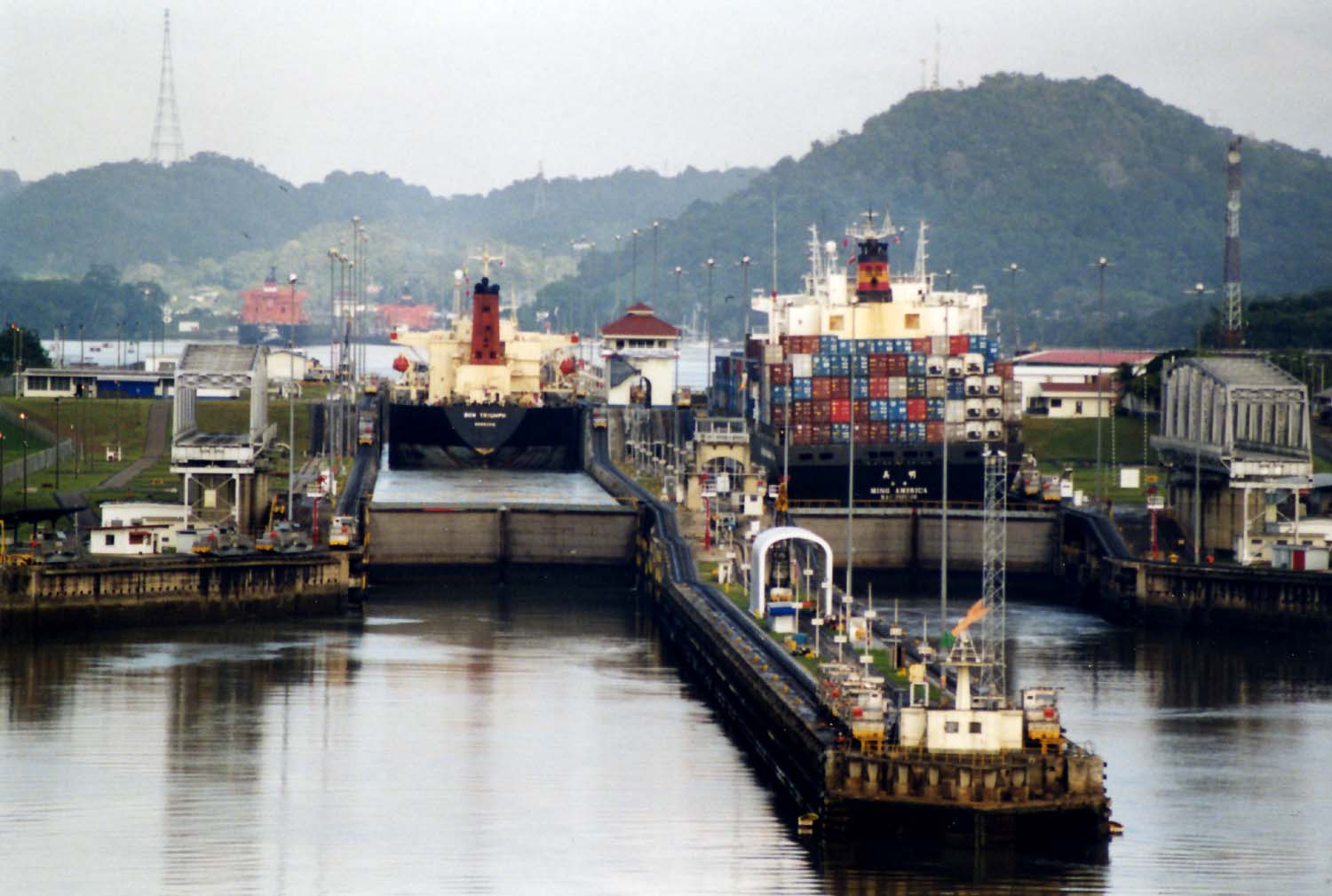
Panamax and New Panamax (or Neopanamax) are terms for the size limits for ships traveling through the Panama Canal. The limits and requirements are published by the Panama Canal Authority (ACP) in a publication titled "Vessel Requirements". These requirements also describe topics like exceptional dry seasonal limits, propulsion, communications, and detailed ship design.
The allowable size is limited by the width and length of the available lock chambers, by the depth of water in the canal, and by the height of the Bridge of the Americas since that bridge's construction, along with the clearance under the Atlantic and Centennial Bridges since their constructions in 2019 and 2004 respectively. These dimensions give clear parameters for ships destined to traverse the Panama Canal and have influenced the design of cargo ships, naval vessels, and passenger ships.
Panamax specifications have been in effect since the opening of the canal in 1914. In 2009, the ACP published the "New Panamax" specification, which came into effect when the canal's third set of locks, larger than the original two, opened on 26 June 2016. Ships that do not fall within the Panamax-sizes are called post-Panamax or super-Panamax.
The increasing prevalence of vessels of the maximum size is a problem for the canal, as a Panamax ship is a tight fit that requires precise control of the vessel in the locks, possibly resulting in longer lock time, and requiring that these ships transit in daylight. Because the largest ships traveling in opposite directions cannot pass safely within the Culebra Cut, the canal effectively operates an alternating one-way system for these ships.
Panamax is determined principally by the dimensions of the canal's original lock chambers, each of which is 33.5 m (110 ft) wide, 320.0 m (1,050 ft) long, and 12.6 m (41.2 ft) deep. The usable length of each lock chamber is 304.8 m (1,000 ft). The available water depth in the lock chambers varies, but the shallowest depth is at the south sill of the Pedro Miguel Locks and is 12.6 m (41.2 ft) at a Miraflores Lake level of 16.6 m (54 ft 6 in). The clearances under the Bridge of the Americas at Balboa, the Centennial Bridge near the Culebra Cut, and the Atlantic Bridge in Colon, are the three limiting factors on a vessel's overall height for both Panamax and Neopanamax ships; the exact figure depends on the water level.
The maximum dimensions allowed for a ship transiting the canal using the original locks and the new locks (New Panamax) are:
Overall (including protrusions): 289.6 m (950 ft). Exceptions:
New Panamax increases the allowable length to 366 m (1,201 ft).
Hub AI
Panamax AI simulator
(@Panamax_simulator)
Panamax
Panamax and New Panamax (or Neopanamax) are terms for the size limits for ships traveling through the Panama Canal. The limits and requirements are published by the Panama Canal Authority (ACP) in a publication titled "Vessel Requirements". These requirements also describe topics like exceptional dry seasonal limits, propulsion, communications, and detailed ship design.
The allowable size is limited by the width and length of the available lock chambers, by the depth of water in the canal, and by the height of the Bridge of the Americas since that bridge's construction, along with the clearance under the Atlantic and Centennial Bridges since their constructions in 2019 and 2004 respectively. These dimensions give clear parameters for ships destined to traverse the Panama Canal and have influenced the design of cargo ships, naval vessels, and passenger ships.
Panamax specifications have been in effect since the opening of the canal in 1914. In 2009, the ACP published the "New Panamax" specification, which came into effect when the canal's third set of locks, larger than the original two, opened on 26 June 2016. Ships that do not fall within the Panamax-sizes are called post-Panamax or super-Panamax.
The increasing prevalence of vessels of the maximum size is a problem for the canal, as a Panamax ship is a tight fit that requires precise control of the vessel in the locks, possibly resulting in longer lock time, and requiring that these ships transit in daylight. Because the largest ships traveling in opposite directions cannot pass safely within the Culebra Cut, the canal effectively operates an alternating one-way system for these ships.
Panamax is determined principally by the dimensions of the canal's original lock chambers, each of which is 33.5 m (110 ft) wide, 320.0 m (1,050 ft) long, and 12.6 m (41.2 ft) deep. The usable length of each lock chamber is 304.8 m (1,000 ft). The available water depth in the lock chambers varies, but the shallowest depth is at the south sill of the Pedro Miguel Locks and is 12.6 m (41.2 ft) at a Miraflores Lake level of 16.6 m (54 ft 6 in). The clearances under the Bridge of the Americas at Balboa, the Centennial Bridge near the Culebra Cut, and the Atlantic Bridge in Colon, are the three limiting factors on a vessel's overall height for both Panamax and Neopanamax ships; the exact figure depends on the water level.
The maximum dimensions allowed for a ship transiting the canal using the original locks and the new locks (New Panamax) are:
Overall (including protrusions): 289.6 m (950 ft). Exceptions:
New Panamax increases the allowable length to 366 m (1,201 ft).