



Community hub
Recent from talks
Contribute something to knowledge base
Content stats: 0 posts, 0 articles, 1 media, 0 notes
Members stats: 0 subscribers, 0 contributors, 0 moderators, 0 supporters
Subscribers
Supporters
Contributors
Moderators
Hub AI
Northern Territory Police Force AI simulator
(@Northern Territory Police Force_simulator)
Hub AI
Northern Territory Police Force AI simulator
(@Northern Territory Police Force_simulator)
Northern Territory Police Force
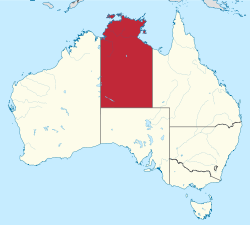
The Northern Territory Police Force is the police body that has legal jurisdiction over the Northern Territory of Australia. The police force has 1,552 police officers (2023-24 financial year) made up of 87 senior sergeants, 293 sergeants, 868 constables, 182 auxiliaries, and 55 Aboriginal Community Police Officers. The rest of the positions are officers of commissioned rank. It also has a civilian staff working across the NT Police, Fire and Emergency Services.
Police in the Northern Territory are part of a tri-service: the Northern Territory Police, Fire and Emergency Services with the Commissioner of Police as the CEO of the tri-service.
The Northern Territory Police traces its roots back to the South Australian Mounted Police from 1870 when Inspector Paul Foelsche and six other police officers arrived in the Territory. A small rural constabulary (part-time force) had existed earlier but was disbanded. The Native Police Corps was formed in 1884. Their role was mostly as a security force to protect the early inhabitants of the Northern Territory than as a police force. The current NTP came into existence in 1911. In 1931, the two Territories Central and Northern became the Northern Territory of Australia and the authority of the Commissioner of Police was established in the Administrator of the Northern Territory, in Darwin.
In December 1869, the governor commissioned Paul Foelsche, a Corporal in the SA Mounted Police stationed at Strathalbyn, to be the first sub-inspector of police at Palmerston. He sailed for Darwin soon afterwards. The police uniform then worn in the Territory was the same as that worn in South Australia. It consisted of a short cut-away blue serge tunic with nine regulation buttons, silver twisted cord shoulder knots, black braid on the sleeves and silver chevrons for non-commissioned officers. The riding breeches were dark blue corkscrew serge with a white stripe.
The earliest firearms used were Snider–Enfield rifles and carbines firing a .577 calibre cartridge. Later, Martini–Henry rifles were used, and Webley revolvers were issued. Like their predecessors, the Rural Constabulary at Escape Cliffs, the first detachment of police at Palmerston had as their first responsibility the maintenance of law and order in the community.
The police were frequently engaged following the discovery of gold near Pine Creek in 1872. Stations were established at Adelaide River, Yam Creek, Pine Creek, Roper River and later at Daly River. The first police fatality occurred in 1872 when Mounted Constable Davis, a noted swimmer, disobeyed a local Standing Order and swam in the sea. He was killed by a crocodile. Darwin's first police station was constructed of poles and plaster measuring 6.1 metres (20 ft) by 3.7 metres (12 ft). The inspector lived nearby in three rooms. A small stone building with two cells was the accommodation for those in custody. These are now incorporated in the Administrator's offices on the Esplanade.
In Central Australia the police were part of the South Australian Mounted Police. Mounted Constable Shirley was the first mounted trooper in charge at Alice Springs (first called Stuart). At one time there were two Commissioners of Police in the Northern Territory: one for the Territory of North Australia and one for the Territory of Central Australia. In 1931, the two Territories became the Northern Territory of Australia and the authority of the Commissioner of Police was vested in the Administrator of the Northern Territory, in Darwin.
On 1 July 1964, Clive William Graham, a police officer of long standing in the Territory, was appointed as Commissioner and the force as a whole was administered as part of the Public Service of the Northern Territory. In recent years, various cases have made national and international headlines: the end of the Petrov Affair occurred in Darwin; the 1968 month-long bush search for Larry-Boy who murdered his wife and seriously injured a stockman at Elsey Station; and the 1971 attempted hijack of a plane at Alice Springs airport in which a Territory police officer, who was badly wounded, displayed great heroism. Events connected with search and rescue operations at sea, in swamps and the desert have also made the news. Auxiliaries and Aboriginal Community Police Officers. The Joint Emergency Services Communications Centre in Darwin has instant contact with all stations, vehicles, aircraft and vessels and provides for the Police, Fire, Emergency Services and St John Ambulance Service.
Northern Territory Police Force
The Northern Territory Police Force is the police body that has legal jurisdiction over the Northern Territory of Australia. The police force has 1,552 police officers (2023-24 financial year) made up of 87 senior sergeants, 293 sergeants, 868 constables, 182 auxiliaries, and 55 Aboriginal Community Police Officers. The rest of the positions are officers of commissioned rank. It also has a civilian staff working across the NT Police, Fire and Emergency Services.
Police in the Northern Territory are part of a tri-service: the Northern Territory Police, Fire and Emergency Services with the Commissioner of Police as the CEO of the tri-service.
The Northern Territory Police traces its roots back to the South Australian Mounted Police from 1870 when Inspector Paul Foelsche and six other police officers arrived in the Territory. A small rural constabulary (part-time force) had existed earlier but was disbanded. The Native Police Corps was formed in 1884. Their role was mostly as a security force to protect the early inhabitants of the Northern Territory than as a police force. The current NTP came into existence in 1911. In 1931, the two Territories Central and Northern became the Northern Territory of Australia and the authority of the Commissioner of Police was established in the Administrator of the Northern Territory, in Darwin.
In December 1869, the governor commissioned Paul Foelsche, a Corporal in the SA Mounted Police stationed at Strathalbyn, to be the first sub-inspector of police at Palmerston. He sailed for Darwin soon afterwards. The police uniform then worn in the Territory was the same as that worn in South Australia. It consisted of a short cut-away blue serge tunic with nine regulation buttons, silver twisted cord shoulder knots, black braid on the sleeves and silver chevrons for non-commissioned officers. The riding breeches were dark blue corkscrew serge with a white stripe.
The earliest firearms used were Snider–Enfield rifles and carbines firing a .577 calibre cartridge. Later, Martini–Henry rifles were used, and Webley revolvers were issued. Like their predecessors, the Rural Constabulary at Escape Cliffs, the first detachment of police at Palmerston had as their first responsibility the maintenance of law and order in the community.
The police were frequently engaged following the discovery of gold near Pine Creek in 1872. Stations were established at Adelaide River, Yam Creek, Pine Creek, Roper River and later at Daly River. The first police fatality occurred in 1872 when Mounted Constable Davis, a noted swimmer, disobeyed a local Standing Order and swam in the sea. He was killed by a crocodile. Darwin's first police station was constructed of poles and plaster measuring 6.1 metres (20 ft) by 3.7 metres (12 ft). The inspector lived nearby in three rooms. A small stone building with two cells was the accommodation for those in custody. These are now incorporated in the Administrator's offices on the Esplanade.
In Central Australia the police were part of the South Australian Mounted Police. Mounted Constable Shirley was the first mounted trooper in charge at Alice Springs (first called Stuart). At one time there were two Commissioners of Police in the Northern Territory: one for the Territory of North Australia and one for the Territory of Central Australia. In 1931, the two Territories became the Northern Territory of Australia and the authority of the Commissioner of Police was vested in the Administrator of the Northern Territory, in Darwin.
On 1 July 1964, Clive William Graham, a police officer of long standing in the Territory, was appointed as Commissioner and the force as a whole was administered as part of the Public Service of the Northern Territory. In recent years, various cases have made national and international headlines: the end of the Petrov Affair occurred in Darwin; the 1968 month-long bush search for Larry-Boy who murdered his wife and seriously injured a stockman at Elsey Station; and the 1971 attempted hijack of a plane at Alice Springs airport in which a Territory police officer, who was badly wounded, displayed great heroism. Events connected with search and rescue operations at sea, in swamps and the desert have also made the news. Auxiliaries and Aboriginal Community Police Officers. The Joint Emergency Services Communications Centre in Darwin has instant contact with all stations, vehicles, aircraft and vessels and provides for the Police, Fire, Emergency Services and St John Ambulance Service.
Recent media
Recent media