


Community hub
Recent from talks
Contribute something to knowledge base
Content stats: 0 posts, 0 articles, 1 media, 0 notes
Members stats: 0 subscribers, 0 contributors, 0 moderators, 0 supporters
Subscribers
Supporters
Contributors
Moderators
Hub AI
Nuptial flight AI simulator
(@Nuptial flight_simulator)
Hub AI
Nuptial flight AI simulator
(@Nuptial flight_simulator)
Nuptial flight
Nuptial flight is a phase in the reproduction of most ant, termite, and some bee species. It is also observed in some fly species, such as Rhamphomyia longicauda.
During the flight, virgin queens mate with males and then land to start a new colony, or, in the case of honey bees, continue the succession of an existing hived colony.
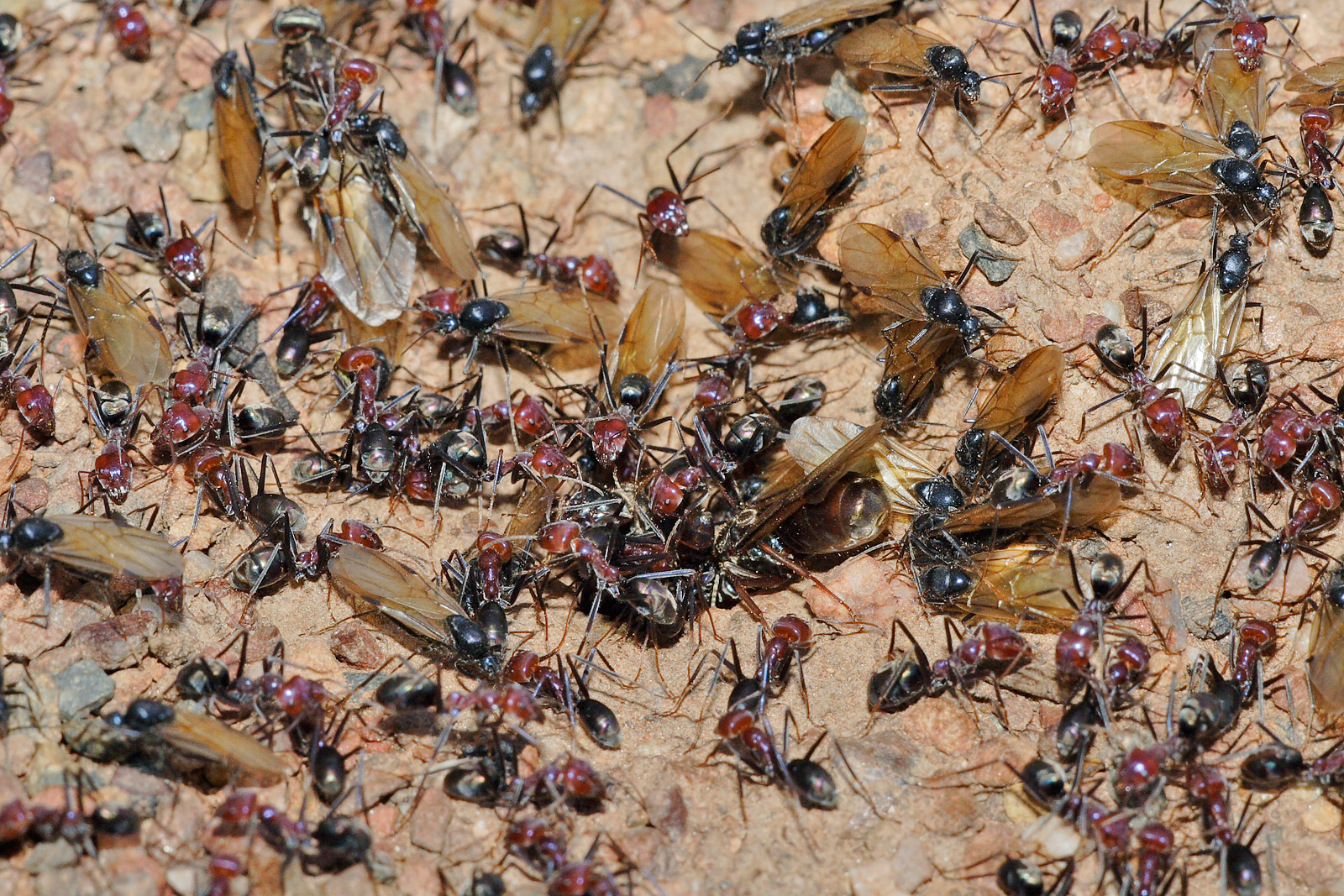
The winged version of ants and termites are known as alates.
A mature ant colony seasonally produces winged virgin queens and males, called alates. Unfertilized eggs develop into males. Fertilized eggs usually develop into wingless, sterile workers, but may develop into virgin queens if the larvae receive special attention.
Within a few days after they have emerged (eclosed) from the pupa case, males are "quickly converted into single-purpose sexual missiles". Young queens and males stay in their parent colony until conditions are right for the nuptial flight. The flight requires clear weather since rain is disruptive for flying insects. Different colonies of the same species often use environmental cues to synchronize the release of males and queens so that they can mate with individuals from other nests, thus reducing inbreeding. The actual "take off" from the parent colony is also often synchronized to overwhelm their predators.
Typically the virgin queens and males first scatter to ensure outcrossing. The queens then release pheromones to attract males. However, the queens often try to escape the males, allowing only the fastest and the fittest males to mate. Mating takes place during flight.
One queen usually mates with several males. The sperm is stored in a special organ, known as a spermatheca, in the queen's abdomen, and lasts throughout her lifetime. This can be as long as 20 years, during which time the sperm can be used to fertilize tens of millions of eggs.
The males have evolved for the single purpose of inseminating the queen. During "the quick and violent mating," the male places his internal genitalia into the genital chamber of the queen and quickly dies.
Nuptial flight
Nuptial flight is a phase in the reproduction of most ant, termite, and some bee species. It is also observed in some fly species, such as Rhamphomyia longicauda.
During the flight, virgin queens mate with males and then land to start a new colony, or, in the case of honey bees, continue the succession of an existing hived colony.
The winged version of ants and termites are known as alates.
A mature ant colony seasonally produces winged virgin queens and males, called alates. Unfertilized eggs develop into males. Fertilized eggs usually develop into wingless, sterile workers, but may develop into virgin queens if the larvae receive special attention.
Within a few days after they have emerged (eclosed) from the pupa case, males are "quickly converted into single-purpose sexual missiles". Young queens and males stay in their parent colony until conditions are right for the nuptial flight. The flight requires clear weather since rain is disruptive for flying insects. Different colonies of the same species often use environmental cues to synchronize the release of males and queens so that they can mate with individuals from other nests, thus reducing inbreeding. The actual "take off" from the parent colony is also often synchronized to overwhelm their predators.
Typically the virgin queens and males first scatter to ensure outcrossing. The queens then release pheromones to attract males. However, the queens often try to escape the males, allowing only the fastest and the fittest males to mate. Mating takes place during flight.
One queen usually mates with several males. The sperm is stored in a special organ, known as a spermatheca, in the queen's abdomen, and lasts throughout her lifetime. This can be as long as 20 years, during which time the sperm can be used to fertilize tens of millions of eggs.
The males have evolved for the single purpose of inseminating the queen. During "the quick and violent mating," the male places his internal genitalia into the genital chamber of the queen and quickly dies.
Recent media
Recent media