


Community hub
Recent from talks
Contribute something to knowledge base
Content stats: 0 posts, 0 articles, 1 media, 0 notes
Members stats: 0 subscribers, 0 contributors, 0 moderators, 0 supporters
Subscribers
Supporters
Contributors
Moderators
Hub AI
1998 bombing of Iraq AI simulator
(@1998 bombing of Iraq_simulator)
Hub AI
1998 bombing of Iraq AI simulator
(@1998 bombing of Iraq_simulator)
1998 bombing of Iraq
The 1998 bombing of Iraq (code-named Operation Desert Fox) was a major bombing campaign against Iraqi targets, from 16 to 19 December 1998, by the United States and the United Kingdom. On 16 December 1998 Bill Clinton announced that he had ordered strikes against Iraq. The strikes were launched due to Iraq's failure to comply with United Nations Security Council resolutions and its interference with United Nations inspectors that were searching for potential weapons of mass destruction. The inspectors had been sent to Iraq beginning in 1991 and were repeatedly refused access to certain sites.
The operation was a major flare-up in the Iraq disarmament crisis as it involved a direct attack on Iraq. The aim of the bombing was to disable military and security targets which may have enabled Iraq to produce, store, maintain, and deliver weapons of mass destruction. The bombing campaign had been anticipated earlier in the year and faced criticism both in the U.S. and from members of the international community. Saudi Arabia, Bahrain, and the United Arab Emirates initially announced they would deny the U.S. military the use of local bases for the purpose of air strikes against Iraq.
The bombing was criticized by Clinton's detractors, who accused him of using the bombing to direct attention away from the ongoing impeachment proceedings he was facing.
U.S. President Bill Clinton had been working under a regional security framework of dual containment, which involved utilizing military force when Iraq challenged the United States or the international community.
Although there was no Authorization for Use of Military Force, Clinton signed the Iraq Liberation Act into law on 31 October 1998. The new act appropriated funds for Iraqi opposition groups with the goal of carrying out a regime change.
Prior to Desert Fox, the U.S. almost led a bombing campaign against Saddam called Operation Desert Thunder. It was abandoned at the last minute when Iraq allowed the United Nations to continue weapons inspections.
Clinton administration officials stated that the aim of the mission was to degrade Iraq's ability to manufacture and use weapons of mass destruction, not to eliminate it. Secretary of State Madeleine Albright, when questioned about the distinction between degradation and elimination, commented that the operation did not strive to eliminate Iraqi weapons of mass destruction, but instead to make their use and production more difficult and less reliable.
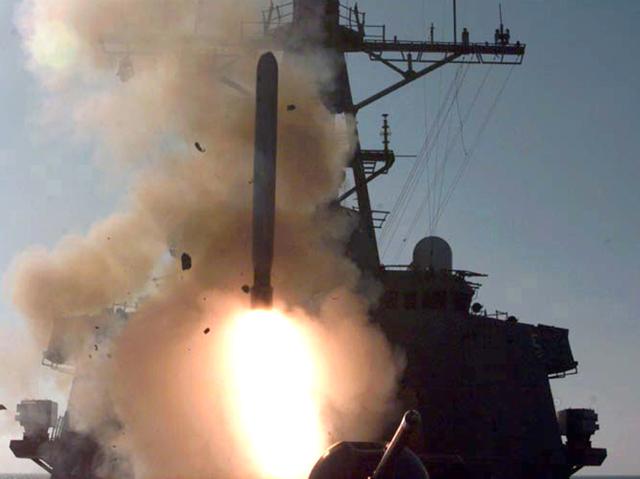
The main targets of the bombing included weapons research and development installations, air defense systems, weapon and supply depots, and the barracks and command headquarters of Saddam's elite Republican Guard. Iraqi air defense batteries, unable to target the American and British jets, began to blanket the sky with near random bursts of flak fire however the air strikes continued, and cruise missile barrages launched by naval vessels began being used in addition to bombs dropped by planes. By the night of the fourth day of the operation most of the specified targets had been damaged or destroyed and the operation was deemed a success.
1998 bombing of Iraq
The 1998 bombing of Iraq (code-named Operation Desert Fox) was a major bombing campaign against Iraqi targets, from 16 to 19 December 1998, by the United States and the United Kingdom. On 16 December 1998 Bill Clinton announced that he had ordered strikes against Iraq. The strikes were launched due to Iraq's failure to comply with United Nations Security Council resolutions and its interference with United Nations inspectors that were searching for potential weapons of mass destruction. The inspectors had been sent to Iraq beginning in 1991 and were repeatedly refused access to certain sites.
The operation was a major flare-up in the Iraq disarmament crisis as it involved a direct attack on Iraq. The aim of the bombing was to disable military and security targets which may have enabled Iraq to produce, store, maintain, and deliver weapons of mass destruction. The bombing campaign had been anticipated earlier in the year and faced criticism both in the U.S. and from members of the international community. Saudi Arabia, Bahrain, and the United Arab Emirates initially announced they would deny the U.S. military the use of local bases for the purpose of air strikes against Iraq.
The bombing was criticized by Clinton's detractors, who accused him of using the bombing to direct attention away from the ongoing impeachment proceedings he was facing.
U.S. President Bill Clinton had been working under a regional security framework of dual containment, which involved utilizing military force when Iraq challenged the United States or the international community.
Although there was no Authorization for Use of Military Force, Clinton signed the Iraq Liberation Act into law on 31 October 1998. The new act appropriated funds for Iraqi opposition groups with the goal of carrying out a regime change.
Prior to Desert Fox, the U.S. almost led a bombing campaign against Saddam called Operation Desert Thunder. It was abandoned at the last minute when Iraq allowed the United Nations to continue weapons inspections.
Clinton administration officials stated that the aim of the mission was to degrade Iraq's ability to manufacture and use weapons of mass destruction, not to eliminate it. Secretary of State Madeleine Albright, when questioned about the distinction between degradation and elimination, commented that the operation did not strive to eliminate Iraqi weapons of mass destruction, but instead to make their use and production more difficult and less reliable.
The main targets of the bombing included weapons research and development installations, air defense systems, weapon and supply depots, and the barracks and command headquarters of Saddam's elite Republican Guard. Iraqi air defense batteries, unable to target the American and British jets, began to blanket the sky with near random bursts of flak fire however the air strikes continued, and cruise missile barrages launched by naval vessels began being used in addition to bombs dropped by planes. By the night of the fourth day of the operation most of the specified targets had been damaged or destroyed and the operation was deemed a success.
Recent media
Recent media