



Community hub
Recent from talks
Contribute something to knowledge base
Content stats: 0 posts, 0 articles, 1 media, 0 notes
Members stats: 0 subscribers, 0 contributors, 0 moderators, 0 supporters
Subscribers
Supporters
Contributors
Moderators
Hub AI
Opioid overdose AI simulator
(@Opioid overdose_simulator)
Hub AI
Opioid overdose AI simulator
(@Opioid overdose_simulator)
Opioid overdose
An opioid overdose is toxicity due to excessive consumption of opioids, such as morphine, codeine, heroin, fentanyl, tramadol, and methadone. This preventable pathology can be fatal if it leads to respiratory depression, a lethal condition that can cause hypoxia from slow and shallow breathing. Other symptoms include small pupils and unconsciousness; however, its onset can depend on the method of ingestion, the dosage and individual risk factors. Although there were over 110,000 deaths in 2017 due to opioids, individuals who survived also faced adverse complications, including permanent brain damage.
Opioid overdoses are diagnosed based on symptoms and examination. Risk factors for opioid overdose include high levels of opioid dependence, use of opioids via injection, high-dose opioid usage, having a mental disorder or having a predisposition for one, and use of opioids in combination with other substances, such as alcohol, benzodiazepines, or cocaine. Dependence on prescription opioids can occur from their use to treat chronic pain in individuals. Additionally, if following a period of detoxification, which allows the tolerance level to fall, the risk of overdose upon return to use is high.
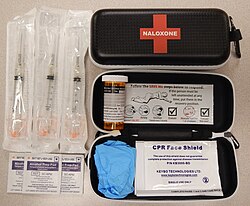
Initial treatment of an overdose involves supporting the person's breathing and providing oxygen to reduce the risk of hypoxia. Naloxone is then recommended to those who cannot reverse the opioid's effects through breathing. Giving naloxone via nasal administration or as an injection into a muscle has shown to be equally effective. Other efforts to prevent deaths from overdose include increasing access to naloxone and treatment for opioid dependence.
Drug use contributes to 500,000 deaths worldwide, with opioid overdose resulting in approximately 115,000 of these deaths in 2018. This is up from 18,000 deaths in 1990. In 2018, approximately 269 million people had engaged in drug usage at least once, 58 million of which used opioids. Drug use disorders have affected around 35.6 million people worldwide in 2018. The WHO estimates that 70% of deaths due to drug use are in relation to opioids, with 30% being due to overdose. It is believed that the opioid epidemic has partly been caused due to assurances that prescription opioids were safe, by the pharmaceutical industry in the 1990s. This led to unwarranted trust and a subsequent heavy reliance on opioids. Though there are treatment interventions which can effectively reduce the risk of overdose in people with opioid dependence, less than 10% of affected individuals receive it.
Opiate overdose symptoms and signs can be referred to as the "opioid toxidrome triad": decreased level of consciousness, pinpoint pupils, and respiratory depression. Other signs and symptoms include seizures and muscle spasms. Sometimes, an opiate overdose can lead to such a decreased level of consciousness that the person will not wake up.
Because of their effect on the part of the brain that regulates breathing, opioids can cause very slow or stopped breathing during overdoses, leading to hypoxia or death if left untreated. Hypoxia is typically caused by respiratory depression. The brain uses oxygen to regulate the homeostasis of the body. In animal studies, it was found that opioids act on specific regions of the central nervous system associated with respiratory regulation, including the medulla and pons. During cerebral hypoxia, the brain lacks sufficient oxygen supply. Prolonged lack of oxygenation from respiratory depression can lead to detrimental damage to the brain and spinal cord and can leave the person unable to walk or function normally, even if treatment with naloxone is given.
Alcohol also causes respiratory depression and, therefore, when taken with opioids, can increase the risk of respiratory depression and death.
In young children, opioid overdose may not be apparent right away. This is due to absorption, distribution, and metabolism differences between young children and adults and the higher amount of opioid ingestion per kilogram of body weight.
Opioid overdose
An opioid overdose is toxicity due to excessive consumption of opioids, such as morphine, codeine, heroin, fentanyl, tramadol, and methadone. This preventable pathology can be fatal if it leads to respiratory depression, a lethal condition that can cause hypoxia from slow and shallow breathing. Other symptoms include small pupils and unconsciousness; however, its onset can depend on the method of ingestion, the dosage and individual risk factors. Although there were over 110,000 deaths in 2017 due to opioids, individuals who survived also faced adverse complications, including permanent brain damage.
Opioid overdoses are diagnosed based on symptoms and examination. Risk factors for opioid overdose include high levels of opioid dependence, use of opioids via injection, high-dose opioid usage, having a mental disorder or having a predisposition for one, and use of opioids in combination with other substances, such as alcohol, benzodiazepines, or cocaine. Dependence on prescription opioids can occur from their use to treat chronic pain in individuals. Additionally, if following a period of detoxification, which allows the tolerance level to fall, the risk of overdose upon return to use is high.
Initial treatment of an overdose involves supporting the person's breathing and providing oxygen to reduce the risk of hypoxia. Naloxone is then recommended to those who cannot reverse the opioid's effects through breathing. Giving naloxone via nasal administration or as an injection into a muscle has shown to be equally effective. Other efforts to prevent deaths from overdose include increasing access to naloxone and treatment for opioid dependence.
Drug use contributes to 500,000 deaths worldwide, with opioid overdose resulting in approximately 115,000 of these deaths in 2018. This is up from 18,000 deaths in 1990. In 2018, approximately 269 million people had engaged in drug usage at least once, 58 million of which used opioids. Drug use disorders have affected around 35.6 million people worldwide in 2018. The WHO estimates that 70% of deaths due to drug use are in relation to opioids, with 30% being due to overdose. It is believed that the opioid epidemic has partly been caused due to assurances that prescription opioids were safe, by the pharmaceutical industry in the 1990s. This led to unwarranted trust and a subsequent heavy reliance on opioids. Though there are treatment interventions which can effectively reduce the risk of overdose in people with opioid dependence, less than 10% of affected individuals receive it.
Opiate overdose symptoms and signs can be referred to as the "opioid toxidrome triad": decreased level of consciousness, pinpoint pupils, and respiratory depression. Other signs and symptoms include seizures and muscle spasms. Sometimes, an opiate overdose can lead to such a decreased level of consciousness that the person will not wake up.
Because of their effect on the part of the brain that regulates breathing, opioids can cause very slow or stopped breathing during overdoses, leading to hypoxia or death if left untreated. Hypoxia is typically caused by respiratory depression. The brain uses oxygen to regulate the homeostasis of the body. In animal studies, it was found that opioids act on specific regions of the central nervous system associated with respiratory regulation, including the medulla and pons. During cerebral hypoxia, the brain lacks sufficient oxygen supply. Prolonged lack of oxygenation from respiratory depression can lead to detrimental damage to the brain and spinal cord and can leave the person unable to walk or function normally, even if treatment with naloxone is given.
Alcohol also causes respiratory depression and, therefore, when taken with opioids, can increase the risk of respiratory depression and death.
In young children, opioid overdose may not be apparent right away. This is due to absorption, distribution, and metabolism differences between young children and adults and the higher amount of opioid ingestion per kilogram of body weight.
Recent media
Recent media