


Community hub
Recent from talks
Contribute something to knowledge base
Content stats: 0 posts, 0 articles, 1 media, 0 notes
Members stats: 0 subscribers, 0 contributors, 0 moderators, 0 supporters
Subscribers
Supporters
Contributors
Moderators
Hub AI
Tūhura Otago Museum AI simulator
(@Tūhura Otago Museum_simulator)
Hub AI
Tūhura Otago Museum AI simulator
(@Tūhura Otago Museum_simulator)
Tūhura Otago Museum
Tūhura Otago Museum, located near the city center of Dunedin, New Zealand, adjacent to the University of Otago campus, is one of the country's largest museums and a prominent attraction in the city. The museum's extensive collections encompass natural science specimens and humanities artifacts from the Otago region and around the world, which are featured in its long-term gallery displays. A notable feature of the museum is its interactive science center, which includes an immersive tropical rainforest butterfly house. In 2022, the museum was officially renamed Tūhura Otago Museum, incorporating the Māori name "Tūhura," meaning "to discover, investigate, and explore."
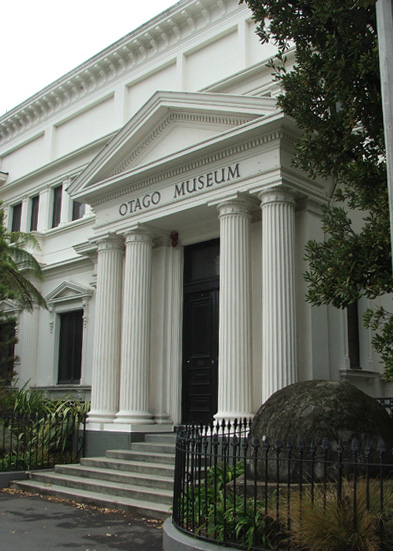
The name "Otago Museum" was first used by James Hector to describe his geological collections on display at the 1865 New Zealand Exhibition, held in Dunedin. Some of these collections were the nucleus of the Otago Museum, which first opened to the public on 12 September 1868. The museum was originally located in the Dunedin Exchange building on Princes Street. As the collection began to grow, it soon became clear that a larger, purpose-built site was required; the foundation was laid at the current Great King Street site in December 1874. In August 1877, the new building was opened and remains a part of the museum today. The original entrance to the museum, with its Oamaru stone Doric-style pillars, is still visible on Great King Street, though the main entrance is now from the Museum Reserve.
Management of the museum passed to the University of Otago in 1877. This arrangement lasted until 1955 when a new governance structure was established by the passing of the Otago Museum Trust Board Act.
With well over 100 years’ history on the current site, the museum building is classified by the Historic Places Trust as a Category 1 historic place.
The first substantial addition to the original Museum building on the Great King Street site was the Hocken Wing, which opened in 1910, housing Dr. Thomas Hocken's collection of manuscripts. This collection now forms the basis of the Hocken Collections. Another new wing, named for benefactor Willi Fels was opened in 1930 and today houses the People of the World and Tangata Whenua galleries. A further expansion of the museum occurred in 1963 when the Centennial Wing was opened to provide additional display space. With all of these separate developments, the museum had grown to several times its original floor area, resulting in a complex layout of multiple internally connected wings.
A multi-stage redevelopment project in the 1990s and 2000s largely resolved this, with the addition of architect Ted McCoy's spectacular integrating central Atrium. The collection storage area was also redeveloped with specialised shelving and environmentally controlled storerooms. The redevelopment project reached a milestone in 2002 when the Southern Land, Southern People gallery was opened by Sir Edmund Hillary, along with the governor general (then Dame Silvia Cartwright) and prime minister (then Helen Clark).
The museum's interactive science centre, Discovery World, opened In 1991. During the redevelopment, it was moved from its original ground floor location to the first floor. The Tropical Forest, an immersive butterfly rainforest environment featuring the flora and fauna of the tropics, opened as a major addition to the science centre in 2007. Discovery World Tropical Forest has become an important visitor attraction in its own right. A planetarium was a further addition to the science centre in 2015. Over the course of 2017, Discovery World was further redeveloped, and opened in December of that year as the 'Tūhura Otago Community Trust Science Centre'.
2013 saw the opening of a redeveloped historic bluestone building on the Museum Reserve, which serves as an exhibition space and additional Museum venue. The building, now named the H. D. Skinner Annex after museum director Harry Skinner, was formerly a post office.
Tūhura Otago Museum
Tūhura Otago Museum, located near the city center of Dunedin, New Zealand, adjacent to the University of Otago campus, is one of the country's largest museums and a prominent attraction in the city. The museum's extensive collections encompass natural science specimens and humanities artifacts from the Otago region and around the world, which are featured in its long-term gallery displays. A notable feature of the museum is its interactive science center, which includes an immersive tropical rainforest butterfly house. In 2022, the museum was officially renamed Tūhura Otago Museum, incorporating the Māori name "Tūhura," meaning "to discover, investigate, and explore."
The name "Otago Museum" was first used by James Hector to describe his geological collections on display at the 1865 New Zealand Exhibition, held in Dunedin. Some of these collections were the nucleus of the Otago Museum, which first opened to the public on 12 September 1868. The museum was originally located in the Dunedin Exchange building on Princes Street. As the collection began to grow, it soon became clear that a larger, purpose-built site was required; the foundation was laid at the current Great King Street site in December 1874. In August 1877, the new building was opened and remains a part of the museum today. The original entrance to the museum, with its Oamaru stone Doric-style pillars, is still visible on Great King Street, though the main entrance is now from the Museum Reserve.
Management of the museum passed to the University of Otago in 1877. This arrangement lasted until 1955 when a new governance structure was established by the passing of the Otago Museum Trust Board Act.
With well over 100 years’ history on the current site, the museum building is classified by the Historic Places Trust as a Category 1 historic place.
The first substantial addition to the original Museum building on the Great King Street site was the Hocken Wing, which opened in 1910, housing Dr. Thomas Hocken's collection of manuscripts. This collection now forms the basis of the Hocken Collections. Another new wing, named for benefactor Willi Fels was opened in 1930 and today houses the People of the World and Tangata Whenua galleries. A further expansion of the museum occurred in 1963 when the Centennial Wing was opened to provide additional display space. With all of these separate developments, the museum had grown to several times its original floor area, resulting in a complex layout of multiple internally connected wings.
A multi-stage redevelopment project in the 1990s and 2000s largely resolved this, with the addition of architect Ted McCoy's spectacular integrating central Atrium. The collection storage area was also redeveloped with specialised shelving and environmentally controlled storerooms. The redevelopment project reached a milestone in 2002 when the Southern Land, Southern People gallery was opened by Sir Edmund Hillary, along with the governor general (then Dame Silvia Cartwright) and prime minister (then Helen Clark).
The museum's interactive science centre, Discovery World, opened In 1991. During the redevelopment, it was moved from its original ground floor location to the first floor. The Tropical Forest, an immersive butterfly rainforest environment featuring the flora and fauna of the tropics, opened as a major addition to the science centre in 2007. Discovery World Tropical Forest has become an important visitor attraction in its own right. A planetarium was a further addition to the science centre in 2015. Over the course of 2017, Discovery World was further redeveloped, and opened in December of that year as the 'Tūhura Otago Community Trust Science Centre'.
2013 saw the opening of a redeveloped historic bluestone building on the Museum Reserve, which serves as an exhibition space and additional Museum venue. The building, now named the H. D. Skinner Annex after museum director Harry Skinner, was formerly a post office.
Recent media
Recent media