
Recent from talks
Paleo-Hebrew Leviticus Scroll
Knowledge base stats:
Talk channels stats:
Members stats:
Paleo-Hebrew Leviticus Scroll
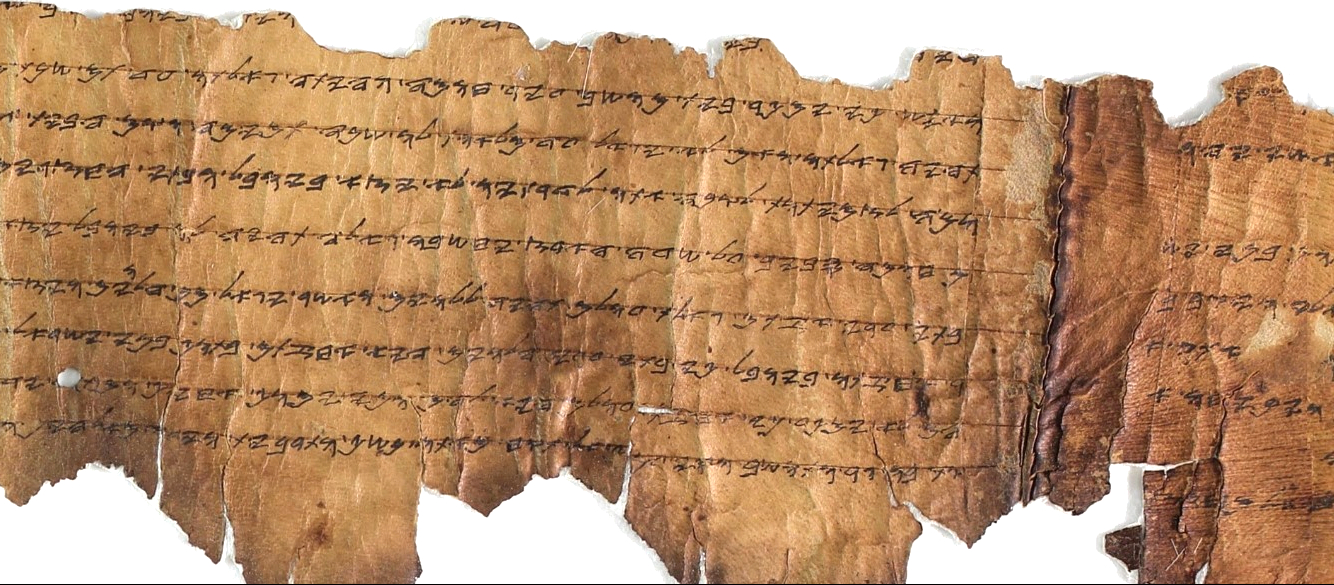
Paleo-Hebrew Leviticus Scroll, known also as 11QpaleoLev, is an ancient text preserved in one of the Qumran group of caves, which provides a rare glimpse of the script used formerly by the Israelites in writing Torah scrolls during pre-exilic history. The fragmentary remains of the Torah scroll is written in the Paleo-Hebrew script and was found stashed away in cave no. 11 at Qumran, showing a portion of Leviticus. The scroll is thought to have been penned by the scribe between the late 2nd century BCE to early 1st century BCE, while others place its writing in the 1st century CE.
The paleo-Hebrew Leviticus Scroll, although many centuries more recent than the well-known earlier ancient paleo-Hebrew epigraphic materials, such as the Royal Steward inscription from Siloam, Jerusalem (8th century BCE), now in the Museum of the Ancient Orient, Istanbul, and the Phoenician inscription on the sarcophagus of King Eshmun-Azar at Sidon, dating to the fifth-fourth century BCE, the Lachish ostraca (ca. 6th-century BCE), the Gezer calendar (ca. 950–918 BCE), and the paleo-Hebrew sacerdotal blessing discovered in 1979 near the St Andrew's Church in Jerusalem, is of no less importance to palaeography—even though the manuscript is fragmentary and only partially preserved on leather parchment.
Today, the paleo-Hebrew Leviticus Scroll (11QpaleoLev) is housed at the Israel Antiquities Authority (IAA), but is not on public display.
For a period of time, Paleo-Leviticus—inscribed sometime after 200 BCE but before the end of the first century BCE--was considered the oldest extant fragment of a Torah scroll. The dating of a Paleo-Exodus scroll (4Q22) placed it in date range of 125–100 BCE, but there is an even older manuscript containing parts of Exodus (near the end of the book) and a small portion of Leviticus (at the beginning of the book) that was copied in 250 BCE (4Q17). 4Q17 is inscribed in the square alphabet adopted after the exile in Babylon—nevertheless its early date of transcription advances the 4Q17 fragment as the oldest extant fragment of the Torah known to us if the contents of Hinnom Scrolls are excluded from consideration (they are not parts of a larger work, but represent short extracts etc.).
The style of paleo-Hebrew script in the Qumran fragments indicates that these manuscripts date to some time after the revolution of the Macabbees and the introduction of a new coinage (following the ejection of the Ptolemaic Greek occupation forces) that was minted with legends that used the old, pre-exilic paleo-Hebrew or Phoenician style of writing. The dating of the scroll hinges on the way that the kaph letter is written—more closely resembling kaphs in Hasmonean coinage then in the Lachish ostraca (a collection of letters from around the year 590 BCE) which are our next most recent and extant exempla of the paleo-Hebrew script.
It has sometimes been presumed that, "using the old script [on the coins] was a kind of nationalist affectation, to proclaim the ancestral, pre-Babylonian-exile, Israelite origins of the newly-independent Hasmonean state." Hasmonean coinage was introduced in 135 BCE with the ascent of John Hyrcanus to leadership and it seems to have been maintained until the beginning of the Herodean dynasty. Whether or not an alphabetic primer predating the new Hasmonean coinage might have been shared in common between the paleo-Hebrew texts of the Qumran caves and the Hasmonean mints is not discussed in the scholarly monographs devoted to this subject. Thus, the literature leaves that question open.
The Talmud states that Samaritans used this script, and other fragments of paleo-Hebrew fragments of the Torah tend to confirm that the version of the Torah being copied in paleo-Hebrew was a Samaritan variant—at least a precursor to the Samaritan variant that became distinct at a later time. As such, it is possible that both the Hasmonean coinage and the Torah manuscripts may have been built up from a Samaritan style guide predating the coinage that comes into circulation under Hyrcanus but post-dating the Lachish ostraca.
The discovery of the first Dead Sea Scrolls in 1947 brought in its wake a flurry of epigraphic discoveries in the Qumran region. The paleo-Hebrew Leviticus Scroll was one of the last among them to be discovered. It was found in January 1956 by local Bedouins of the Ta'amireh clan, in what is now known as "Qumran Cave 11", about 2 kilometres (1.2 mi) north of Khirbet Qumran, where it had been stashed along with other manuscripts. The entrance to the cave had been sealed off by fallen debris and large boulders, while part of the cave's roof had also collapsed, keeping the cave inaccessible for many centuries. The cache of manuscripts found in cave no. 11 yielded, among other manuscripts, the Great Psalms Scroll (11QPs), the Temple Scroll (11QT; being the longest of the Dead Sea Scrolls), and the paleo-Hebrew Leviticus Scroll. The Leviticus Scroll was obtained by the Rockefeller Museum (formerly the Palestine Archaeological Museum) in May 1956 where it was kept in the museum's scrollery, and there remained largely untouched for 12 years, until it could be examined by researchers. When the museum came under the administration of the Israeli government after the Six-Day War in 1967, the museum assigned the Leviticus Scroll to D.N. Freedman for study and publication, who published the first report on the manuscript in 1974. Today, the 11QpaleoLev is held by the Israel Antiquities Authority (IAA).
Hub AI
Paleo-Hebrew Leviticus Scroll AI simulator
(@Paleo-Hebrew Leviticus Scroll_simulator)
Paleo-Hebrew Leviticus Scroll
Paleo-Hebrew Leviticus Scroll, known also as 11QpaleoLev, is an ancient text preserved in one of the Qumran group of caves, which provides a rare glimpse of the script used formerly by the Israelites in writing Torah scrolls during pre-exilic history. The fragmentary remains of the Torah scroll is written in the Paleo-Hebrew script and was found stashed away in cave no. 11 at Qumran, showing a portion of Leviticus. The scroll is thought to have been penned by the scribe between the late 2nd century BCE to early 1st century BCE, while others place its writing in the 1st century CE.
The paleo-Hebrew Leviticus Scroll, although many centuries more recent than the well-known earlier ancient paleo-Hebrew epigraphic materials, such as the Royal Steward inscription from Siloam, Jerusalem (8th century BCE), now in the Museum of the Ancient Orient, Istanbul, and the Phoenician inscription on the sarcophagus of King Eshmun-Azar at Sidon, dating to the fifth-fourth century BCE, the Lachish ostraca (ca. 6th-century BCE), the Gezer calendar (ca. 950–918 BCE), and the paleo-Hebrew sacerdotal blessing discovered in 1979 near the St Andrew's Church in Jerusalem, is of no less importance to palaeography—even though the manuscript is fragmentary and only partially preserved on leather parchment.
Today, the paleo-Hebrew Leviticus Scroll (11QpaleoLev) is housed at the Israel Antiquities Authority (IAA), but is not on public display.
For a period of time, Paleo-Leviticus—inscribed sometime after 200 BCE but before the end of the first century BCE--was considered the oldest extant fragment of a Torah scroll. The dating of a Paleo-Exodus scroll (4Q22) placed it in date range of 125–100 BCE, but there is an even older manuscript containing parts of Exodus (near the end of the book) and a small portion of Leviticus (at the beginning of the book) that was copied in 250 BCE (4Q17). 4Q17 is inscribed in the square alphabet adopted after the exile in Babylon—nevertheless its early date of transcription advances the 4Q17 fragment as the oldest extant fragment of the Torah known to us if the contents of Hinnom Scrolls are excluded from consideration (they are not parts of a larger work, but represent short extracts etc.).
The style of paleo-Hebrew script in the Qumran fragments indicates that these manuscripts date to some time after the revolution of the Macabbees and the introduction of a new coinage (following the ejection of the Ptolemaic Greek occupation forces) that was minted with legends that used the old, pre-exilic paleo-Hebrew or Phoenician style of writing. The dating of the scroll hinges on the way that the kaph letter is written—more closely resembling kaphs in Hasmonean coinage then in the Lachish ostraca (a collection of letters from around the year 590 BCE) which are our next most recent and extant exempla of the paleo-Hebrew script.
It has sometimes been presumed that, "using the old script [on the coins] was a kind of nationalist affectation, to proclaim the ancestral, pre-Babylonian-exile, Israelite origins of the newly-independent Hasmonean state." Hasmonean coinage was introduced in 135 BCE with the ascent of John Hyrcanus to leadership and it seems to have been maintained until the beginning of the Herodean dynasty. Whether or not an alphabetic primer predating the new Hasmonean coinage might have been shared in common between the paleo-Hebrew texts of the Qumran caves and the Hasmonean mints is not discussed in the scholarly monographs devoted to this subject. Thus, the literature leaves that question open.
The Talmud states that Samaritans used this script, and other fragments of paleo-Hebrew fragments of the Torah tend to confirm that the version of the Torah being copied in paleo-Hebrew was a Samaritan variant—at least a precursor to the Samaritan variant that became distinct at a later time. As such, it is possible that both the Hasmonean coinage and the Torah manuscripts may have been built up from a Samaritan style guide predating the coinage that comes into circulation under Hyrcanus but post-dating the Lachish ostraca.
The discovery of the first Dead Sea Scrolls in 1947 brought in its wake a flurry of epigraphic discoveries in the Qumran region. The paleo-Hebrew Leviticus Scroll was one of the last among them to be discovered. It was found in January 1956 by local Bedouins of the Ta'amireh clan, in what is now known as "Qumran Cave 11", about 2 kilometres (1.2 mi) north of Khirbet Qumran, where it had been stashed along with other manuscripts. The entrance to the cave had been sealed off by fallen debris and large boulders, while part of the cave's roof had also collapsed, keeping the cave inaccessible for many centuries. The cache of manuscripts found in cave no. 11 yielded, among other manuscripts, the Great Psalms Scroll (11QPs), the Temple Scroll (11QT; being the longest of the Dead Sea Scrolls), and the paleo-Hebrew Leviticus Scroll. The Leviticus Scroll was obtained by the Rockefeller Museum (formerly the Palestine Archaeological Museum) in May 1956 where it was kept in the museum's scrollery, and there remained largely untouched for 12 years, until it could be examined by researchers. When the museum came under the administration of the Israeli government after the Six-Day War in 1967, the museum assigned the Leviticus Scroll to D.N. Freedman for study and publication, who published the first report on the manuscript in 1974. Today, the 11QpaleoLev is held by the Israel Antiquities Authority (IAA).
Recent media