
Recent from talks
Pedro Ximénez
Knowledge base stats:
Talk channels stats:
Members stats:
Pedro Ximénez
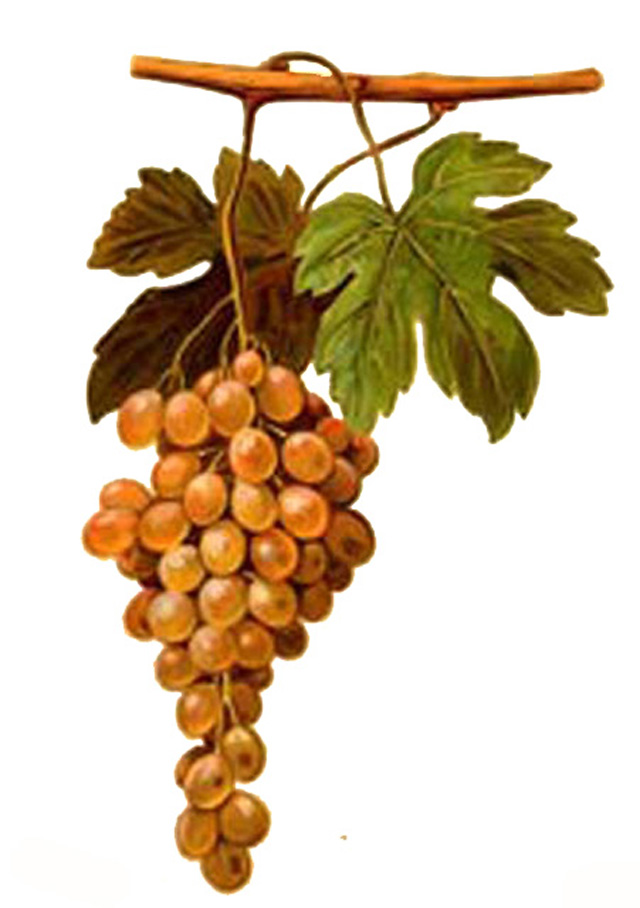
Pedro Ximénez (also known as PX and many other variations; Andalusian pronunciation [ˌpeðrohiˈmene]) is a white Spanish wine grape variety grown in several Spanish wine regions, most notably the denominación de origen (DO) of Montilla-Moriles. Here it is used to produce a varietal wine, an intensely sweet, dark, dessert sherry. It is made by drying the grapes under the hot sun, concentrating the sweetness (similar to straw wine production), which are then used to create a thick, black liquid with a strong taste of raisins and molasses that is fortified and aged in solera.
Also, Pedro Ximénez is grown in Australia to make fortified wines and sherry type wines known by the Australian term - Apera. It is often used for blending and to make botrytised dessert wines. This grape variety has thrived in Western Australia's Swan Valley since its introduction there due to the hot climate growing conditions. The vine requires a rich soil and short pruning. James Busby brought some Pedro Ximénez to Australia in 1832. Some were imported from Jerez and planted at Clarendon; a transfer from the Sydney Botanic Garden is recorded in around 1839.
Pedro Giménez (Pedro Jiménez) is a widely grown criolla variety in South America whose relationship to Pedro Ximénez is uncertain, as it shows ampelographic differences.
There have been several apocryphal legends about the grape's origins. In 1661, the German ampelographer F. J. Sachs speculated that Pedro Ximénez originated in either the Canary Islands or Madeira and was later brought to the German wine regions of the Rheingau, Rheinhessen and eventually the Mosel before either a Spanish soldier named Pedro Ximen or a Catholic Cardinal named Ximenès brought the grape to Málaga and Sierras de Málaga. This theory, which was spread in various incarnations by other German wine writers such as Baron August Wilhelm von Babo and Balthasar Sprenger, also led to speculation that Pedro Ximénez was somehow related to (or possibly even the same grape as) the German wine grapes Elbling and Riesling but DNA evidence in the late 20th and early 21st century has discounted those theories.
Today ampelographers believe that Pedro Ximénez probably originated somewhere in the Andalusia region of southern Spain where the grape has been growing since at least the early 17th century. In 1618, the Spanish writer Vicente Espinel described the famous wine of "Pedro Ximénez de Malaga". In 2007, DNA analysis showed that Pedro Ximénez was the offspring of the Arabic table grape Gibi which was once grown in southern France and throughout the Iberian Peninsula, possibly introduced sometime during the Al-Andalus period of Moorish rule. Gibi was also discovered to be one of the parent varieties of the Extremadura wine grape Alarije, making the later variety a half-sibling to Pedro Ximénez.
The origin of the name Pedro Ximénez is not yet clear with French ampelographer Joseph Roy-Chevrier speculating in 1905 that the grape was named after the village of Jiménez in Sanlúcar de Barrameda. As Ximénez and Jiménez are common surnames in Iberia, another theory is that the grape was named after a notable vintner who helped propagate the variety in the region.
Pedro Ximénez is a mid to late ripening grape variety that also tends to bud at the midpoint of the budding period of the vine growing season. The vine can be very vigorous and productive, producing large clusters of berries of irregular sizes (occasionally the result of millerandage). Despite having thin skinned berries, Pedro Ximénez is highly susceptible to the viticultural hazard of botrytis bunch rot as well as downy mildew, esca and eutypa dieback. The vine has some resistance to the fungal disease powdery mildew but is also very prone to damage caused by termite infection.
DNA evidence has shown that Pedro Ximénez is an offspring variety of the Arabic table grape Gibi and a half sibling to Alarije. In 2007, it was also confirmed that the table grape Corinto bianco was a seedless mutation of Pedro Ximénez.
Hub AI
Pedro Ximénez AI simulator
(@Pedro Ximénez_simulator)
Pedro Ximénez
Pedro Ximénez (also known as PX and many other variations; Andalusian pronunciation [ˌpeðrohiˈmene]) is a white Spanish wine grape variety grown in several Spanish wine regions, most notably the denominación de origen (DO) of Montilla-Moriles. Here it is used to produce a varietal wine, an intensely sweet, dark, dessert sherry. It is made by drying the grapes under the hot sun, concentrating the sweetness (similar to straw wine production), which are then used to create a thick, black liquid with a strong taste of raisins and molasses that is fortified and aged in solera.
Also, Pedro Ximénez is grown in Australia to make fortified wines and sherry type wines known by the Australian term - Apera. It is often used for blending and to make botrytised dessert wines. This grape variety has thrived in Western Australia's Swan Valley since its introduction there due to the hot climate growing conditions. The vine requires a rich soil and short pruning. James Busby brought some Pedro Ximénez to Australia in 1832. Some were imported from Jerez and planted at Clarendon; a transfer from the Sydney Botanic Garden is recorded in around 1839.
Pedro Giménez (Pedro Jiménez) is a widely grown criolla variety in South America whose relationship to Pedro Ximénez is uncertain, as it shows ampelographic differences.
There have been several apocryphal legends about the grape's origins. In 1661, the German ampelographer F. J. Sachs speculated that Pedro Ximénez originated in either the Canary Islands or Madeira and was later brought to the German wine regions of the Rheingau, Rheinhessen and eventually the Mosel before either a Spanish soldier named Pedro Ximen or a Catholic Cardinal named Ximenès brought the grape to Málaga and Sierras de Málaga. This theory, which was spread in various incarnations by other German wine writers such as Baron August Wilhelm von Babo and Balthasar Sprenger, also led to speculation that Pedro Ximénez was somehow related to (or possibly even the same grape as) the German wine grapes Elbling and Riesling but DNA evidence in the late 20th and early 21st century has discounted those theories.
Today ampelographers believe that Pedro Ximénez probably originated somewhere in the Andalusia region of southern Spain where the grape has been growing since at least the early 17th century. In 1618, the Spanish writer Vicente Espinel described the famous wine of "Pedro Ximénez de Malaga". In 2007, DNA analysis showed that Pedro Ximénez was the offspring of the Arabic table grape Gibi which was once grown in southern France and throughout the Iberian Peninsula, possibly introduced sometime during the Al-Andalus period of Moorish rule. Gibi was also discovered to be one of the parent varieties of the Extremadura wine grape Alarije, making the later variety a half-sibling to Pedro Ximénez.
The origin of the name Pedro Ximénez is not yet clear with French ampelographer Joseph Roy-Chevrier speculating in 1905 that the grape was named after the village of Jiménez in Sanlúcar de Barrameda. As Ximénez and Jiménez are common surnames in Iberia, another theory is that the grape was named after a notable vintner who helped propagate the variety in the region.
Pedro Ximénez is a mid to late ripening grape variety that also tends to bud at the midpoint of the budding period of the vine growing season. The vine can be very vigorous and productive, producing large clusters of berries of irregular sizes (occasionally the result of millerandage). Despite having thin skinned berries, Pedro Ximénez is highly susceptible to the viticultural hazard of botrytis bunch rot as well as downy mildew, esca and eutypa dieback. The vine has some resistance to the fungal disease powdery mildew but is also very prone to damage caused by termite infection.
DNA evidence has shown that Pedro Ximénez is an offspring variety of the Arabic table grape Gibi and a half sibling to Alarije. In 2007, it was also confirmed that the table grape Corinto bianco was a seedless mutation of Pedro Ximénez.
Recent media