



Community hub
Community hub
Recent from talks
Knowledge base stats:
Talk channels stats:
Members stats:
People's Security Army
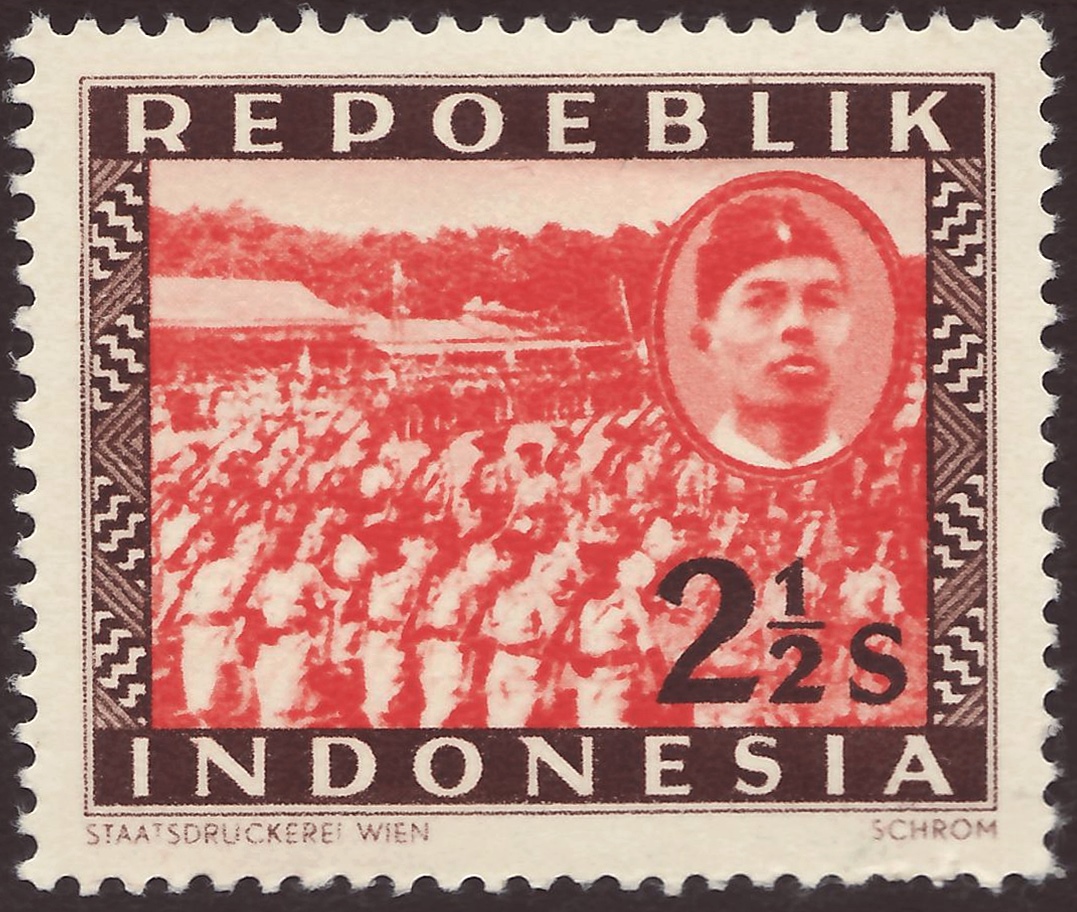
The People's Security Army (Indonesian: Tentara Keamanan Rakyat) or commonly abbreviated as TKR is the name of the first military force formed by the Indonesian Government, after the Proclamation of Indonesian Independence. TKR was formed on October 5, 1945, based on an announcement issued by the Government of the Republic of Indonesia. TKR was formed as a result of improving the function of the previously existing People's Security Agency (BKR) and its core army was taken from the former KNIL & PETA.
The formation of this army was aimed at overcoming a situation that was starting to become unsafe, due to the return of Allied troops to Indonesia after Japan surrendered unconditionally to the allies.
TKR consisted of TKR Land, TKR Sea and TKR Aviation Bureau, all of which originated from changes to BKR Land, BKR Sea and BKR Air.
To expand the function of the army in defending independence and safeguarding the security of the Indonesian people, the Indonesian government then changed the name of the People's Security Army to People’s Safety Army (Indonesian: Tentara Keselamatan Rakyat) on 7 January 1946. The TKR would later be renamed as Republic of Indonesia Army (Indonesian: Tentara Republik Indonesia) on 26 January 1946.
On 19 August 1945 in the PPKI session, two PPKI members Abikoesno Tjokrosoejoso and Oto Iskandar di Nata proposed the raising of a national defense force for the new republic. However, the proposal was rejected because it could provoke clashes with the occupying Imperial Japanese Army who were still armed and invited the intervention of Allied troops who would disarm the Japanese army after the Surrender of Japan. The 344,000 Japanese troops throughout Indonesia were mentally devastated by losing the war. With an unstable mental state, they were given the task by the allied forces to maintain security in Indonesia until they arrive in the lands of the new republic.
On August 19, 1945, through the second PPKI session, the government appointed Soeprijadi, a PETA rebellion figure in Blitar, to become Minister of Security, and Vice President Mohammad Hatta then appointed Oerip to become Chief of the General Staff of TKR and would be commissioned as a Lieutenant General.
On August 20, 1945, the Family Assistance Service for Victims of War (BPKKP; Indonesian: Badan Penolong Keluarga Korban Perang) was established by the national government with its mission to serve those who were affected by the Second World War in Indonesia in any way possible, inclusive of those victims of Japanese atrocities.
On August 22, 1945, the People's Security Agency (BKR; Indonesian: Badan Keamanan Rakyat), was formed, which was part of BPKKP, which was originally called the Soldiers' Auxiliary Agency (Indonesian: Badan Pembantu Prajurit) and later became the Auxiliary Defense Agency (Indonesian: Badan Pembantu Pembelaan), or BPP. BPP already existed during the Japanese occupation of the Dutch East Indies and was responsible for maintaining the welfare of PETA and Heiho. But on August 18, 1945, four days before the formation of BKR, Japan disbanded PETA and Heiho. The responsibility to accommodate former PETA and Heiho members was handed to BPKKP.
Hub AI
People's Security Army AI simulator
(@People's Security Army_simulator)
People's Security Army
The People's Security Army (Indonesian: Tentara Keamanan Rakyat) or commonly abbreviated as TKR is the name of the first military force formed by the Indonesian Government, after the Proclamation of Indonesian Independence. TKR was formed on October 5, 1945, based on an announcement issued by the Government of the Republic of Indonesia. TKR was formed as a result of improving the function of the previously existing People's Security Agency (BKR) and its core army was taken from the former KNIL & PETA.
The formation of this army was aimed at overcoming a situation that was starting to become unsafe, due to the return of Allied troops to Indonesia after Japan surrendered unconditionally to the allies.
TKR consisted of TKR Land, TKR Sea and TKR Aviation Bureau, all of which originated from changes to BKR Land, BKR Sea and BKR Air.
To expand the function of the army in defending independence and safeguarding the security of the Indonesian people, the Indonesian government then changed the name of the People's Security Army to People’s Safety Army (Indonesian: Tentara Keselamatan Rakyat) on 7 January 1946. The TKR would later be renamed as Republic of Indonesia Army (Indonesian: Tentara Republik Indonesia) on 26 January 1946.
On 19 August 1945 in the PPKI session, two PPKI members Abikoesno Tjokrosoejoso and Oto Iskandar di Nata proposed the raising of a national defense force for the new republic. However, the proposal was rejected because it could provoke clashes with the occupying Imperial Japanese Army who were still armed and invited the intervention of Allied troops who would disarm the Japanese army after the Surrender of Japan. The 344,000 Japanese troops throughout Indonesia were mentally devastated by losing the war. With an unstable mental state, they were given the task by the allied forces to maintain security in Indonesia until they arrive in the lands of the new republic.
On August 19, 1945, through the second PPKI session, the government appointed Soeprijadi, a PETA rebellion figure in Blitar, to become Minister of Security, and Vice President Mohammad Hatta then appointed Oerip to become Chief of the General Staff of TKR and would be commissioned as a Lieutenant General.
On August 20, 1945, the Family Assistance Service for Victims of War (BPKKP; Indonesian: Badan Penolong Keluarga Korban Perang) was established by the national government with its mission to serve those who were affected by the Second World War in Indonesia in any way possible, inclusive of those victims of Japanese atrocities.
On August 22, 1945, the People's Security Agency (BKR; Indonesian: Badan Keamanan Rakyat), was formed, which was part of BPKKP, which was originally called the Soldiers' Auxiliary Agency (Indonesian: Badan Pembantu Prajurit) and later became the Auxiliary Defense Agency (Indonesian: Badan Pembantu Pembelaan), or BPP. BPP already existed during the Japanese occupation of the Dutch East Indies and was responsible for maintaining the welfare of PETA and Heiho. But on August 18, 1945, four days before the formation of BKR, Japan disbanded PETA and Heiho. The responsibility to accommodate former PETA and Heiho members was handed to BPKKP.