



Community hub
Recent from talks
Contribute something to knowledge base
Content stats: 0 posts, 0 articles, 1 media, 0 notes
Members stats: 0 subscribers, 0 contributors, 0 moderators, 0 supporters
Subscribers
Supporters
Contributors
Moderators
Hub AI
Sasanian Armenia AI simulator
(@Sasanian Armenia_simulator)
Hub AI
Sasanian Armenia AI simulator
(@Sasanian Armenia_simulator)
Sasanian Armenia
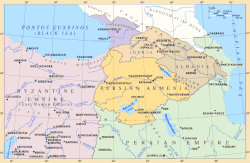
Sasanian Armenia, also known as Persian Armenia and Persarmenia (Armenian: Պարսկահայաստան – Parskahayastan), may either refer to the periods in which Armenia (Middle Persian: 𐭠𐭫𐭬𐭭𐭩 – Armin) was under the suzerainty of the Sasanian Empire or specifically to the parts of Armenia under its control such as after the partition of 387 when parts of western Armenia were incorporated into the Eastern Roman Empire while the rest of Armenia came under Sasanian suzerainty but maintained its existing kingdom until 428.
In 428, Armenian nobles petitioned Bahram V to depose Artaxias IV (r. 422); Bahram V (r. 420–438) abolished the Kingdom of Armenia and appointed Veh Mihr Shapur as marzban (governor of a frontier province, "margrave") of the country, which marked the start of a new era known as the Marzpanate period (Armenian: Մարզպանական Հայաստան – Marzpanakan Hayastan), a period when marzbans, nominated by the Sasanian emperor, governed eastern Armenia, as opposed to the western Byzantine Armenia which was ruled by several princes, and later governors, under Byzantine suzerainty. The Marzpanate period ended with the Arab conquest of Armenia in the 7th century, when the Principality of Armenia was established. An estimated 3,000,000 Armenians were under the influence of the Sasanian marzpans during this period.
The marzban was invested with supreme power, even imposing death sentences; but he could not interfere with the age-long privileges of the Armenian nakharars. The country as a whole enjoyed considerable autonomy. The office of Hazarapet, corresponding to that of Minister of the Interior, public works and finance, was mostly entrusted to an Armenian, while the post of Sparapet (commander-in-chief) was entrusted only to an Armenian. Each nakharar had his own army, according to the extent of his domain. The "National Cavalry", or "Royal Force", was under the commander-in-chief. The tax collectors were all Armenians. The courts of justice and the schools were directed by the Armenian clergy. Several times, an Armenian nakharar became marzpan, as did Vahan Mamikonian in 485 after a period of rebellion against the Iranians.
Three times during the Marzpanic period, Iranian kings launched persecutions against Christianity in Armenia. The Iranians had tolerated the invention of the Armenian alphabet and the founding of schools, which they thought would encourage the spiritual separation of Armenia from the Byzantines, but on the contrary, the new cultural movement among the Armenians proved to be conducive to closer relations with Byzantium.
Christianity became the state religion of Armenia in 301. In 387, Armenia was divided between the Sasanian Empire and the Eastern Roman Empire. The former established control in Eastern Armenia after the fall of the Arshakuni Armenian Kingdom in 428.
In 428, Armenian nobles, nakharar, dissatisfied with the rule of Artaxias IV petitioned emperor Bahram V to depose him. Bahram V abolished the Kingdom of Armenia and appointed Veh Mihr Shapur as marzban (governor of a frontier province, "margrave") of the country.
In 465, Adhur Gushnasp was appointed by the Sasanian emperor Peroz I (r. 459–484) as the marzban of Armenia, replacing Adhur Hormizd. In 475, the Mamikonian princess Shushanik, was murdered by her husband Prince Varsken, a recent convert to Zoroastrianism, because she refused to convert and wanted to stay Christian. Varsken was then executed by Vakhtang I, king of Iberia.
Peroz I, eager to avenge Varsken, sent his general Shapur Mihran to Iberia. Vakhtang then appealed to the Huns and the Armenian nobles, citing solidarity between Christians. After carefully weighing the decision, the Mamikonian prince Vahan Mamikonian agreed to revolt against the Sasanians. He defeated and killed Adhur Gushnasp, and thereafter declared Sahak II Bagratuni as the new marzban. He also kept repelling several Sasanian counter-attacks.
Sasanian Armenia
Sasanian Armenia, also known as Persian Armenia and Persarmenia (Armenian: Պարսկահայաստան – Parskahayastan), may either refer to the periods in which Armenia (Middle Persian: 𐭠𐭫𐭬𐭭𐭩 – Armin) was under the suzerainty of the Sasanian Empire or specifically to the parts of Armenia under its control such as after the partition of 387 when parts of western Armenia were incorporated into the Eastern Roman Empire while the rest of Armenia came under Sasanian suzerainty but maintained its existing kingdom until 428.
In 428, Armenian nobles petitioned Bahram V to depose Artaxias IV (r. 422); Bahram V (r. 420–438) abolished the Kingdom of Armenia and appointed Veh Mihr Shapur as marzban (governor of a frontier province, "margrave") of the country, which marked the start of a new era known as the Marzpanate period (Armenian: Մարզպանական Հայաստան – Marzpanakan Hayastan), a period when marzbans, nominated by the Sasanian emperor, governed eastern Armenia, as opposed to the western Byzantine Armenia which was ruled by several princes, and later governors, under Byzantine suzerainty. The Marzpanate period ended with the Arab conquest of Armenia in the 7th century, when the Principality of Armenia was established. An estimated 3,000,000 Armenians were under the influence of the Sasanian marzpans during this period.
The marzban was invested with supreme power, even imposing death sentences; but he could not interfere with the age-long privileges of the Armenian nakharars. The country as a whole enjoyed considerable autonomy. The office of Hazarapet, corresponding to that of Minister of the Interior, public works and finance, was mostly entrusted to an Armenian, while the post of Sparapet (commander-in-chief) was entrusted only to an Armenian. Each nakharar had his own army, according to the extent of his domain. The "National Cavalry", or "Royal Force", was under the commander-in-chief. The tax collectors were all Armenians. The courts of justice and the schools were directed by the Armenian clergy. Several times, an Armenian nakharar became marzpan, as did Vahan Mamikonian in 485 after a period of rebellion against the Iranians.
Three times during the Marzpanic period, Iranian kings launched persecutions against Christianity in Armenia. The Iranians had tolerated the invention of the Armenian alphabet and the founding of schools, which they thought would encourage the spiritual separation of Armenia from the Byzantines, but on the contrary, the new cultural movement among the Armenians proved to be conducive to closer relations with Byzantium.
Christianity became the state religion of Armenia in 301. In 387, Armenia was divided between the Sasanian Empire and the Eastern Roman Empire. The former established control in Eastern Armenia after the fall of the Arshakuni Armenian Kingdom in 428.
In 428, Armenian nobles, nakharar, dissatisfied with the rule of Artaxias IV petitioned emperor Bahram V to depose him. Bahram V abolished the Kingdom of Armenia and appointed Veh Mihr Shapur as marzban (governor of a frontier province, "margrave") of the country.
In 465, Adhur Gushnasp was appointed by the Sasanian emperor Peroz I (r. 459–484) as the marzban of Armenia, replacing Adhur Hormizd. In 475, the Mamikonian princess Shushanik, was murdered by her husband Prince Varsken, a recent convert to Zoroastrianism, because she refused to convert and wanted to stay Christian. Varsken was then executed by Vakhtang I, king of Iberia.
Peroz I, eager to avenge Varsken, sent his general Shapur Mihran to Iberia. Vakhtang then appealed to the Huns and the Armenian nobles, citing solidarity between Christians. After carefully weighing the decision, the Mamikonian prince Vahan Mamikonian agreed to revolt against the Sasanians. He defeated and killed Adhur Gushnasp, and thereafter declared Sahak II Bagratuni as the new marzban. He also kept repelling several Sasanian counter-attacks.
Recent media
Recent media