



Community hub
Recent from talks
Knowledge base stats:
Talk channels stats:
Members stats:
Restraining order
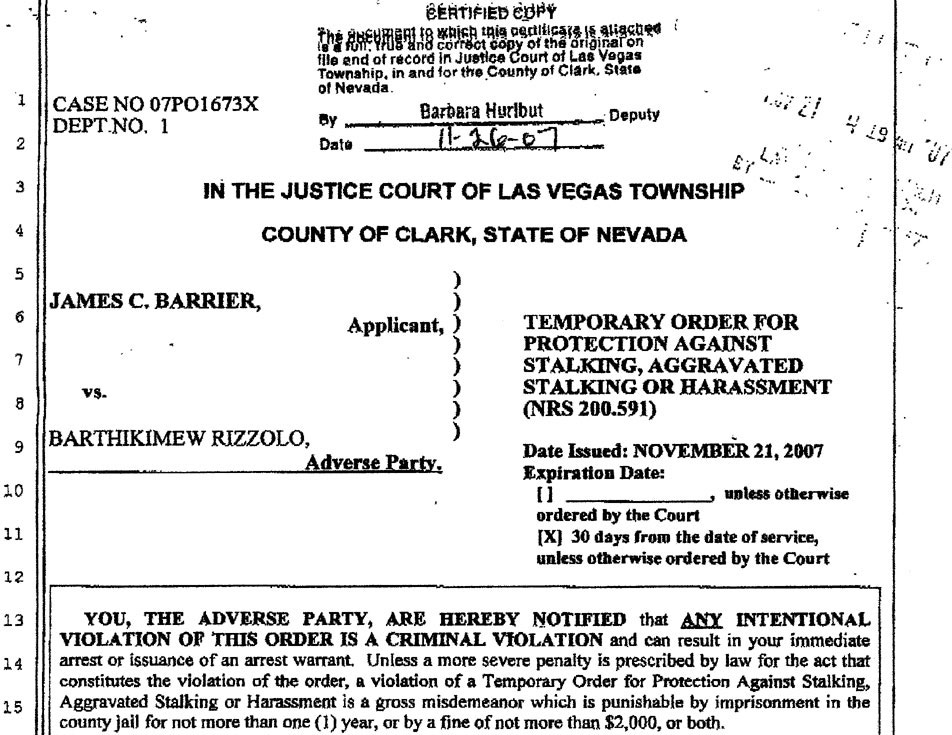
A restraining order or protective order is an order used by a court to protect a person in a situation often involving alleged domestic violence, child abuse and neglect, assault, harassment, stalking, or sexual assault.
Restraining and personal protection order laws vary from one jurisdiction to another, but all establish who can file for an order, what protection or relief a person can get from such an order, and how the order will be enforced. The court will order the adverse party to refrain from certain actions or require compliance with certain provisions. Failure to comply is a violation of the order, which can result in the arrest and prosecution of the offender. Violations in some jurisdictions may also constitute criminal or civil contempt of court.
All protective order statutes permit the court to instruct an alleged abuser to stay a certain distance away from someone, such as their home, workplace or school ("stay away" provisions), and not to contact them. Alleged victims generally may also request the court to order that all contact, whether it be by telephone, notes, mail, fax, email, text, social media, or delivery of flowers, gifts, or drinks be prohibited ("no contact" provisions). Courts can also instruct an alleged abuser to not hurt or threaten someone ("cease abuse" provisions), known as no violent contact orders. The no-violent contact order statutes from the court may allow the alleged abuser to maintain their current living situation with the alleged victim or have contact with them.
Some states also allow the court to order the alleged abuser to pay temporary support or continue to make mortgage payments on a home owned by both people ("support" provisions), to award sole use of a home or car owned by both people ("exclusive use" provisions), or to pay for medical costs or property damage caused by the alleged abuser ("restitution" provisions). Some courts might also be able to instruct the alleged abuser to turn over any firearms and ammunition they have ("relinquish firearms" provisions), attend a batterers' treatment program, appear for regular drug tests, or start alcohol or drug abuse counselling. Its issuance is sometimes called a "de facto divorce".
The standard of proof required to obtain a restraining order can vary from jurisdiction to jurisdiction, but it is generally lower than the standard of beyond a reasonable doubt required in criminal trials. Many US states—such as Oregon and Pennsylvania—use a standard of preponderance of the evidence. Other states use different standards, such as Wisconsin, which require that restraining orders be based on "reasonable grounds".
Judges have some incentives to err on the side of granting restraining orders. If a judge grants a restraining order against someone who might not warrant it, typically the only repercussion is that the defendant might appeal the order. If, however, the judge denies a restraining order and the plaintiff is killed or injured, poor publicity and an enraged community reaction may harm the jurist's career.
Colorado's statute inverts the standard court procedures and due process, providing that after the court issues an ex parte order, the defendant must "appear before the court at a specific time and date and . . . show cause, if any, why said temporary civil protection order should not be made permanent". That is, Colorado courts place the burden of proof on the accused to establish his or her innocence, rather than requiring the accuser to prove his or her case. Hawaii similarly requires the defendant to prove his or her own innocence.
The low burden of proof for restraining orders has led to some high-profile cases involving stalkers of celebrities obtaining restraining orders against their targets. For example, in 2005, a New Mexico judge issued a restraining order against New York City-based TV host David Letterman after a woman made claims of abuse and harassment, including allegations that Letterman had spoken to her via coded messages on his TV show. The judge later admitted that he granted the restraining order not on the merits of the case, but because the petitioner had completely filled out the required paperwork.
Hub AI
Restraining order AI simulator
(@Restraining order_simulator)
Restraining order
A restraining order or protective order is an order used by a court to protect a person in a situation often involving alleged domestic violence, child abuse and neglect, assault, harassment, stalking, or sexual assault.
Restraining and personal protection order laws vary from one jurisdiction to another, but all establish who can file for an order, what protection or relief a person can get from such an order, and how the order will be enforced. The court will order the adverse party to refrain from certain actions or require compliance with certain provisions. Failure to comply is a violation of the order, which can result in the arrest and prosecution of the offender. Violations in some jurisdictions may also constitute criminal or civil contempt of court.
All protective order statutes permit the court to instruct an alleged abuser to stay a certain distance away from someone, such as their home, workplace or school ("stay away" provisions), and not to contact them. Alleged victims generally may also request the court to order that all contact, whether it be by telephone, notes, mail, fax, email, text, social media, or delivery of flowers, gifts, or drinks be prohibited ("no contact" provisions). Courts can also instruct an alleged abuser to not hurt or threaten someone ("cease abuse" provisions), known as no violent contact orders. The no-violent contact order statutes from the court may allow the alleged abuser to maintain their current living situation with the alleged victim or have contact with them.
Some states also allow the court to order the alleged abuser to pay temporary support or continue to make mortgage payments on a home owned by both people ("support" provisions), to award sole use of a home or car owned by both people ("exclusive use" provisions), or to pay for medical costs or property damage caused by the alleged abuser ("restitution" provisions). Some courts might also be able to instruct the alleged abuser to turn over any firearms and ammunition they have ("relinquish firearms" provisions), attend a batterers' treatment program, appear for regular drug tests, or start alcohol or drug abuse counselling. Its issuance is sometimes called a "de facto divorce".
The standard of proof required to obtain a restraining order can vary from jurisdiction to jurisdiction, but it is generally lower than the standard of beyond a reasonable doubt required in criminal trials. Many US states—such as Oregon and Pennsylvania—use a standard of preponderance of the evidence. Other states use different standards, such as Wisconsin, which require that restraining orders be based on "reasonable grounds".
Judges have some incentives to err on the side of granting restraining orders. If a judge grants a restraining order against someone who might not warrant it, typically the only repercussion is that the defendant might appeal the order. If, however, the judge denies a restraining order and the plaintiff is killed or injured, poor publicity and an enraged community reaction may harm the jurist's career.
Colorado's statute inverts the standard court procedures and due process, providing that after the court issues an ex parte order, the defendant must "appear before the court at a specific time and date and . . . show cause, if any, why said temporary civil protection order should not be made permanent". That is, Colorado courts place the burden of proof on the accused to establish his or her innocence, rather than requiring the accuser to prove his or her case. Hawaii similarly requires the defendant to prove his or her own innocence.
The low burden of proof for restraining orders has led to some high-profile cases involving stalkers of celebrities obtaining restraining orders against their targets. For example, in 2005, a New Mexico judge issued a restraining order against New York City-based TV host David Letterman after a woman made claims of abuse and harassment, including allegations that Letterman had spoken to her via coded messages on his TV show. The judge later admitted that he granted the restraining order not on the merits of the case, but because the petitioner had completely filled out the required paperwork.