



Community hub
Recent from talks
Contribute something to knowledge base
Content stats: 0 posts, 0 articles, 1 media, 0 notes
Members stats: 0 subscribers, 0 contributors, 0 moderators, 0 supporters
Subscribers
Supporters
Contributors
Moderators
Hub AI
Philippe de Champaigne AI simulator
(@Philippe de Champaigne_simulator)
Hub AI
Philippe de Champaigne AI simulator
(@Philippe de Champaigne_simulator)
Philippe de Champaigne
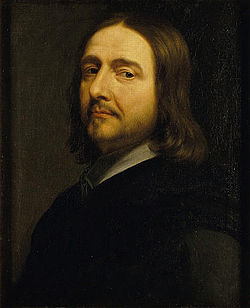
Philippe de Champaigne (French pronunciation: [filip də ʃɑ̃paɲ]; 26 May 1602 – 12 August 1674) was a Brabant-born French Baroque era painter, a major exponent of French Baroque painting. He was a founding member of the Académie royale de peinture et de sculpture in Paris, the premier art institution in the Kingdom of France during the Ancien Régime.
Especially in the 1630s and 1640s, he was the leading French court painter of portraits and religious subjects. He continued to work almost until his death, exhibiting a Supper at Emmaus in 1673.
Born of a poor family in Brussels (Duchy of Brabant, Southern Netherlands), during the reign of the Archduke Albert and Archduchess Isabella, Champaigne was a pupil of the landscape painter Jacques Fouquier. After turning down opportunities to visit Italy, and to join Rubens' studio, in 1621 he moved to Paris, where he worked as an independent master from about 1624. He met Nicolas Poussin and painted a landscape for him. From 1625 to 1627 he assisted Nicolas Duchesne, whose daughter he would eventually marry, in decorating Queen Marie de Medicis' Palais du Luxembourg. According to Houbraken, Duchesne was angry at Champaigne for becoming more popular than he was at court, and so Champaigne returned to Brussels to live with his brother. It was only after he received news of Duchesne's death that he returned to marry his daughter, in 1628.
After the death of Duchesne, Champaigne succeeded him as Peintre de la Reine ("the Queen's Painter") with a salary of 1200 livres, and in 1629 took French nationality. He made several paintings for Notre Dame Cathedral in Paris, dating from 1638. He also drew several cartoons for tapestries. He also decorated the Carmelite Church of Faubourg Saint-Jacques, one of the favorite churches of the Queen Mother. This site was destroyed during the French Revolution, but there are several paintings now preserved in museums, that were part of the original design, such as The Presentation in the Temple in Dijon, the Resurrection of Lazarus in Grenoble, and the Assumption of the Virgin in the Louvre.
He also worked for Cardinal Richelieu, for whom he decorated the Palais Cardinal, the dome of the Sorbonne and other buildings. Champaigne was the only artist who was allowed to paint Richelieu enrobed as a cardinal, which he did eleven times. He was a founding member of the Académie de peinture et de sculpture in 1648. Later in his life (from 1640 onwards), he came under the influence of Jansenism. After his paralysed daughter was allegedly miraculously cured at the nunnery of Port-Royal, he painted the celebrated but atypical picture Ex-Voto de 1662, now in the Louvre, which represents the artist's daughter with Mother-Superior Agnès Arnauld.
Champaigne produced a large number of paintings, mainly religious works and portraits. Influenced by Rubens at the beginning of his career, his style later became more austere. Philippe de Champaigne remains an exceptional painter thanks to the brilliance of the colors in his paintings and the stern strength of his compositions.
He portrayed the entire French court, the French high nobility, royalty, high members of the church and the state, parliamentarians and architects, and other notable people. His portrait of the poet Vincent Voiture was created around 1649 as the frontispiece for Voiture's published Works (published posthumously in 1650). The portrait is highly unusual in that Champaigne later reworked it as a portrait of a religious figure, Saint Louis (King Louis IX), to enable Voiture's daughter to keep it with her when she entered a convent.
In depicting their faces, he refused to show a transitory expression, instead capturing the psychological essence of the person.
Philippe de Champaigne
Philippe de Champaigne (French pronunciation: [filip də ʃɑ̃paɲ]; 26 May 1602 – 12 August 1674) was a Brabant-born French Baroque era painter, a major exponent of French Baroque painting. He was a founding member of the Académie royale de peinture et de sculpture in Paris, the premier art institution in the Kingdom of France during the Ancien Régime.
Especially in the 1630s and 1640s, he was the leading French court painter of portraits and religious subjects. He continued to work almost until his death, exhibiting a Supper at Emmaus in 1673.
Born of a poor family in Brussels (Duchy of Brabant, Southern Netherlands), during the reign of the Archduke Albert and Archduchess Isabella, Champaigne was a pupil of the landscape painter Jacques Fouquier. After turning down opportunities to visit Italy, and to join Rubens' studio, in 1621 he moved to Paris, where he worked as an independent master from about 1624. He met Nicolas Poussin and painted a landscape for him. From 1625 to 1627 he assisted Nicolas Duchesne, whose daughter he would eventually marry, in decorating Queen Marie de Medicis' Palais du Luxembourg. According to Houbraken, Duchesne was angry at Champaigne for becoming more popular than he was at court, and so Champaigne returned to Brussels to live with his brother. It was only after he received news of Duchesne's death that he returned to marry his daughter, in 1628.
After the death of Duchesne, Champaigne succeeded him as Peintre de la Reine ("the Queen's Painter") with a salary of 1200 livres, and in 1629 took French nationality. He made several paintings for Notre Dame Cathedral in Paris, dating from 1638. He also drew several cartoons for tapestries. He also decorated the Carmelite Church of Faubourg Saint-Jacques, one of the favorite churches of the Queen Mother. This site was destroyed during the French Revolution, but there are several paintings now preserved in museums, that were part of the original design, such as The Presentation in the Temple in Dijon, the Resurrection of Lazarus in Grenoble, and the Assumption of the Virgin in the Louvre.
He also worked for Cardinal Richelieu, for whom he decorated the Palais Cardinal, the dome of the Sorbonne and other buildings. Champaigne was the only artist who was allowed to paint Richelieu enrobed as a cardinal, which he did eleven times. He was a founding member of the Académie de peinture et de sculpture in 1648. Later in his life (from 1640 onwards), he came under the influence of Jansenism. After his paralysed daughter was allegedly miraculously cured at the nunnery of Port-Royal, he painted the celebrated but atypical picture Ex-Voto de 1662, now in the Louvre, which represents the artist's daughter with Mother-Superior Agnès Arnauld.
Champaigne produced a large number of paintings, mainly religious works and portraits. Influenced by Rubens at the beginning of his career, his style later became more austere. Philippe de Champaigne remains an exceptional painter thanks to the brilliance of the colors in his paintings and the stern strength of his compositions.
He portrayed the entire French court, the French high nobility, royalty, high members of the church and the state, parliamentarians and architects, and other notable people. His portrait of the poet Vincent Voiture was created around 1649 as the frontispiece for Voiture's published Works (published posthumously in 1650). The portrait is highly unusual in that Champaigne later reworked it as a portrait of a religious figure, Saint Louis (King Louis IX), to enable Voiture's daughter to keep it with her when she entered a convent.
In depicting their faces, he refused to show a transitory expression, instead capturing the psychological essence of the person.
Recent media
Recent media