
Recent from talks
Giovanni Pico della Mirandola
Knowledge base stats:
Talk channels stats:
Members stats:
Giovanni Pico della Mirandola
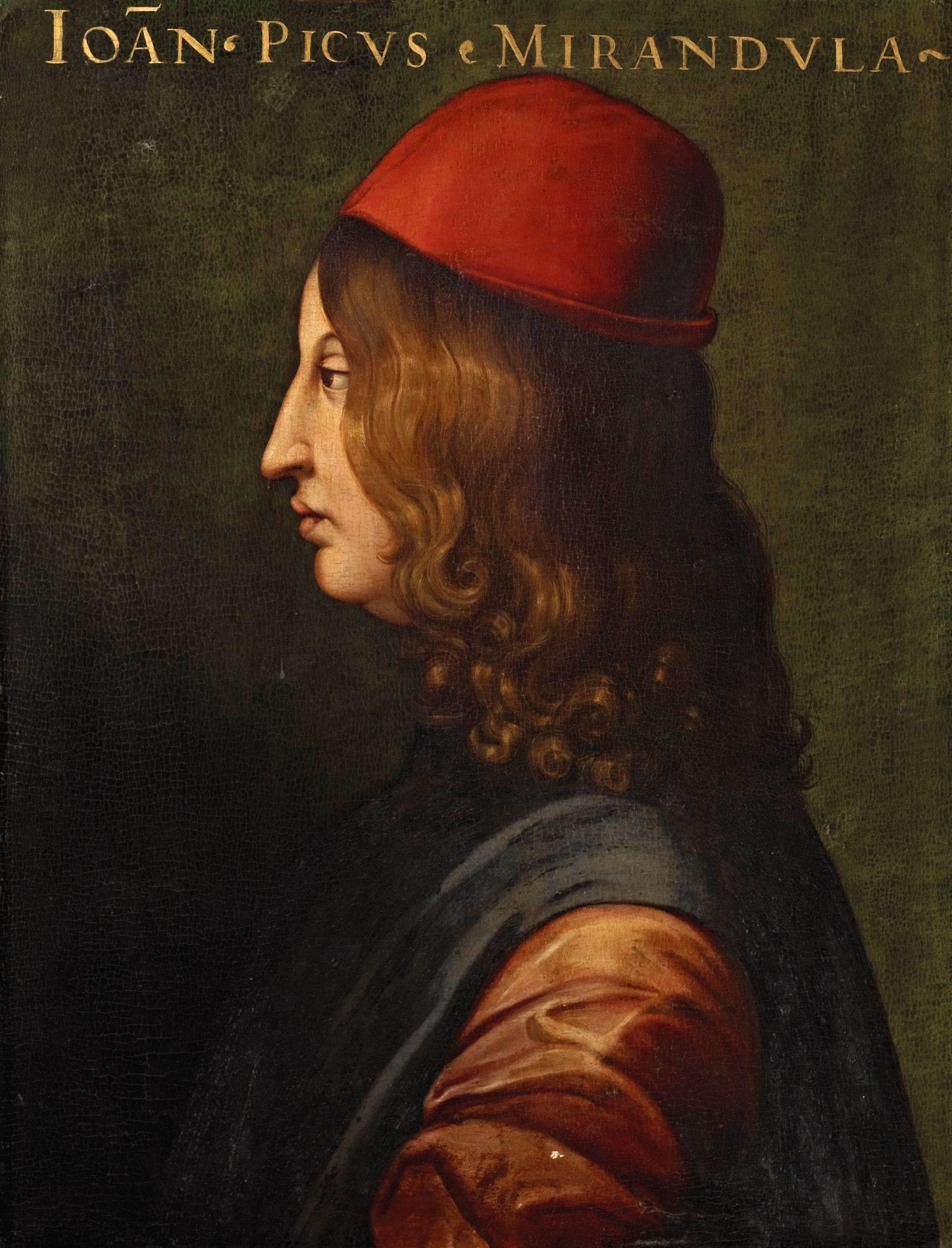
Giovanni Pico dei conti della Mirandola e della Concordia (/ˈpiːkoʊ ˌdɛlə mɪˈrændələ, -ˈrɑːn-/ PEE-koh DEL-ə mirr-A(H)N-də-lə; Italian: [dʒoˈvanni ˈpiːko della miˈrandola]; Latin: Johannes Picus de Mirandula; 24 February 1463 – 17 November 1494), known as Pico della Mirandola, was an Italian Renaissance nobleman and philosopher. He is famed for the events of 1486, when, at the age of 23, he proposed to defend 900 theses on religion, philosophy, natural philosophy, and magic against all comers, for which he wrote the Oration on the Dignity of Man, which has been called the "Manifesto of the Renaissance", and a key text of Renaissance humanism and of what has been called the "Hermetic Reformation". He was the founder of the tradition of Christian Kabbalah, a key tenet of early modern Western esotericism. The 900 Theses was the first printed book to be universally banned by the Church. Pico is sometimes seen as a proto-Protestant, because his 900 theses anticipated many Protestant views.
Giovanni was born at Mirandola, near Modena, the youngest son of Gianfrancesco I Pico, Lord of Mirandola and Count of Concordia, by his wife Giulia, daughter of Feltrino Boiardo, Count of Scandiano. The family had long dwelt in the Castle of Mirandola (Duchy of Modena), which had become independent in the fourteenth century and had received in 1414 from the Holy Roman Emperor Sigismund the fief of Concordia. Mirandola was a small autonomous county (later, a duchy) in Emilia, near Ferrara. The Pico della Mirandola were closely related to the Sforza, Gonzaga and Este dynasties, and Giovanni's siblings married the descendants of the hereditary rulers of Ferrara, Bologna, Carpi, Forlì and Piombino.
Born twenty-three years into his parents' marriage, Giovanni had two much older brothers, both of whom outlived him: Count Galeotto I continued the dynasty, while Antonio became a general in the Imperial army. The Pico family would reign as dukes until Mirandola, an ally of Louis XIV of France, was conquered by his rival, Joseph I, Holy Roman Emperor, in 1708 and annexed to Modena by Duke Rinaldo d'Este, the exiled male line becoming extinct in 1747.
Giovanni's maternal family was singularly distinguished in the arts and scholarship of the Italian Renaissance. His cousin and contemporary was the poet Matteo Maria Boiardo, who grew up under the influence of his own uncle, the Florentine patron of the arts and scholar-poet Tito Vespasiano Strozzi.
Giovanni had a paradoxical relationship with his nephew Giovanni Francesco Pico della Mirandola, who was a great admirer of his uncle, yet published Examen vanitatis doctrinae gentium (1520) in opposition to the "ancient wisdom narrative" espoused by Giovanni, described by historian Charles B. Schmitt as an attempt "to destroy what his uncle had built."
A precocious child with an exceptional memory, Giovanni was schooled in Latin and possibly Greek at a very early age. Intended for the Church by his mother, he was named a papal protonotary (probably honorary) at the age of 10 and in 1477, he went to Bologna to study canon law.
At the sudden death of his mother three years later, Pico renounced canon law and began to study philosophy at the University of Ferrara. During a brief trip to Florence, he met Angelo Poliziano, the courtly poet Girolamo Benivieni, and probably the young Dominican friar Girolamo Savonarola. For the rest of his life, he remained very close friends with all three. He may also have been a lover of Poliziano.
From 1480 to 1482, he continued his studies at the University of Padua, a major centre of Aristotelianism in Italy. Already proficient in Latin and Greek, he studied Hebrew and Arabic in Padua with Elia del Medigo, a Jewish Averroist, and read Aramaic manuscripts with him as well. Del Medigo also translated Judaic manuscripts from Hebrew into Latin for Pico, as he would continue to do for a number of years. Pico also wrote sonnets in Latin and Italian which, because of the influence of Savonarola, he destroyed at the end of his life.[citation needed]
Hub AI
Giovanni Pico della Mirandola AI simulator
(@Giovanni Pico della Mirandola_simulator)
Giovanni Pico della Mirandola
Giovanni Pico dei conti della Mirandola e della Concordia (/ˈpiːkoʊ ˌdɛlə mɪˈrændələ, -ˈrɑːn-/ PEE-koh DEL-ə mirr-A(H)N-də-lə; Italian: [dʒoˈvanni ˈpiːko della miˈrandola]; Latin: Johannes Picus de Mirandula; 24 February 1463 – 17 November 1494), known as Pico della Mirandola, was an Italian Renaissance nobleman and philosopher. He is famed for the events of 1486, when, at the age of 23, he proposed to defend 900 theses on religion, philosophy, natural philosophy, and magic against all comers, for which he wrote the Oration on the Dignity of Man, which has been called the "Manifesto of the Renaissance", and a key text of Renaissance humanism and of what has been called the "Hermetic Reformation". He was the founder of the tradition of Christian Kabbalah, a key tenet of early modern Western esotericism. The 900 Theses was the first printed book to be universally banned by the Church. Pico is sometimes seen as a proto-Protestant, because his 900 theses anticipated many Protestant views.
Giovanni was born at Mirandola, near Modena, the youngest son of Gianfrancesco I Pico, Lord of Mirandola and Count of Concordia, by his wife Giulia, daughter of Feltrino Boiardo, Count of Scandiano. The family had long dwelt in the Castle of Mirandola (Duchy of Modena), which had become independent in the fourteenth century and had received in 1414 from the Holy Roman Emperor Sigismund the fief of Concordia. Mirandola was a small autonomous county (later, a duchy) in Emilia, near Ferrara. The Pico della Mirandola were closely related to the Sforza, Gonzaga and Este dynasties, and Giovanni's siblings married the descendants of the hereditary rulers of Ferrara, Bologna, Carpi, Forlì and Piombino.
Born twenty-three years into his parents' marriage, Giovanni had two much older brothers, both of whom outlived him: Count Galeotto I continued the dynasty, while Antonio became a general in the Imperial army. The Pico family would reign as dukes until Mirandola, an ally of Louis XIV of France, was conquered by his rival, Joseph I, Holy Roman Emperor, in 1708 and annexed to Modena by Duke Rinaldo d'Este, the exiled male line becoming extinct in 1747.
Giovanni's maternal family was singularly distinguished in the arts and scholarship of the Italian Renaissance. His cousin and contemporary was the poet Matteo Maria Boiardo, who grew up under the influence of his own uncle, the Florentine patron of the arts and scholar-poet Tito Vespasiano Strozzi.
Giovanni had a paradoxical relationship with his nephew Giovanni Francesco Pico della Mirandola, who was a great admirer of his uncle, yet published Examen vanitatis doctrinae gentium (1520) in opposition to the "ancient wisdom narrative" espoused by Giovanni, described by historian Charles B. Schmitt as an attempt "to destroy what his uncle had built."
A precocious child with an exceptional memory, Giovanni was schooled in Latin and possibly Greek at a very early age. Intended for the Church by his mother, he was named a papal protonotary (probably honorary) at the age of 10 and in 1477, he went to Bologna to study canon law.
At the sudden death of his mother three years later, Pico renounced canon law and began to study philosophy at the University of Ferrara. During a brief trip to Florence, he met Angelo Poliziano, the courtly poet Girolamo Benivieni, and probably the young Dominican friar Girolamo Savonarola. For the rest of his life, he remained very close friends with all three. He may also have been a lover of Poliziano.
From 1480 to 1482, he continued his studies at the University of Padua, a major centre of Aristotelianism in Italy. Already proficient in Latin and Greek, he studied Hebrew and Arabic in Padua with Elia del Medigo, a Jewish Averroist, and read Aramaic manuscripts with him as well. Del Medigo also translated Judaic manuscripts from Hebrew into Latin for Pico, as he would continue to do for a number of years. Pico also wrote sonnets in Latin and Italian which, because of the influence of Savonarola, he destroyed at the end of his life.[citation needed]
Recent media