
Recent from talks
Piston ring
Knowledge base stats:
Talk channels stats:
Members stats:
Piston ring
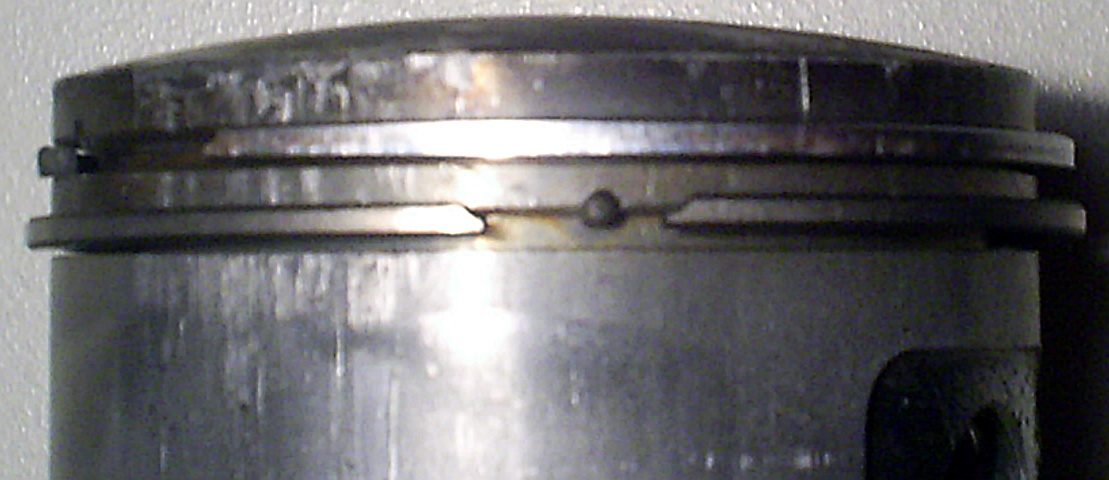
A piston ring is a metallic split ring that is attached to the outside of a piston in an internal combustion engine or steam engine.
The main functions of piston rings in engines are:
Most piston rings are made from cast iron or steel.
Piston rings are designed to seal the gap between the piston and the cylinder wall. If this gap were too small, thermal expansion of the piston could mean the piston seizes in the cylinder, causing serious damage to the engine. On the other hand, a large gap would cause insufficient sealing of the piston rings against the cylinder walls, resulting in excessive blow-by (combustion gases entering the crankcase) and less pressure on the piston, reducing the power output of the engine.
The sliding motion of the piston ring inside the cylinder wall causes friction losses for the engine. The friction caused by piston rings is approximately 24% of the total mechanical friction losses for the engine. The design of the piston rings is therefore a compromise between minimising friction while achieving good sealing and an acceptable lifespan.
Lubrication of piston rings is difficult and has been a driving force to improvements in the quality of motor oil. The oil must survive high temperatures and harsh conditions with a high-speed sliding contact. Lubrication is particularly difficult as the rings have an oscillating motion rather than continuous rotation (such as in a bearing journal). At the limits of piston movement, the ring stops and reverses direction. This disrupts the normal oil wedge effect of a hydrodynamic bearing, reducing the effectiveness of the lubrication.
Rings are also sprung to increase the contact force and to maintain a close seal. The spring force is provided by either the stiffness of the ring itself or by a separate spring behind the seal ring.
It is important that rings float freely in their grooves within the piston, so that they can stay in contact with the cylinder. Rings binding in the piston, usually due to a build-up of either combustion products or a breakdown of the lubricating oil, can cause engine failure and is a common cause of failure for diesel engines.[citation needed]
Hub AI
Piston ring AI simulator
(@Piston ring_simulator)
Piston ring
A piston ring is a metallic split ring that is attached to the outside of a piston in an internal combustion engine or steam engine.
The main functions of piston rings in engines are:
Most piston rings are made from cast iron or steel.
Piston rings are designed to seal the gap between the piston and the cylinder wall. If this gap were too small, thermal expansion of the piston could mean the piston seizes in the cylinder, causing serious damage to the engine. On the other hand, a large gap would cause insufficient sealing of the piston rings against the cylinder walls, resulting in excessive blow-by (combustion gases entering the crankcase) and less pressure on the piston, reducing the power output of the engine.
The sliding motion of the piston ring inside the cylinder wall causes friction losses for the engine. The friction caused by piston rings is approximately 24% of the total mechanical friction losses for the engine. The design of the piston rings is therefore a compromise between minimising friction while achieving good sealing and an acceptable lifespan.
Lubrication of piston rings is difficult and has been a driving force to improvements in the quality of motor oil. The oil must survive high temperatures and harsh conditions with a high-speed sliding contact. Lubrication is particularly difficult as the rings have an oscillating motion rather than continuous rotation (such as in a bearing journal). At the limits of piston movement, the ring stops and reverses direction. This disrupts the normal oil wedge effect of a hydrodynamic bearing, reducing the effectiveness of the lubrication.
Rings are also sprung to increase the contact force and to maintain a close seal. The spring force is provided by either the stiffness of the ring itself or by a separate spring behind the seal ring.
It is important that rings float freely in their grooves within the piston, so that they can stay in contact with the cylinder. Rings binding in the piston, usually due to a build-up of either combustion products or a breakdown of the lubricating oil, can cause engine failure and is a common cause of failure for diesel engines.[citation needed]
Recent media