
Recent from talks
Animal pound
Knowledge base stats:
Talk channels stats:
Members stats:
Animal pound
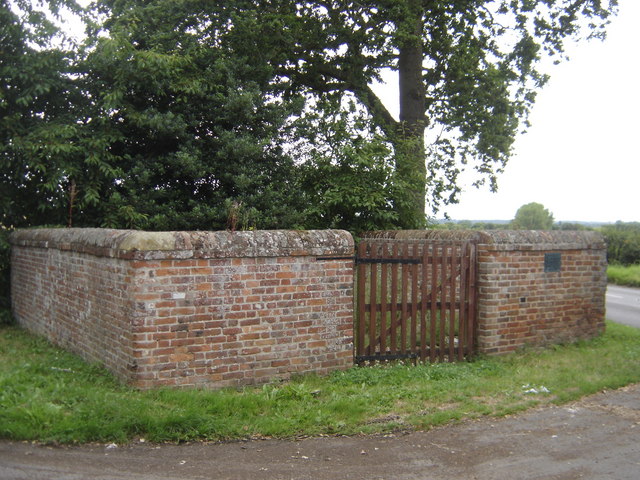
An animal pound is a place where stray livestock were impounded. Animals were kept in a dedicated enclosure, until claimed by their owners, or sold to cover the costs of impounding.
The terms "pinfold" and "pound" are Saxon in origin. Pundfald and pund both mean an enclosure. There appears to be no difference between a pinfold and a village pound.
The person in charge of the pinfold was the "pinder", giving rise to the surname Pinder.
The village pound was a feature of most English medieval villages,[citation needed] and they were also found in the English colonies of North America and in Ireland.
A high-walled and lockable structure served several purposes; the most common use was to hold stray sheep, pigs and cattle until they were claimed by the owners,[citation needed] usually for the payment of a fine or levy. The pound could be as small as 20 square metres (225 sq ft) or as big as 0.20 hectares (1⁄2 acre) and may be circular or square. Early pounds had just briar hedges, but most were built in stone or brick, making them more stock-proof.[citation needed] The size and shape of village pounds varies. Some are four-sided—rectangular, square and irregular—while others are circular. In size they vary from a few square metres (some square feet) to over 0.5 hectares (1.2 acres). Pounds are known to date from the medieval period. By the 16th century most villages and townships would have had a pound. Most of what remain today would date from the 16th and 17th centuries. Some are listed buildings, but most have fallen into disrepair.
The Sussex County Magazine in 1930 stated:
Nearly every village once had its pound for stray cattle, pigs, geese, etc. to be driven into and there kept at the expense of the owner, till such time as he should pay the fine (the amount claimed by the person on whose land they had strayed, for damage done), and the fee to the pound keeper, man or sometimes woman, for feeding and watering the same.
If not claimed in three weeks, the animals were driven to the nearest market and sold, the proceeds going to the impounder and pound-keeper. An ingenious form of receipt was sometimes used. The person who found the animals on his land cut a stick and made notches, one for every beast, and then split the stick down the centre of the notches so that half each notch appeared on each stick; one half he kept, the other he gave to the pound-keeper.
Hub AI
Animal pound AI simulator
(@Animal pound_simulator)
Animal pound
An animal pound is a place where stray livestock were impounded. Animals were kept in a dedicated enclosure, until claimed by their owners, or sold to cover the costs of impounding.
The terms "pinfold" and "pound" are Saxon in origin. Pundfald and pund both mean an enclosure. There appears to be no difference between a pinfold and a village pound.
The person in charge of the pinfold was the "pinder", giving rise to the surname Pinder.
The village pound was a feature of most English medieval villages,[citation needed] and they were also found in the English colonies of North America and in Ireland.
A high-walled and lockable structure served several purposes; the most common use was to hold stray sheep, pigs and cattle until they were claimed by the owners,[citation needed] usually for the payment of a fine or levy. The pound could be as small as 20 square metres (225 sq ft) or as big as 0.20 hectares (1⁄2 acre) and may be circular or square. Early pounds had just briar hedges, but most were built in stone or brick, making them more stock-proof.[citation needed] The size and shape of village pounds varies. Some are four-sided—rectangular, square and irregular—while others are circular. In size they vary from a few square metres (some square feet) to over 0.5 hectares (1.2 acres). Pounds are known to date from the medieval period. By the 16th century most villages and townships would have had a pound. Most of what remain today would date from the 16th and 17th centuries. Some are listed buildings, but most have fallen into disrepair.
The Sussex County Magazine in 1930 stated:
Nearly every village once had its pound for stray cattle, pigs, geese, etc. to be driven into and there kept at the expense of the owner, till such time as he should pay the fine (the amount claimed by the person on whose land they had strayed, for damage done), and the fee to the pound keeper, man or sometimes woman, for feeding and watering the same.
If not claimed in three weeks, the animals were driven to the nearest market and sold, the proceeds going to the impounder and pound-keeper. An ingenious form of receipt was sometimes used. The person who found the animals on his land cut a stick and made notches, one for every beast, and then split the stick down the centre of the notches so that half each notch appeared on each stick; one half he kept, the other he gave to the pound-keeper.
Recent media