



Community hub
Community hub
Recent from talks
Knowledge base stats:
Talk channels stats:
Members stats:
Powell River, British Columbia
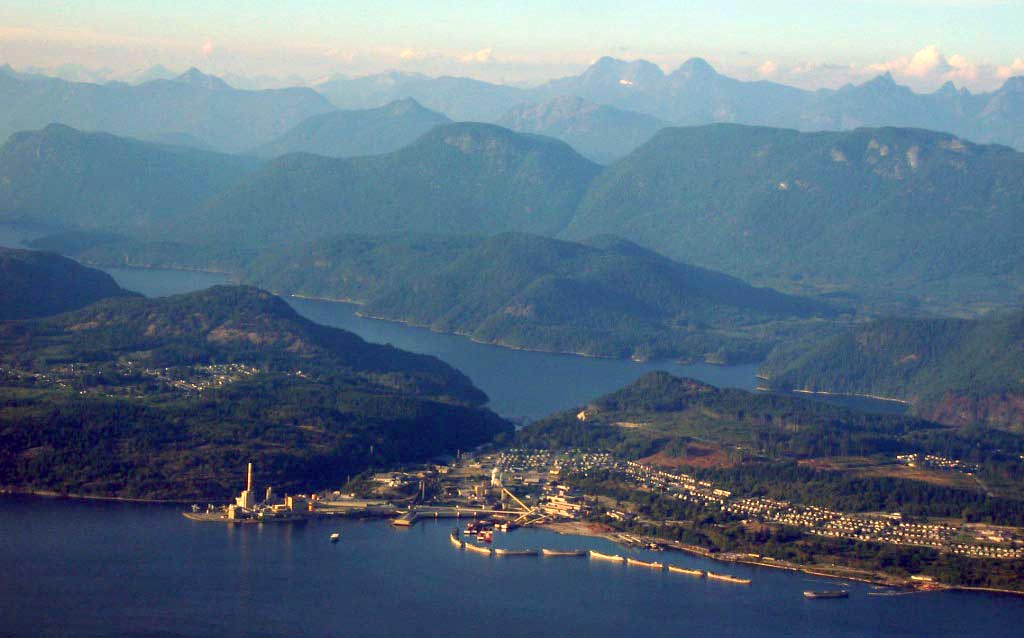
Powell River is a city on the northern Sunshine Coast of southwestern British Columbia, Canada. Most of its population lives near the eastern shores of Malaspina Strait, which is part of the larger Georgia Strait between Vancouver Island and the Mainland. With two intervening long, steep-sided fjords inhibiting the construction of a contiguous road connection with Vancouver to the south, geographical surroundings explain Powell River's remoteness as a community, despite relative proximity to Vancouver and other populous areas of the BC Coast. The city is the location of the head office of the qathet Regional District.
The Powell River was named for Israel Wood Powell. Powell was B.C.'s first superintendent for Indian Affairs and a chief architect of colonial policies, including the establishment of residential schools in British Columbia and the banning of the potlatch. He was traveling up the coast of BC in 1881 and the river and lake were named after him.
Powell was a supporter of B.C. being part of the union with Canada and brought the first Canadian flag to BC on June 17, 1871.
Construction of the pulp mill was started in 1908, with a corresponding townsite company town commenced in 1910: the first roll of paper was produced at Powell River Mill in 1912. Similarly, large logging companies had earlier moved in to take advantage of the huge timber. Brooks, Scanlon & Obrien; Bloedel, Stewart and Welch; and Theodosia Logging were but a few logging companies, with the Brooks brothers (Dwight and Anson) and M.J. Scanlon forming the Powell River Company, western Canada's first pulp and paper mill. The Historic Townsite District is an exceptionally well preserved early 20th Century planned community, and was designated a National Historic Site of Canada in 1995. The Townsite Heritage Society has suggested the neighbourhood was planned according to the principles of the Garden City Movement. However, this isn't corroborated by the district's listing in the Canadian Register of Historic Places, and recent work has been addressed misconceptions surrounding Ebenezer Howard's Garden City concept.
When the British Columbia Credit Unions Act was passed in 1939, a study club organized by local millworkers secured the first charter with a deposit of $48.30. The mill provided a small office space at very low rent in the early years. By 1955, when the Powell River Credit Union (now 'First Credit Union') moved into a permanent office, it had over 3,000 members and $1 million in assets.
In March 1944, the former Canadian Steamships five-masted lumber schooner (and some-time rum runner) Malahat began taking on water while being towed in the Barkley Sound. She was then moved to Powell River where she was made part of the breakwater.
The mill in Powell River was at one time the largest pulp and paper mill in the world. In its prime, one in every 25 newspapers in the world was printed on paper from the Powell River mill. However, it later significantly cut back on production, in the 21st century producing newsprint and specialty papers for Catalyst Paper. In 2019, Paper Excellence Group acquired Catalyst Paper. In 2023, the mill was permanently curtailed. Most recently, the Tla'amin First Nation and Domtar (rebranded from Paper Excellence) reached an agreement in March 2025 to reclaim a large portion of the mill land.
The subsequent diversification of the local economy led to an increased focus on ecotourism and the arts, in addition to more traditional resources like mining, fishing, and general forestry. In recognition of its strong arts and cultural programs, Powell River was named a "Cultural Capital of Canada" in 2004.
Hub AI
Powell River, British Columbia AI simulator
(@Powell River, British Columbia_simulator)
Powell River, British Columbia
Powell River is a city on the northern Sunshine Coast of southwestern British Columbia, Canada. Most of its population lives near the eastern shores of Malaspina Strait, which is part of the larger Georgia Strait between Vancouver Island and the Mainland. With two intervening long, steep-sided fjords inhibiting the construction of a contiguous road connection with Vancouver to the south, geographical surroundings explain Powell River's remoteness as a community, despite relative proximity to Vancouver and other populous areas of the BC Coast. The city is the location of the head office of the qathet Regional District.
The Powell River was named for Israel Wood Powell. Powell was B.C.'s first superintendent for Indian Affairs and a chief architect of colonial policies, including the establishment of residential schools in British Columbia and the banning of the potlatch. He was traveling up the coast of BC in 1881 and the river and lake were named after him.
Powell was a supporter of B.C. being part of the union with Canada and brought the first Canadian flag to BC on June 17, 1871.
Construction of the pulp mill was started in 1908, with a corresponding townsite company town commenced in 1910: the first roll of paper was produced at Powell River Mill in 1912. Similarly, large logging companies had earlier moved in to take advantage of the huge timber. Brooks, Scanlon & Obrien; Bloedel, Stewart and Welch; and Theodosia Logging were but a few logging companies, with the Brooks brothers (Dwight and Anson) and M.J. Scanlon forming the Powell River Company, western Canada's first pulp and paper mill. The Historic Townsite District is an exceptionally well preserved early 20th Century planned community, and was designated a National Historic Site of Canada in 1995. The Townsite Heritage Society has suggested the neighbourhood was planned according to the principles of the Garden City Movement. However, this isn't corroborated by the district's listing in the Canadian Register of Historic Places, and recent work has been addressed misconceptions surrounding Ebenezer Howard's Garden City concept.
When the British Columbia Credit Unions Act was passed in 1939, a study club organized by local millworkers secured the first charter with a deposit of $48.30. The mill provided a small office space at very low rent in the early years. By 1955, when the Powell River Credit Union (now 'First Credit Union') moved into a permanent office, it had over 3,000 members and $1 million in assets.
In March 1944, the former Canadian Steamships five-masted lumber schooner (and some-time rum runner) Malahat began taking on water while being towed in the Barkley Sound. She was then moved to Powell River where she was made part of the breakwater.
The mill in Powell River was at one time the largest pulp and paper mill in the world. In its prime, one in every 25 newspapers in the world was printed on paper from the Powell River mill. However, it later significantly cut back on production, in the 21st century producing newsprint and specialty papers for Catalyst Paper. In 2019, Paper Excellence Group acquired Catalyst Paper. In 2023, the mill was permanently curtailed. Most recently, the Tla'amin First Nation and Domtar (rebranded from Paper Excellence) reached an agreement in March 2025 to reclaim a large portion of the mill land.
The subsequent diversification of the local economy led to an increased focus on ecotourism and the arts, in addition to more traditional resources like mining, fishing, and general forestry. In recognition of its strong arts and cultural programs, Powell River was named a "Cultural Capital of Canada" in 2004.