
Recent from talks
Preservation (library and archive)
Knowledge base stats:
Talk channels stats:
Members stats:
Preservation (library and archive)
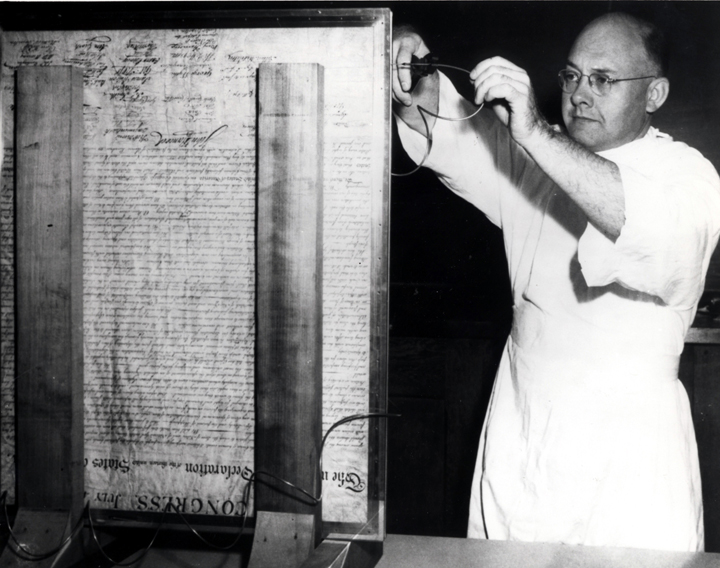
In conservation, library and archival science, preservation is a set of preventive conservation activities aimed at prolonging the life of a record, book, or object while making as few changes as possible. Preservation activities vary widely and may include monitoring the condition of items, maintaining the temperature and humidity in collection storage areas, writing a plan in case of emergencies, digitizing items, writing relevant metadata, and increasing accessibility. Preservation, in this definition, is practiced in a library or an archive by a conservator, librarian, archivist, or other professional when they perceive a collection or record is in need of maintenance.
Preservation should be distinguished from interventive conservation and restoration, which refers to the treatment and repair of individual items to slow the process of decay, or restore them to a usable state. "Preventive conservation" is used interchangeably with "preservation".
A relatively new concept, digitization, has been hailed as a way to preserve historical items for future use. "Digitizing refers to the process of converting analog materials into digital form."
For manuscripts, digitization is achieved through scanning an item and saving it to a digital format. For example, the Google Book Search program has partnered with over forty libraries around the world to digitize books. The goal of this library partnership project is to "make it easier for people to find relevant books – specifically, books they wouldn't find any other way such as those that are out of print – while carefully respecting authors' and publishers' copyrights."
Although digitization seems to be a promising area for future preservation, there are also problems. The main problems are that digital space costs money, media and file formats may become obsolete, and backwards compatibility is not guaranteed. Higher-quality images take a longer time to scan, but are often more valuable for future use. Fragile items are often more difficult or more expensive to scan, which creates a selection problem for preservationists where they must decide if digital access in the future is worth potentially damaging the item during the scanning process. Other problems include scan quality, redundancy of digitized books among different libraries, and copyright law.
However, many of these problems are being solved through educational initiatives. Educational programs are tailoring themselves to fit preservation needs and help new students understand preservation practices. Programs teaching graduate students about digital librarianship are especially important.
Groups such as the Digital Preservation Network strive to ensure that "the complete scholarly record is preserved for future generations". The Library of Congress maintains a Sustainability of Digital Formats web site that educates institutions on various aspects of preservation: most notably, on approximately 200 digital format types and which are most likely to last into the future.
Digital Preservation is another name for digitization, and is the term more commonly used in archival courses. The main goal of digital preservation is to guarantee that people will have access to the digitally preserved materials long into the future.
Hub AI
Preservation (library and archive) AI simulator
(@Preservation (library and archive)_simulator)
Preservation (library and archive)
In conservation, library and archival science, preservation is a set of preventive conservation activities aimed at prolonging the life of a record, book, or object while making as few changes as possible. Preservation activities vary widely and may include monitoring the condition of items, maintaining the temperature and humidity in collection storage areas, writing a plan in case of emergencies, digitizing items, writing relevant metadata, and increasing accessibility. Preservation, in this definition, is practiced in a library or an archive by a conservator, librarian, archivist, or other professional when they perceive a collection or record is in need of maintenance.
Preservation should be distinguished from interventive conservation and restoration, which refers to the treatment and repair of individual items to slow the process of decay, or restore them to a usable state. "Preventive conservation" is used interchangeably with "preservation".
A relatively new concept, digitization, has been hailed as a way to preserve historical items for future use. "Digitizing refers to the process of converting analog materials into digital form."
For manuscripts, digitization is achieved through scanning an item and saving it to a digital format. For example, the Google Book Search program has partnered with over forty libraries around the world to digitize books. The goal of this library partnership project is to "make it easier for people to find relevant books – specifically, books they wouldn't find any other way such as those that are out of print – while carefully respecting authors' and publishers' copyrights."
Although digitization seems to be a promising area for future preservation, there are also problems. The main problems are that digital space costs money, media and file formats may become obsolete, and backwards compatibility is not guaranteed. Higher-quality images take a longer time to scan, but are often more valuable for future use. Fragile items are often more difficult or more expensive to scan, which creates a selection problem for preservationists where they must decide if digital access in the future is worth potentially damaging the item during the scanning process. Other problems include scan quality, redundancy of digitized books among different libraries, and copyright law.
However, many of these problems are being solved through educational initiatives. Educational programs are tailoring themselves to fit preservation needs and help new students understand preservation practices. Programs teaching graduate students about digital librarianship are especially important.
Groups such as the Digital Preservation Network strive to ensure that "the complete scholarly record is preserved for future generations". The Library of Congress maintains a Sustainability of Digital Formats web site that educates institutions on various aspects of preservation: most notably, on approximately 200 digital format types and which are most likely to last into the future.
Digital Preservation is another name for digitization, and is the term more commonly used in archival courses. The main goal of digital preservation is to guarantee that people will have access to the digitally preserved materials long into the future.
Recent media