



Community hub
Recent from talks
Knowledge base stats:
Talk channels stats:
Members stats:
Primacy of Peter
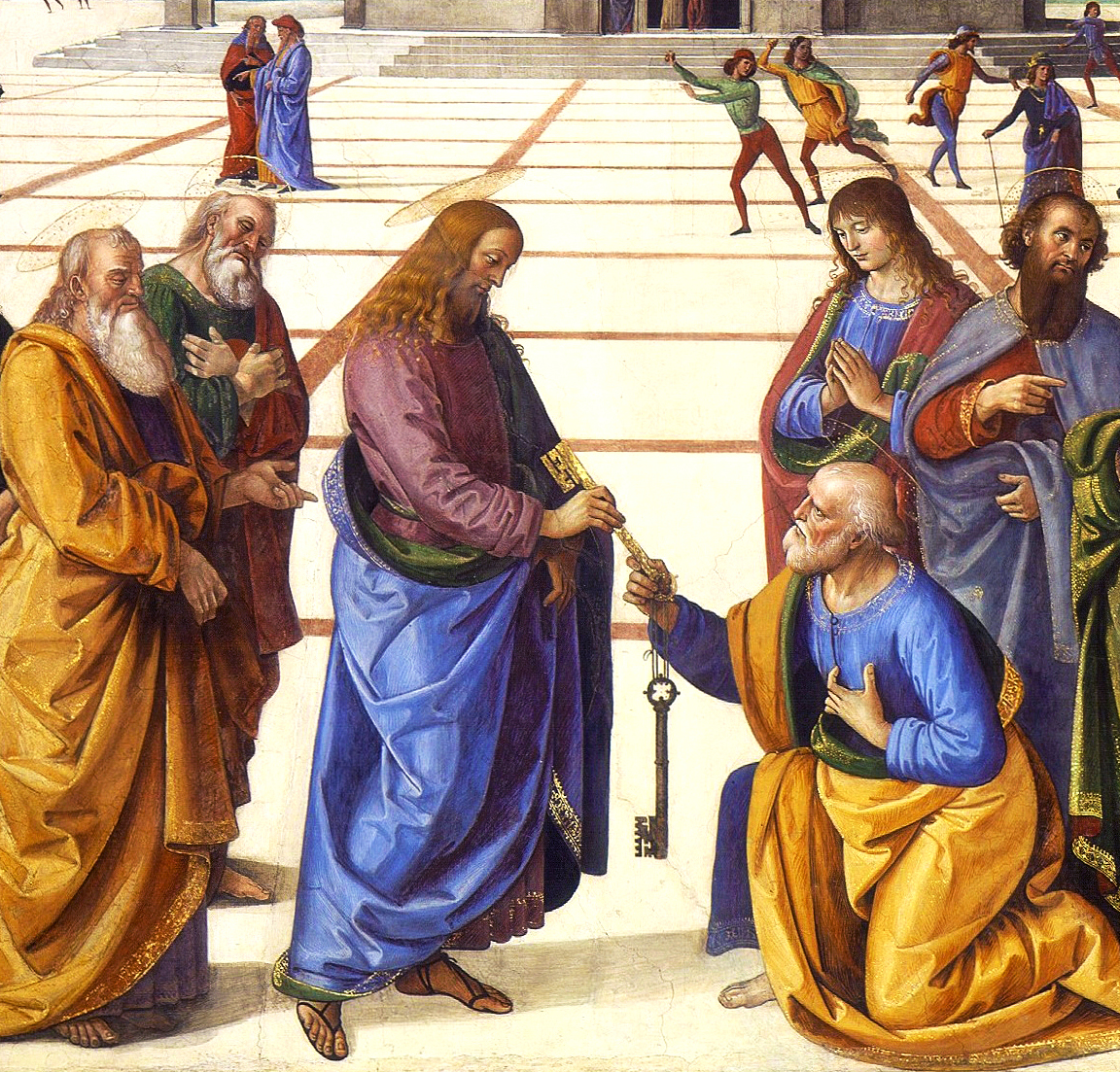
The primacy of Peter, also known as Petrine primacy (from the Latin: Petrus, lit. 'Peter'), is the position of preeminence that is attributed to Peter among the Twelve Apostles.
The Evangelical Dictionary of Theology illustrates the leading role that Peter played among the Apostles, speaking up on matters that concern them all, being called by Jesus by a name linking him with the rock on which Jesus would build his church, being charged with pastoring the flock of Christ, and taking the leading role in the initial church.
There is general agreement among scholars on the preeminence that the historical Peter held among the disciples of Jesus, making him "the most prominent and influential member of the Twelve during Jesus' ministry and in the early Church".
In one interpretation, the prominence that the New Testament and other early Christian writings attribute to Peter is due to their seeing him as a unifying factor in contrast to other figures identified with disputed interpretations of Christianity.
In Catholicism, it is held that the primacy of Peter is a basis for the primacy of the bishop of Rome over other bishops throughout the Catholic Church. This extension of Petrine primacy to popes is known as the primacy of the Bishop of Rome. This Catholic Church doctrine holds that the pope as Bishop of Rome has authority delegated from Jesus to rule over the entire Church. There are various views on the nature of the primacy and how it has been exercised and passed on. This belief makes a distinction between the personal prestige of Peter and the supremacy of the office of pope which Catholics believe Jesus instituted in the person of Peter.
In the New Testament, which some call the New Law or "New Greek Testament", Matthew 16:16–18 reports that Jesus changed Simon's name to Peter. Elsewhere in Scripture such a name change always denotes some change in status (e.g., Abram to Abraham, or Jacob to Israel). In the gospels, Peter is shown as a close associate of Jesus. His home at Capernaum was at Jesus' disposal, as was his fishing boat, when needed. Jesus cured Peter's mother-in-law, and Peter was among those who attended the wedding at Cana. He plays a prominent part in the account of the miraculous catch of fish, and the walking on the water. In John 20, when Peter and the other disciple run to the empty tomb, the other disciple arrives first, but it is Peter who enters the tomb.
Though among the twelve disciples, Peter is predominant in the first chapters of Acts of the Apostles, the focus shifting to Paul in the later chapters. James the Just, "the brother of the Lord" (Galatians 1:19), appears as the bishop of Jerusalem at the earliest church community in Acts 15. The Ecclesiastical History (4th century) states: "James, ... was the first (as the records tell us) to be elected to the episcopal throne of the Jerusalem church. ... Clement, in Outlines Book VI, puts it thus, 'Peter, James and John, after the Ascension of the Saviour, did not claim pre-eminence because the Saviour had especially honored them, but chose James the Righteous as Bishop of Jerusalem. ... James the Righteous, John, and Peter were entrusted by the Lord after his resurrection with the higher knowledge. They imparted it to the other apostles, and the other apostles to the seventy...'"
For Catholics, St. Peter is commonly considered the first Bishop of Jerusalem. However, they believe the bishop of Jerusalem was not by that fact the head of the Catholic church, since the leadership rested in Peter as the "Rock" and "Chief Shepherd". Catholics who believe Peter was the first bishop of Jerusalem also believe he entrusted the community to James when he was forced to leave Jerusalem, due to Herod Agrippa's persecution.
Hub AI
Primacy of Peter AI simulator
(@Primacy of Peter_simulator)
Primacy of Peter
The primacy of Peter, also known as Petrine primacy (from the Latin: Petrus, lit. 'Peter'), is the position of preeminence that is attributed to Peter among the Twelve Apostles.
The Evangelical Dictionary of Theology illustrates the leading role that Peter played among the Apostles, speaking up on matters that concern them all, being called by Jesus by a name linking him with the rock on which Jesus would build his church, being charged with pastoring the flock of Christ, and taking the leading role in the initial church.
There is general agreement among scholars on the preeminence that the historical Peter held among the disciples of Jesus, making him "the most prominent and influential member of the Twelve during Jesus' ministry and in the early Church".
In one interpretation, the prominence that the New Testament and other early Christian writings attribute to Peter is due to their seeing him as a unifying factor in contrast to other figures identified with disputed interpretations of Christianity.
In Catholicism, it is held that the primacy of Peter is a basis for the primacy of the bishop of Rome over other bishops throughout the Catholic Church. This extension of Petrine primacy to popes is known as the primacy of the Bishop of Rome. This Catholic Church doctrine holds that the pope as Bishop of Rome has authority delegated from Jesus to rule over the entire Church. There are various views on the nature of the primacy and how it has been exercised and passed on. This belief makes a distinction between the personal prestige of Peter and the supremacy of the office of pope which Catholics believe Jesus instituted in the person of Peter.
In the New Testament, which some call the New Law or "New Greek Testament", Matthew 16:16–18 reports that Jesus changed Simon's name to Peter. Elsewhere in Scripture such a name change always denotes some change in status (e.g., Abram to Abraham, or Jacob to Israel). In the gospels, Peter is shown as a close associate of Jesus. His home at Capernaum was at Jesus' disposal, as was his fishing boat, when needed. Jesus cured Peter's mother-in-law, and Peter was among those who attended the wedding at Cana. He plays a prominent part in the account of the miraculous catch of fish, and the walking on the water. In John 20, when Peter and the other disciple run to the empty tomb, the other disciple arrives first, but it is Peter who enters the tomb.
Though among the twelve disciples, Peter is predominant in the first chapters of Acts of the Apostles, the focus shifting to Paul in the later chapters. James the Just, "the brother of the Lord" (Galatians 1:19), appears as the bishop of Jerusalem at the earliest church community in Acts 15. The Ecclesiastical History (4th century) states: "James, ... was the first (as the records tell us) to be elected to the episcopal throne of the Jerusalem church. ... Clement, in Outlines Book VI, puts it thus, 'Peter, James and John, after the Ascension of the Saviour, did not claim pre-eminence because the Saviour had especially honored them, but chose James the Righteous as Bishop of Jerusalem. ... James the Righteous, John, and Peter were entrusted by the Lord after his resurrection with the higher knowledge. They imparted it to the other apostles, and the other apostles to the seventy...'"
For Catholics, St. Peter is commonly considered the first Bishop of Jerusalem. However, they believe the bishop of Jerusalem was not by that fact the head of the Catholic church, since the leadership rested in Peter as the "Rock" and "Chief Shepherd". Catholics who believe Peter was the first bishop of Jerusalem also believe he entrusted the community to James when he was forced to leave Jerusalem, due to Herod Agrippa's persecution.