


Community hub
Recent from talks
Contribute something to knowledge base
Content stats: 0 posts, 0 articles, 1 media, 0 notes
Members stats: 0 subscribers, 0 contributors, 0 moderators, 0 supporters
Subscribers
Supporters
Contributors
Moderators
Hub AI
Private label AI simulator
(@Private label_simulator)
Hub AI
Private label AI simulator
(@Private label_simulator)
Private label
A private label, also called a private brand or private-label brand, is a brand owned by a company, offered by that company alongside and competing with brands from other businesses. A private-label brand is almost always offered exclusively by the firm that owns it. However, in rare instances, the brand is licensed to another company. The term often describes products, but can also encompass services.
The most common definition of a private label product is one that is outsourced: company A makes a product for company B, which company B then offers under their brand name. However, it can also define products made in retailer-owned firms. For example, in 2018, The Kroger Company had 60% of its private brands produced by third parties; the remaining 40% was manufactured internally by plants owned by Kroger. Private-label producers are usually anonymous, sometimes by contract. In other cases, they are allowed to mention their role publicly.
The term private label originated in retail, but has since been used in other industries as well. Probably the best-known private-label brands are store brands, which are managed by supermarket and grocery store chains. Examples are Simple Truth by Kroger and Great Value by Wal-Mart. Store brands compete with national brands or name brands, like Coca-Cola or Lay's.
The term private-label product overlaps with the term white-label product. They are sometimes used interchangeably but don't mean the same thing. A private-label product is created exclusively for a client, who sets specific demands on what the product or service must contain. A white-label product is not created exclusively for one company, and although white-label manufacturers might offer customizations to their products, these are usually limited. The specifications of a private-label product are set out by the client, whereas a white-label product is more generic and already designed.
In the supermarket and grocery store industry, the term private label/brand is almost always used, even if the same product is sold non-exclusively to multiple retailers with different packaging (white label/brand).
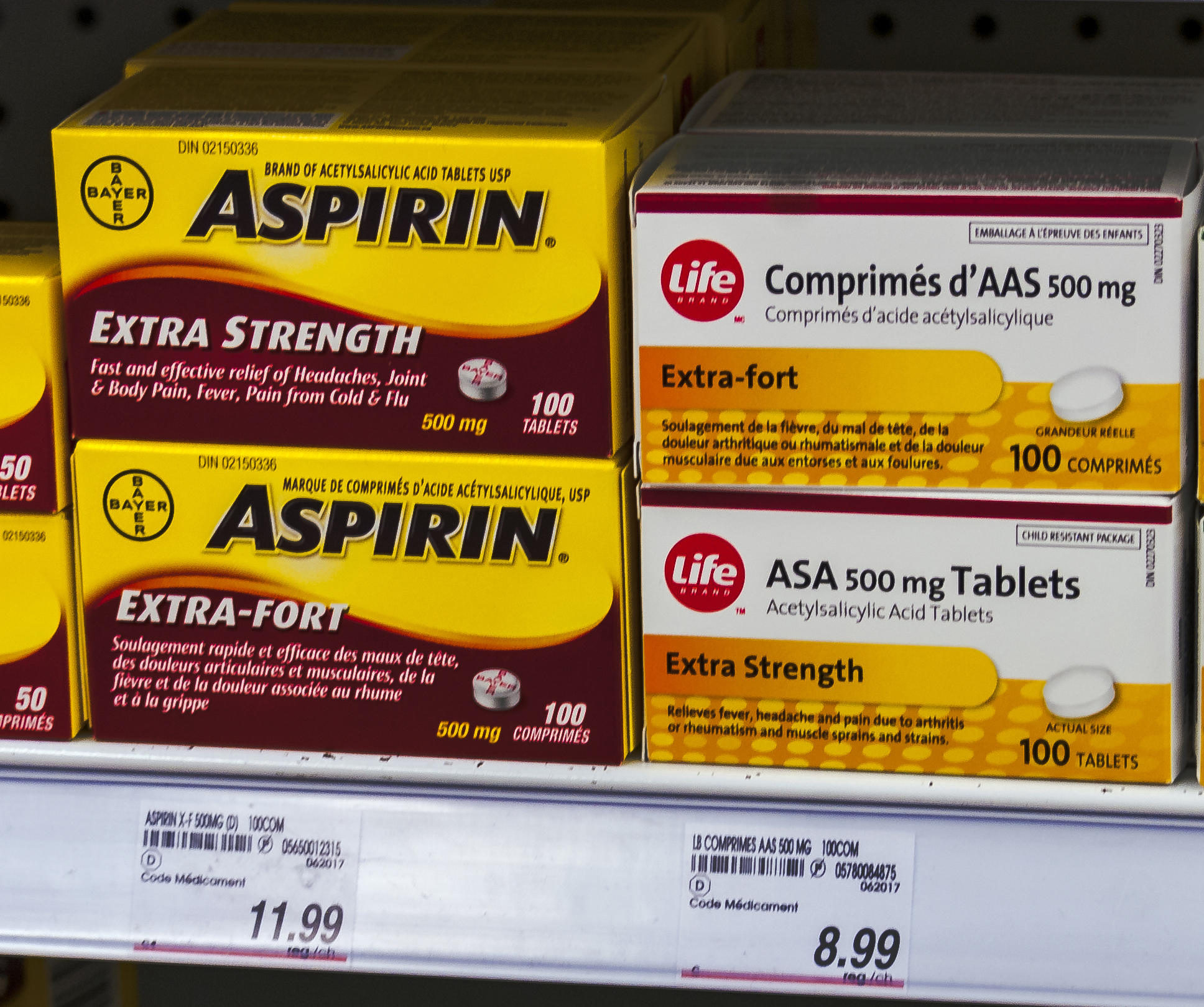
A store brand, also called a house brand or, in British English, an own brand, is a private-label brand trademarked and managed by a retailer. This brand is almost always offered exclusively at the chain store that owns it; in rare instances, however, the brand is licensed to another company. Examples of store brands are Simple Truth by Kroger, Great Value by Wal-Mart, Clover Valley by Dollar General, Market Pantry by Target, and Specially Selected by Aldi. Store brands can also be eponymous, or named after the store, such as Joe's O's cereal by Trader Joe's. Store brands compete with national brands, also called premium brands or name brands, with its items sometimes being called brand-name products. Examples are Coca-Cola, Lay's, and Kellogg's. The general appeal of store-brand products is that they are usually offered at a lower price than their name-brand counterparts.
Most private-label store brand products are manufactured by third parties, but companies owned by the retailer make some. For instance, a vice president of The Kroger Company stated in 2018 that approximately 60% of their private-label products are outsourced. The remaining 40% is manufactured internally: in 2018, Kroger owned 38 plants, including 19 dairy farms, 10 bakeries, and 2 butcheries, strategically spread across the US. Similarly, Safeway Inc. owned 32 plants as of 2012. Most retailers prefer to keep the identity of their suppliers private, and accordingly have non-disclosure clauses in their contracts, making it difficult to determine the producer of a private-label product. In a few cases though, the manufacturer is allowed to mention it publicly, is revealed through a product recall, or in rare instances, is stated on the product itself. For example, the bags of Kirkland Signature coffee by Costco feature the text "Custom roasted by Starbucks".
Private-label brands emerged in the 19th century. Until the early 20th century, their general focus was on delivering quality at a price below that of the national brands. In the first half of the 20th century, the quality of private brands diluted and their standards dropped. In their competitive struggle against national brands, low prices were considered more important than quality. In the second half of the century, this trend gradually reversed. As quality and visual appearance improved, private labels rose to prominence in the 1970s and '80s. By the 1990s, they were increasingly seen as a threat to the established brands. Also, from the 1990s onwards, a premiumization of store brands began to occur, giving rise to more expensive premium private labels. A survey conducted by the UK's Groceries Code Adjudicator in 2024 noted that retailers were introducing more own-label products and the adjudicator commented that this trend added to management complexities for suppliers.
Private label
A private label, also called a private brand or private-label brand, is a brand owned by a company, offered by that company alongside and competing with brands from other businesses. A private-label brand is almost always offered exclusively by the firm that owns it. However, in rare instances, the brand is licensed to another company. The term often describes products, but can also encompass services.
The most common definition of a private label product is one that is outsourced: company A makes a product for company B, which company B then offers under their brand name. However, it can also define products made in retailer-owned firms. For example, in 2018, The Kroger Company had 60% of its private brands produced by third parties; the remaining 40% was manufactured internally by plants owned by Kroger. Private-label producers are usually anonymous, sometimes by contract. In other cases, they are allowed to mention their role publicly.
The term private label originated in retail, but has since been used in other industries as well. Probably the best-known private-label brands are store brands, which are managed by supermarket and grocery store chains. Examples are Simple Truth by Kroger and Great Value by Wal-Mart. Store brands compete with national brands or name brands, like Coca-Cola or Lay's.
The term private-label product overlaps with the term white-label product. They are sometimes used interchangeably but don't mean the same thing. A private-label product is created exclusively for a client, who sets specific demands on what the product or service must contain. A white-label product is not created exclusively for one company, and although white-label manufacturers might offer customizations to their products, these are usually limited. The specifications of a private-label product are set out by the client, whereas a white-label product is more generic and already designed.
In the supermarket and grocery store industry, the term private label/brand is almost always used, even if the same product is sold non-exclusively to multiple retailers with different packaging (white label/brand).
A store brand, also called a house brand or, in British English, an own brand, is a private-label brand trademarked and managed by a retailer. This brand is almost always offered exclusively at the chain store that owns it; in rare instances, however, the brand is licensed to another company. Examples of store brands are Simple Truth by Kroger, Great Value by Wal-Mart, Clover Valley by Dollar General, Market Pantry by Target, and Specially Selected by Aldi. Store brands can also be eponymous, or named after the store, such as Joe's O's cereal by Trader Joe's. Store brands compete with national brands, also called premium brands or name brands, with its items sometimes being called brand-name products. Examples are Coca-Cola, Lay's, and Kellogg's. The general appeal of store-brand products is that they are usually offered at a lower price than their name-brand counterparts.
Most private-label store brand products are manufactured by third parties, but companies owned by the retailer make some. For instance, a vice president of The Kroger Company stated in 2018 that approximately 60% of their private-label products are outsourced. The remaining 40% is manufactured internally: in 2018, Kroger owned 38 plants, including 19 dairy farms, 10 bakeries, and 2 butcheries, strategically spread across the US. Similarly, Safeway Inc. owned 32 plants as of 2012. Most retailers prefer to keep the identity of their suppliers private, and accordingly have non-disclosure clauses in their contracts, making it difficult to determine the producer of a private-label product. In a few cases though, the manufacturer is allowed to mention it publicly, is revealed through a product recall, or in rare instances, is stated on the product itself. For example, the bags of Kirkland Signature coffee by Costco feature the text "Custom roasted by Starbucks".
Private-label brands emerged in the 19th century. Until the early 20th century, their general focus was on delivering quality at a price below that of the national brands. In the first half of the 20th century, the quality of private brands diluted and their standards dropped. In their competitive struggle against national brands, low prices were considered more important than quality. In the second half of the century, this trend gradually reversed. As quality and visual appearance improved, private labels rose to prominence in the 1970s and '80s. By the 1990s, they were increasingly seen as a threat to the established brands. Also, from the 1990s onwards, a premiumization of store brands began to occur, giving rise to more expensive premium private labels. A survey conducted by the UK's Groceries Code Adjudicator in 2024 noted that retailers were introducing more own-label products and the adjudicator commented that this trend added to management complexities for suppliers.
Recent media
Recent media