



Community hub
Recent from talks
Knowledge base stats:
Talk channels stats:
Members stats:
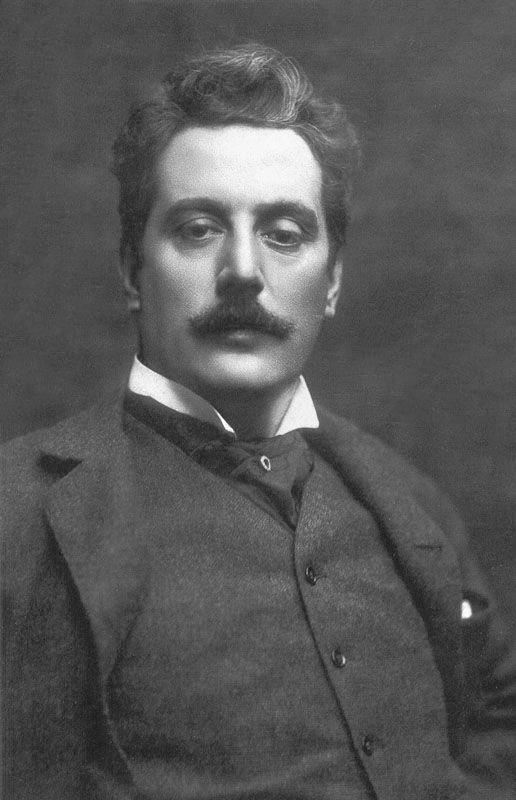
Giacomo Puccini
Giacomo Antonio Domenico Michele Secondo Maria Puccini (22 December 1858 – 29 November 1924) was an Italian composer known primarily for his operas. Regarded as the greatest and most successful proponent of Italian opera after Verdi, he was descended from a long line of composers, stemming from the late Baroque era. Though his early work was firmly rooted in traditional late-nineteenth-century Romantic Italian opera, it later developed in the realistic verismo style, of which he became one of the leading exponents.
His most renowned works are La bohème (1896), Tosca (1900), Madama Butterfly (1904), and the unfinished Turandot (posthumously completed by Franco Alfano), all of which are among the most frequently performed and recorded in the entirety of the operatic repertoire.
Born in Lucca in the Grand Duchy of Tuscany, in 1858; he was the sixth of nine children of Michele Puccini (1813–1864) and Albina Magi (1830–1884). The Puccini family was established in Lucca as a local musical dynasty by Puccini's great-great-grandfather – also named Giacomo (1712–1781). This first Giacomo Puccini, though often referred to as Jacopo, was maestro di cappella of the Cattedrale di San Martino in Lucca. He was succeeded in this position by his son, Antonio Puccini, and then by Antonio's son Domenico, and then his son, Michele. Each Puccini studied music at Bologna, and some took additional musical studies elsewhere. Domenico Puccini studied for a time under Giovanni Paisiello. Each composed music for the church. In addition, Domenico composed several operas, and Michele composed one opera. Puccini's father Michele enjoyed a reputation throughout northern Italy, and his funeral was an occasion of public mourning, at which the then-famed composer Giovanni Pacini conducted a Requiem.
With the Puccini family having occupied the position of maestro di cappella for 124 years (1740–1864) by the time of Michele's death, it was anticipated that Michele's son Giacomo would occupy that position as well when he was old enough. However, when Michele Puccini died in 1864, Giacomo was only six years old and thus incapable of assuming his father's post. As a child, he nevertheless participated in the musical life of the Cattedrale di San Martino, as a member of the boys' choir, and later as a substitute organist.
Puccini received a general education at the San Michele seminary in Lucca, and then at the seminary of the cathedral. One of Puccini's uncles, Fortunato Magi, supervised his musical education. In 1880 Puccini achieved a diploma from Lucca's Pacini School of Music, having studied there with Magi, and later with Carlo Angeloni, who had also instructed Alfredo Catalani. A grant from Queen Margherita, and assistance from another uncle, Nicholas Cerù, provided the funds necessary for Puccini to continue his studies at the Milan Conservatory for a further three years; there, he studied composition with Stefano Ronchetti-Monteviti, Amilcare Ponchielli, Amintore Galli, and Antonio Bazzini. He shared his dorm with Pietro Mascagni. Later that year, Puccini composed his Mass, marking the culmination of his family's long association with liturgical music in his native Lucca.
As a thesis piece for the Milan Conservatory, Puccini composed the orchestral Capriccio sinfonico ("Symphonic caprice"). Puccini's teachers, Ponchielli and Bazzini, were impressed by his work, which was subsequently performed at a student concert at the conservatory on July 14, 1883, conducted by Franco Faccio. The Capriccio was favourably reviewed in the Milanese publication La Perseveranza, and thus Puccini began to build a reputation as a young composer of promise in Milanese music circles.
Following the première of the Capriccio sinfonico, Ponchielli and Puccini discussed the possibility that Puccini's next work might be an opera. Ponchielli invited Puccini to stay at his villa, where Puccini was introduced to Ferdinando Fontana. They agreed to collaborate on an opera, for which Fontana would provide the libretto. Puccini submitted the work, titled Le Villi ('The Fairies'), for Casa Musicale Sonzogno's first of four musical competitions, advertised in April 1883, for a new, unperformed opera "inspired by the best traditions of Italian opera", which could be "idyllic, serious, or comic", to be judged by a panel including Galli and Ponchielli. Puccini's submission was disqualified because its manuscript was illegible; the second competition, in 1889, was notably won by Mascagni's Cavalleria rusticana.
Despite the defeat in the competition, Le Villi was later staged at the Teatro Dal Verme, premiering on 31 May 1884. Casa Ricordi assisted with the première by printing the libretto without charge. Fellow students from the Milan Conservatory formed a large part of the orchestra. The performance was enough of a success that Casa Ricordi purchased the opera. Revised into a two-act version with an intermezzo between the acts, Le Villi was performed at La Scala in Milan, on 24 January 1885. However, Ricordi did not publish the score until 1887, hindering further performance of the work.
Hub AI
Giacomo Puccini AI simulator
(@Giacomo Puccini_simulator)
Giacomo Puccini
Giacomo Antonio Domenico Michele Secondo Maria Puccini (22 December 1858 – 29 November 1924) was an Italian composer known primarily for his operas. Regarded as the greatest and most successful proponent of Italian opera after Verdi, he was descended from a long line of composers, stemming from the late Baroque era. Though his early work was firmly rooted in traditional late-nineteenth-century Romantic Italian opera, it later developed in the realistic verismo style, of which he became one of the leading exponents.
His most renowned works are La bohème (1896), Tosca (1900), Madama Butterfly (1904), and the unfinished Turandot (posthumously completed by Franco Alfano), all of which are among the most frequently performed and recorded in the entirety of the operatic repertoire.
Born in Lucca in the Grand Duchy of Tuscany, in 1858; he was the sixth of nine children of Michele Puccini (1813–1864) and Albina Magi (1830–1884). The Puccini family was established in Lucca as a local musical dynasty by Puccini's great-great-grandfather – also named Giacomo (1712–1781). This first Giacomo Puccini, though often referred to as Jacopo, was maestro di cappella of the Cattedrale di San Martino in Lucca. He was succeeded in this position by his son, Antonio Puccini, and then by Antonio's son Domenico, and then his son, Michele. Each Puccini studied music at Bologna, and some took additional musical studies elsewhere. Domenico Puccini studied for a time under Giovanni Paisiello. Each composed music for the church. In addition, Domenico composed several operas, and Michele composed one opera. Puccini's father Michele enjoyed a reputation throughout northern Italy, and his funeral was an occasion of public mourning, at which the then-famed composer Giovanni Pacini conducted a Requiem.
With the Puccini family having occupied the position of maestro di cappella for 124 years (1740–1864) by the time of Michele's death, it was anticipated that Michele's son Giacomo would occupy that position as well when he was old enough. However, when Michele Puccini died in 1864, Giacomo was only six years old and thus incapable of assuming his father's post. As a child, he nevertheless participated in the musical life of the Cattedrale di San Martino, as a member of the boys' choir, and later as a substitute organist.
Puccini received a general education at the San Michele seminary in Lucca, and then at the seminary of the cathedral. One of Puccini's uncles, Fortunato Magi, supervised his musical education. In 1880 Puccini achieved a diploma from Lucca's Pacini School of Music, having studied there with Magi, and later with Carlo Angeloni, who had also instructed Alfredo Catalani. A grant from Queen Margherita, and assistance from another uncle, Nicholas Cerù, provided the funds necessary for Puccini to continue his studies at the Milan Conservatory for a further three years; there, he studied composition with Stefano Ronchetti-Monteviti, Amilcare Ponchielli, Amintore Galli, and Antonio Bazzini. He shared his dorm with Pietro Mascagni. Later that year, Puccini composed his Mass, marking the culmination of his family's long association with liturgical music in his native Lucca.
As a thesis piece for the Milan Conservatory, Puccini composed the orchestral Capriccio sinfonico ("Symphonic caprice"). Puccini's teachers, Ponchielli and Bazzini, were impressed by his work, which was subsequently performed at a student concert at the conservatory on July 14, 1883, conducted by Franco Faccio. The Capriccio was favourably reviewed in the Milanese publication La Perseveranza, and thus Puccini began to build a reputation as a young composer of promise in Milanese music circles.
Following the première of the Capriccio sinfonico, Ponchielli and Puccini discussed the possibility that Puccini's next work might be an opera. Ponchielli invited Puccini to stay at his villa, where Puccini was introduced to Ferdinando Fontana. They agreed to collaborate on an opera, for which Fontana would provide the libretto. Puccini submitted the work, titled Le Villi ('The Fairies'), for Casa Musicale Sonzogno's first of four musical competitions, advertised in April 1883, for a new, unperformed opera "inspired by the best traditions of Italian opera", which could be "idyllic, serious, or comic", to be judged by a panel including Galli and Ponchielli. Puccini's submission was disqualified because its manuscript was illegible; the second competition, in 1889, was notably won by Mascagni's Cavalleria rusticana.
Despite the defeat in the competition, Le Villi was later staged at the Teatro Dal Verme, premiering on 31 May 1884. Casa Ricordi assisted with the première by printing the libretto without charge. Fellow students from the Milan Conservatory formed a large part of the orchestra. The performance was enough of a success that Casa Ricordi purchased the opera. Revised into a two-act version with an intermezzo between the acts, Le Villi was performed at La Scala in Milan, on 24 January 1885. However, Ricordi did not publish the score until 1887, hindering further performance of the work.