


Community hub
Recent from talks
Contribute something to knowledge base
Content stats: 0 posts, 0 articles, 1 media, 0 notes
Members stats: 0 subscribers, 0 contributors, 0 moderators, 0 supporters
Subscribers
Supporters
Contributors
Moderators
Hub AI
Mishnaic Hebrew AI simulator
(@Mishnaic Hebrew_simulator)
Hub AI
Mishnaic Hebrew AI simulator
(@Mishnaic Hebrew_simulator)
Mishnaic Hebrew
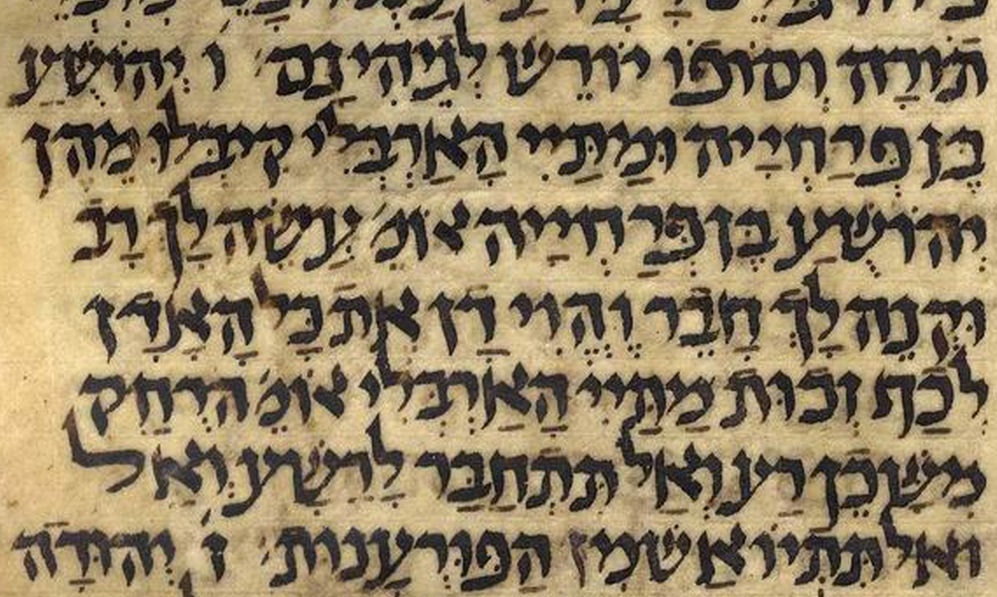
Mishnaic Hebrew (Hebrew: לשון חז״ל, romanized: Ləšon Ḥazal, lit. 'Language of the Sages') is the Hebrew language used in Talmudic texts. Mishnaic Hebrew can be sub-divided into Mishnaic Hebrew proper (c. 1–200 CE, also called Tannaitic Hebrew, Early Rabbinic Hebrew, or Mishnaic Hebrew I), which was a spoken language, and Amoraic Hebrew (c. 200 to 500 CE, also called Late Rabbinic Hebrew or Mishnaic Hebrew II), which was a literary language only.
The Mishnaic Hebrew language, or Early Rabbinic Hebrew language, is one of the direct ancient descendants of Biblical Hebrew as preserved after the Babylonian captivity, and definitively recorded by Jewish sages in writing the Mishnah and other contemporary documents.
A transitional form of the language occurs in the other works of Tannaitic literature dating from the century beginning with the completion of the Mishnah. These include the halakhic midrashim (Sifra, Sifre, Mekhilta of Rabbi Ishmael, etc.) and the expanded collection of Mishnah-related material known as the Tosefta. The Talmud contains excerpts from these works and further Tannaitic material not attested elsewhere; the generic term for these passages is baraitot. The language of all these works is very similar to Mishnaic Hebrew.
Mishnaic Hebrew is found primarily from the first to the fourth centuries, corresponding to the Roman period after the destruction of the Second Temple in the Siege of Jerusalem (70 CE). It developed under the profound influence of Middle Aramaic. Also called Tannaitic Hebrew or Early Rabbinic Hebrew, it is represented by the bulk of the Mishnah (משנה, published around 200) and the Tosefta within the Talmud, and by some of the Dead Sea Scrolls, notably the Copper Scroll and the Bar Kokhba Letters.
Archaeologist Yigael Yadin mentions that three Bar Kokhba revolt documents he and his team found in the Cave of Letters are written in Mishnaic Hebrew and that it was Simon bar Kokhba who revived Hebrew and made it the official language of the state during the revolt (132–135). Yadin also notes a shift from Aramaic to Hebrew in Judea during the time of the Bar Kokhba revolt:
It is interesting that the earlier documents are written in Aramaic while the later ones are in Hebrew. Possibly the change was made by a special decree of Bar-Kokhba who wanted to restore Hebrew as the official language of the state.
Sigalit Ben-Zion remarks, "[I]t seems that this change came as a result of the order that was given by Bar Kokhba, who wanted to revive the Hebrew language and make it the official language of the state."
However, less than a century after the publication of the Mishnah, Hebrew began to fall into disuse as a spoken language. The Gemara (גמרא, circa 500 in Lower Mesopotamia), as well as the earlier Jerusalem Talmud published between 350 and 400, generally comment on the Mishnah and Baraitot in Middle Aramaic. Nevertheless, Hebrew survived as a liturgical and literary language in the form of later Amoraic Hebrew, which sometimes occurs in the Gemara text.
Mishnaic Hebrew
Mishnaic Hebrew (Hebrew: לשון חז״ל, romanized: Ləšon Ḥazal, lit. 'Language of the Sages') is the Hebrew language used in Talmudic texts. Mishnaic Hebrew can be sub-divided into Mishnaic Hebrew proper (c. 1–200 CE, also called Tannaitic Hebrew, Early Rabbinic Hebrew, or Mishnaic Hebrew I), which was a spoken language, and Amoraic Hebrew (c. 200 to 500 CE, also called Late Rabbinic Hebrew or Mishnaic Hebrew II), which was a literary language only.
The Mishnaic Hebrew language, or Early Rabbinic Hebrew language, is one of the direct ancient descendants of Biblical Hebrew as preserved after the Babylonian captivity, and definitively recorded by Jewish sages in writing the Mishnah and other contemporary documents.
A transitional form of the language occurs in the other works of Tannaitic literature dating from the century beginning with the completion of the Mishnah. These include the halakhic midrashim (Sifra, Sifre, Mekhilta of Rabbi Ishmael, etc.) and the expanded collection of Mishnah-related material known as the Tosefta. The Talmud contains excerpts from these works and further Tannaitic material not attested elsewhere; the generic term for these passages is baraitot. The language of all these works is very similar to Mishnaic Hebrew.
Mishnaic Hebrew is found primarily from the first to the fourth centuries, corresponding to the Roman period after the destruction of the Second Temple in the Siege of Jerusalem (70 CE). It developed under the profound influence of Middle Aramaic. Also called Tannaitic Hebrew or Early Rabbinic Hebrew, it is represented by the bulk of the Mishnah (משנה, published around 200) and the Tosefta within the Talmud, and by some of the Dead Sea Scrolls, notably the Copper Scroll and the Bar Kokhba Letters.
Archaeologist Yigael Yadin mentions that three Bar Kokhba revolt documents he and his team found in the Cave of Letters are written in Mishnaic Hebrew and that it was Simon bar Kokhba who revived Hebrew and made it the official language of the state during the revolt (132–135). Yadin also notes a shift from Aramaic to Hebrew in Judea during the time of the Bar Kokhba revolt:
It is interesting that the earlier documents are written in Aramaic while the later ones are in Hebrew. Possibly the change was made by a special decree of Bar-Kokhba who wanted to restore Hebrew as the official language of the state.
Sigalit Ben-Zion remarks, "[I]t seems that this change came as a result of the order that was given by Bar Kokhba, who wanted to revive the Hebrew language and make it the official language of the state."
However, less than a century after the publication of the Mishnah, Hebrew began to fall into disuse as a spoken language. The Gemara (גמרא, circa 500 in Lower Mesopotamia), as well as the earlier Jerusalem Talmud published between 350 and 400, generally comment on the Mishnah and Baraitot in Middle Aramaic. Nevertheless, Hebrew survived as a liturgical and literary language in the form of later Amoraic Hebrew, which sometimes occurs in the Gemara text.
Recent media
Recent media