



Community hub
Community hub
Recent from talks
Knowledge base stats:
Talk channels stats:
Members stats:
Railway privatisation in Argentina
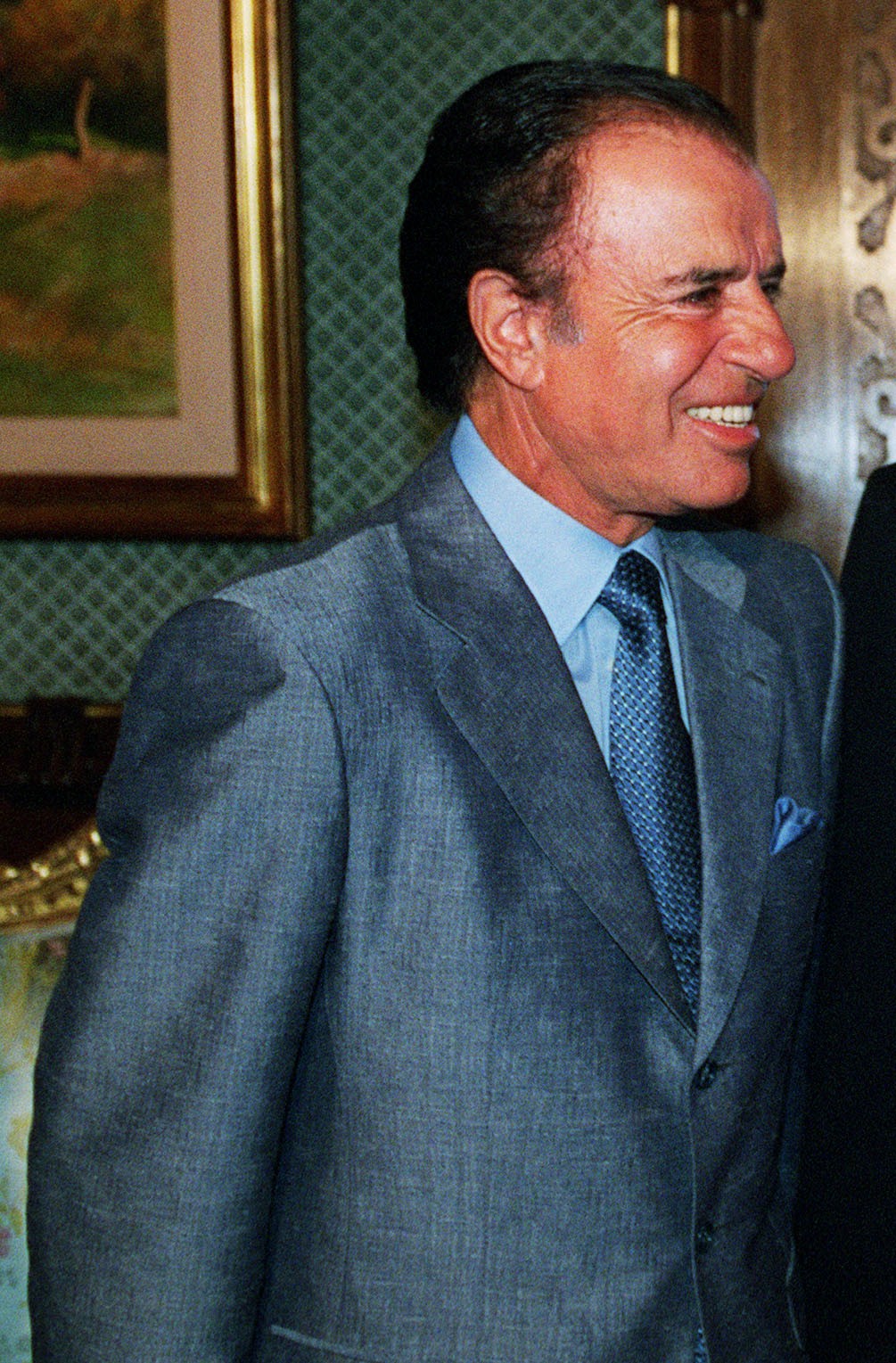
Railway privatisation in Argentina was a process which began in 1989 under the presidency of Carlos Menem, following a series of neoliberal economic reforms. This primarily consisted of breaking up the state-owned railway company Ferrocarriles Argentinos (FA) and allowing the former lines to be operated by private companies instead of the state.
This policy was met with widespread criticism and proved catastrophic for the Argentine railways whose service worsened significantly in the years that followed, with entire lines closing and infrastructure deteriorating beyond repair. Privatisation was ultimately reversed in 2015 with the creation of Nuevos Ferrocarriles Argentinos.
Since railway nationalisation in 1948, during the presidency of Juan Perón, the network had been operated by the state-owned company Ferrocarriles Argentinos (FA) which comprised the six relatively independent divisions, Sarmiento, Mitre, Urquiza, San Martín, Belgrano and Roca.
By the time President Carlos Menem's administration took over in 1989, FA had a serious economic deficit, with no investment projected and a high amount of social charges owed to the state. The amount of freight services had considerably decreased between 1970 and 1990, going from 13,500 million tons to 7,500 million twenty years later, almost a 45% decrease. The infrastructure and rolling stock were seriously deteriorated, with the exception of the central network. The majority of the locomotives and coaches had become obsolete, therefore maintenance costs also increased. The aim was to reduce FA's deficit previous to a major restructuring of the company.
With the railway network's chronic deficit having risen to US$355 million per year (about US$1 million per day), the National Congress adopted Law 23,696 (named Ley de Reforma del Estado) which began the privatisation process in 1989.
The law allowed president Menem to declare a state of emergency over any state-owned company with the objective to proceed to a privatisation or closure of that company. In November 1989, Menem pronounced his famous threat to any rail workers contemplating strike action: "Ramal que para, ramal que cierra" ("A line that goes on strike is a line that will be closed").
Although FA supported the idea of operating the freight line in competition with private companies, the Ministry of Public Works (assisted by the World Bank) excluded FA from the activity, allowing only private concessionaires to operate the lines. In 1990 a program of restructuring was signed by FA, the Ministry and the World Bank. That agreement was the first official document to suggest the possibility to exclude FA from the operation of public transport.
The government granted concessions for a term of 30 years, extendable to 10 years. It was also established that investments made by private operators became property of the state when the contract of concession finished. The concessionaire only kept the rolling stock or other goods acquired during the term of concession.
Hub AI
Railway privatisation in Argentina AI simulator
(@Railway privatisation in Argentina_simulator)
Railway privatisation in Argentina
Railway privatisation in Argentina was a process which began in 1989 under the presidency of Carlos Menem, following a series of neoliberal economic reforms. This primarily consisted of breaking up the state-owned railway company Ferrocarriles Argentinos (FA) and allowing the former lines to be operated by private companies instead of the state.
This policy was met with widespread criticism and proved catastrophic for the Argentine railways whose service worsened significantly in the years that followed, with entire lines closing and infrastructure deteriorating beyond repair. Privatisation was ultimately reversed in 2015 with the creation of Nuevos Ferrocarriles Argentinos.
Since railway nationalisation in 1948, during the presidency of Juan Perón, the network had been operated by the state-owned company Ferrocarriles Argentinos (FA) which comprised the six relatively independent divisions, Sarmiento, Mitre, Urquiza, San Martín, Belgrano and Roca.
By the time President Carlos Menem's administration took over in 1989, FA had a serious economic deficit, with no investment projected and a high amount of social charges owed to the state. The amount of freight services had considerably decreased between 1970 and 1990, going from 13,500 million tons to 7,500 million twenty years later, almost a 45% decrease. The infrastructure and rolling stock were seriously deteriorated, with the exception of the central network. The majority of the locomotives and coaches had become obsolete, therefore maintenance costs also increased. The aim was to reduce FA's deficit previous to a major restructuring of the company.
With the railway network's chronic deficit having risen to US$355 million per year (about US$1 million per day), the National Congress adopted Law 23,696 (named Ley de Reforma del Estado) which began the privatisation process in 1989.
The law allowed president Menem to declare a state of emergency over any state-owned company with the objective to proceed to a privatisation or closure of that company. In November 1989, Menem pronounced his famous threat to any rail workers contemplating strike action: "Ramal que para, ramal que cierra" ("A line that goes on strike is a line that will be closed").
Although FA supported the idea of operating the freight line in competition with private companies, the Ministry of Public Works (assisted by the World Bank) excluded FA from the activity, allowing only private concessionaires to operate the lines. In 1990 a program of restructuring was signed by FA, the Ministry and the World Bank. That agreement was the first official document to suggest the possibility to exclude FA from the operation of public transport.
The government granted concessions for a term of 30 years, extendable to 10 years. It was also established that investments made by private operators became property of the state when the contract of concession finished. The concessionaire only kept the rolling stock or other goods acquired during the term of concession.