
Recent from talks
Rainbow flag (LGBTQ)
Knowledge base stats:
Talk channels stats:
Members stats:
Rainbow flag (LGBTQ)
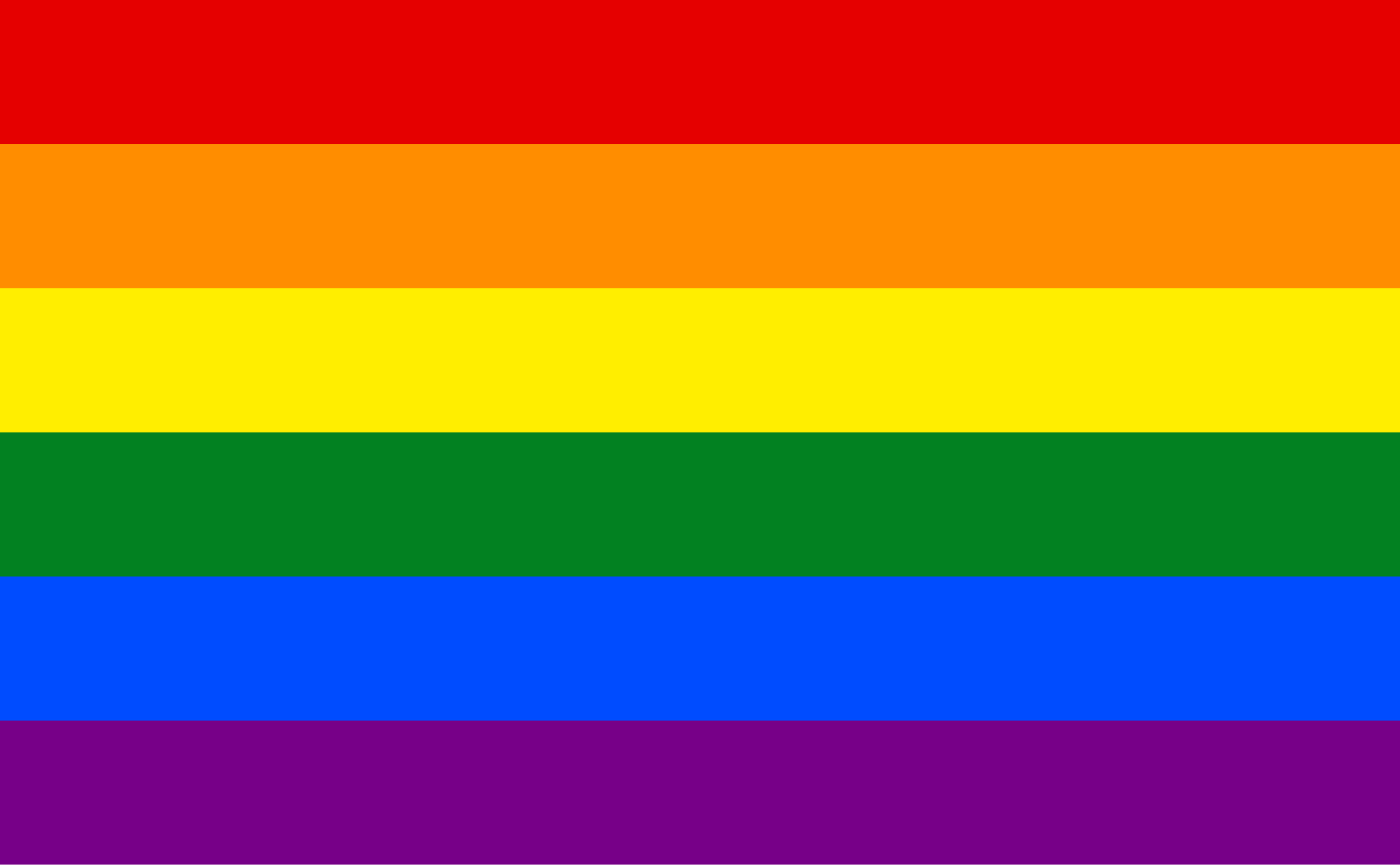
The rainbow flag or pride flag (formerly gay pride flag) is a symbol of LGBTQ pride and LGBTQ social movements, as well as a peace symbol. The colors reflect the diversity of the LGBTQ community and the spectrum of human sexuality and gender. Using a rainbow flag as a symbol of LGBTQ pride began in San Francisco, California and subsequently became common at LGBTQ rights events worldwide.
Originally devised by the artists Gilbert Baker, Lynn Segerblom, James McNamara and other activists, the design underwent several revisions after its debut in 1978, and continues to inspire variations. Although Baker's original rainbow flag had eight colors, from 1979 to the present day the most common variant consists of six stripes: red, orange, yellow, green, blue, and violet. The flag is typically displayed horizontally, with the red stripe on top, as it would be in a natural rainbow.
LGBTQ people and allies currently use rainbow flags and many rainbow-themed items and color schemes as an outward symbol of their identity or support. There are derivations of the rainbow flag that are used to focus attention on specific causes or groups within the community (e.g. transgender people, fighting the AIDS epidemic, inclusion of LGBTQ people of color). In addition to the rainbow, many other flags and symbols are used to communicate specific identities within the LGBTQ community.
Gilbert Baker was an American artist and activist known for designing the rainbow flag. Born in 1951 in Parsons, Kansas, Baker served in the United States Army from 1970 to 1972. After his discharge, he learned to sew and became involved in the gay rights movement in San Francisco.
Influenced by his friend and gay rights activist, Harvey Milk, Baker adopted Milk’s call for openness and truth among gay people. He saw the flag as a direct way to express presence and identity. At the urging of filmmaker Arthur J. Bressan Jr., Baker created the rainbow flag to serve as a symbol for the movement.
The first flags appeared on June 25, 1978, during the San Francisco Gay Freedom Day Parade celebration.
According to a profile published in the Bay Area Reporter in 1985, Baker "chose the rainbow motif because of its associations with the hippie movement of the Sixties but he notes that the use of the design dates all the way back to ancient Egypt". People have speculated that Baker was inspired by the Judy Garland song "Over the Rainbow" (Garland being among the first gay icons), but when asked, Baker said that it was "more about the Rolling Stones and their song 'She's a Rainbow'". Baker was likely influenced by the "Brotherhood Flag" (with five horizontal stripes to represent different races: red, white, brown, yellow, and black) popular among the world peace movement and hippie movement of the 1960s.
The first rainbow flags commissioned by the fledgling pride committee were produced by a team that included artist Lynn Segerblom. Segerblom was then known as Faerie Argyle Rainbow; according to her, she created the original dyeing process for the flags. Thirty volunteers hand-dyed and stitched the first two flags for the parade. The original flag design had eight stripes, with a specific meaning assigned to each of the colors:
Hub AI
Rainbow flag (LGBTQ) AI simulator
(@Rainbow flag (LGBTQ)_simulator)
Rainbow flag (LGBTQ)
The rainbow flag or pride flag (formerly gay pride flag) is a symbol of LGBTQ pride and LGBTQ social movements, as well as a peace symbol. The colors reflect the diversity of the LGBTQ community and the spectrum of human sexuality and gender. Using a rainbow flag as a symbol of LGBTQ pride began in San Francisco, California and subsequently became common at LGBTQ rights events worldwide.
Originally devised by the artists Gilbert Baker, Lynn Segerblom, James McNamara and other activists, the design underwent several revisions after its debut in 1978, and continues to inspire variations. Although Baker's original rainbow flag had eight colors, from 1979 to the present day the most common variant consists of six stripes: red, orange, yellow, green, blue, and violet. The flag is typically displayed horizontally, with the red stripe on top, as it would be in a natural rainbow.
LGBTQ people and allies currently use rainbow flags and many rainbow-themed items and color schemes as an outward symbol of their identity or support. There are derivations of the rainbow flag that are used to focus attention on specific causes or groups within the community (e.g. transgender people, fighting the AIDS epidemic, inclusion of LGBTQ people of color). In addition to the rainbow, many other flags and symbols are used to communicate specific identities within the LGBTQ community.
Gilbert Baker was an American artist and activist known for designing the rainbow flag. Born in 1951 in Parsons, Kansas, Baker served in the United States Army from 1970 to 1972. After his discharge, he learned to sew and became involved in the gay rights movement in San Francisco.
Influenced by his friend and gay rights activist, Harvey Milk, Baker adopted Milk’s call for openness and truth among gay people. He saw the flag as a direct way to express presence and identity. At the urging of filmmaker Arthur J. Bressan Jr., Baker created the rainbow flag to serve as a symbol for the movement.
The first flags appeared on June 25, 1978, during the San Francisco Gay Freedom Day Parade celebration.
According to a profile published in the Bay Area Reporter in 1985, Baker "chose the rainbow motif because of its associations with the hippie movement of the Sixties but he notes that the use of the design dates all the way back to ancient Egypt". People have speculated that Baker was inspired by the Judy Garland song "Over the Rainbow" (Garland being among the first gay icons), but when asked, Baker said that it was "more about the Rolling Stones and their song 'She's a Rainbow'". Baker was likely influenced by the "Brotherhood Flag" (with five horizontal stripes to represent different races: red, white, brown, yellow, and black) popular among the world peace movement and hippie movement of the 1960s.
The first rainbow flags commissioned by the fledgling pride committee were produced by a team that included artist Lynn Segerblom. Segerblom was then known as Faerie Argyle Rainbow; according to her, she created the original dyeing process for the flags. Thirty volunteers hand-dyed and stitched the first two flags for the parade. The original flag design had eight stripes, with a specific meaning assigned to each of the colors:
Recent media