



Community hub
Recent from talks
Knowledge base stats:
Talk channels stats:
Members stats:
The Foundations
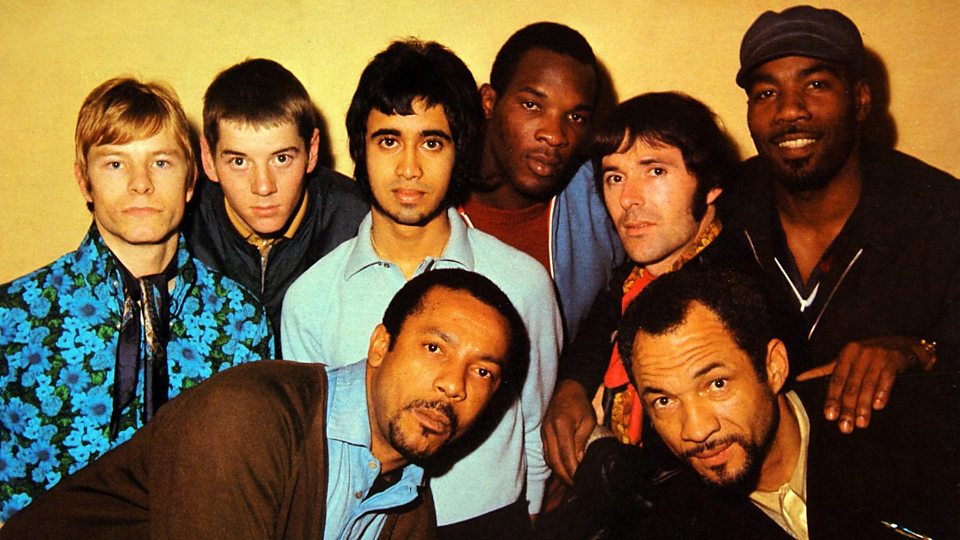
The Foundations were a British soul band who were primarily active between 1967 and 1970. The group's background was West Indian, White British and Sri Lankan. Their 1967 debut single "Baby Now That I've Found You" reached number one in the UK and Canada, and number eleven in the US. Their 1968 single "Build Me Up Buttercup" reached number two in the UK and number three on the US Billboard Hot 100. The group was the first multi-racial group to have a number one hit in the UK in the 1960s.
The Foundations were one of the few British acts to imitate successfully what became known as the Motown Sound. The Foundations signed to Pye, at the time one of only four big UK record companies (the others being EMI, which included the His Master's Voice, Columbia and Parlophone labels, Decca, and Philips, which also owned Fontana).
The Foundations attracted much interest because of the size and structure of the group. Not only was there a diverse ethnic mix in the group, there was also diversity in ages and musical backgrounds. The oldest member of the group, Mike Elliott, was 38 years old. The youngest was Tim Harris, who, at 18, was barely out of school. The West Indian horn section consisted of Jamaican-born Mike Elliott and Pat Burke, both saxophonists and Dominican-born Eric Allandale on trombone. They were all highly experienced musicians who came from professional jazz and rock-and-roll backgrounds.
The origins of the Foundations go back to an R&B and ska outfit called the Ramong Sound, aka Ramongs. The band had two lead singers, Raymond Morrison (aka Ramong Morrison) and Clem Curtis. Curtis had come to the group by way of his guitar-playing uncle, who was impressed by his nephew's voice and told him that there was a band called the Ramongs looking for singers. Curtis auditioned and joined the band, and rose from being a backing singer to sharing the lead with Raymond Morrison.
At some stage Morrison was imprisoned for six months. In his absence, a friend of the band called Joan who ran a record store, suggested future psychedelic shock rocker Arthur Brown as a replacement. Brown was straight and clean living, and did not drink, smoke or take drugs. Decades later, Brown recalled when he walked into the Westbourne Grove bar for an audition, he saw Curtis holding a spear to the throat of the drummer, bent backwards over the bar. Brown and Curtis each performed solo numbers as well as duets and one of the band members recalled later that they had experimented with "underground-type music" when Brown was with them.
The group had unsuccessfully tried to recruit Rod Stewart as a singer. They had a jam session with him, but he turned down their offer as he preferred other musical styles. Alan Warner recalled decades later that Stewart's then girlfriend, Dee Harrington, had ended up being secretary for the Foundations' management.
The Foundations are said to have formed in Bayswater, London, in January 1967. They practised and played in a basement coffee bar club called the Butterfly Club, which they also ran. The premises were at one time `used as a gambling den. While managing the club themselves, they played music nightly and handled the cooking and cleaning. They would get to bed around 6am or 7am, sleep until 4pm, and open again at 8pm. Sometimes they barely made enough money to pay the rent, occasionally living off leftovers and a couple of pounds of rice. Gomez recalled in 1969 that he, MacBeth, Allandale and Harris were living on £2 per week and could not afford a packet of razor blades. His mother would come and tell him off for leaving his job in the County Hall architect's department. The situation of saxophonist Mike Elliott was also not ideal. He had been staying in a top floor flat, in a condemned house, where the roof had been removed. Elliott was still paying rent. Clem Curtis recalled going to see him one morning, knocking on his door which got Elliott out of bed. He asked him, "Hey, Mike, where's your roof gone?", to which Elliott replied, "I don't know, man, they just came and knocked it off."
The 4 February 1967 issue of Melody Maker shows a booking for the Ramong Sound (mis-spelt as Ramog Sound) to play at the All-Star Club on Sunday, 5 February.
Hub AI
The Foundations AI simulator
(@The Foundations_simulator)
The Foundations
The Foundations were a British soul band who were primarily active between 1967 and 1970. The group's background was West Indian, White British and Sri Lankan. Their 1967 debut single "Baby Now That I've Found You" reached number one in the UK and Canada, and number eleven in the US. Their 1968 single "Build Me Up Buttercup" reached number two in the UK and number three on the US Billboard Hot 100. The group was the first multi-racial group to have a number one hit in the UK in the 1960s.
The Foundations were one of the few British acts to imitate successfully what became known as the Motown Sound. The Foundations signed to Pye, at the time one of only four big UK record companies (the others being EMI, which included the His Master's Voice, Columbia and Parlophone labels, Decca, and Philips, which also owned Fontana).
The Foundations attracted much interest because of the size and structure of the group. Not only was there a diverse ethnic mix in the group, there was also diversity in ages and musical backgrounds. The oldest member of the group, Mike Elliott, was 38 years old. The youngest was Tim Harris, who, at 18, was barely out of school. The West Indian horn section consisted of Jamaican-born Mike Elliott and Pat Burke, both saxophonists and Dominican-born Eric Allandale on trombone. They were all highly experienced musicians who came from professional jazz and rock-and-roll backgrounds.
The origins of the Foundations go back to an R&B and ska outfit called the Ramong Sound, aka Ramongs. The band had two lead singers, Raymond Morrison (aka Ramong Morrison) and Clem Curtis. Curtis had come to the group by way of his guitar-playing uncle, who was impressed by his nephew's voice and told him that there was a band called the Ramongs looking for singers. Curtis auditioned and joined the band, and rose from being a backing singer to sharing the lead with Raymond Morrison.
At some stage Morrison was imprisoned for six months. In his absence, a friend of the band called Joan who ran a record store, suggested future psychedelic shock rocker Arthur Brown as a replacement. Brown was straight and clean living, and did not drink, smoke or take drugs. Decades later, Brown recalled when he walked into the Westbourne Grove bar for an audition, he saw Curtis holding a spear to the throat of the drummer, bent backwards over the bar. Brown and Curtis each performed solo numbers as well as duets and one of the band members recalled later that they had experimented with "underground-type music" when Brown was with them.
The group had unsuccessfully tried to recruit Rod Stewart as a singer. They had a jam session with him, but he turned down their offer as he preferred other musical styles. Alan Warner recalled decades later that Stewart's then girlfriend, Dee Harrington, had ended up being secretary for the Foundations' management.
The Foundations are said to have formed in Bayswater, London, in January 1967. They practised and played in a basement coffee bar club called the Butterfly Club, which they also ran. The premises were at one time `used as a gambling den. While managing the club themselves, they played music nightly and handled the cooking and cleaning. They would get to bed around 6am or 7am, sleep until 4pm, and open again at 8pm. Sometimes they barely made enough money to pay the rent, occasionally living off leftovers and a couple of pounds of rice. Gomez recalled in 1969 that he, MacBeth, Allandale and Harris were living on £2 per week and could not afford a packet of razor blades. His mother would come and tell him off for leaving his job in the County Hall architect's department. The situation of saxophonist Mike Elliott was also not ideal. He had been staying in a top floor flat, in a condemned house, where the roof had been removed. Elliott was still paying rent. Clem Curtis recalled going to see him one morning, knocking on his door which got Elliott out of bed. He asked him, "Hey, Mike, where's your roof gone?", to which Elliott replied, "I don't know, man, they just came and knocked it off."
The 4 February 1967 issue of Melody Maker shows a booking for the Ramong Sound (mis-spelt as Ramog Sound) to play at the All-Star Club on Sunday, 5 February.