
Recent from talks
Rose of Viterbo
Knowledge base stats:
Talk channels stats:
Members stats:
Rose of Viterbo
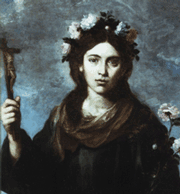
Rose of Viterbo, TOSF (Italian: Rosa da Viterbo; c. 1233 – 6 March 1251), was a young woman born in Viterbo, then a contested commune of the Papal States. She spent her brief life as a recluse, and was outspoken in her support of the papacy. Otherwise leading an unremarkable life, she later became known for her mystical gifts of prophecy and having miraculous powers. She is honoured as a saint by the Catholic Church.
The chronology of her life remains uncertain, as the acts of her canonization, the chief historical sources, record no dates. Most scholars agree she was probably born around the year 1233.
Born of poor and pious parents, even as a child, Rose had a great desire to pray and to aid the poor. She prayed much for the conversion of sinners. Rose was not yet 10 years old when the Blessed Virgin Mary is said to have instructed her to take the habit of the Third Order of St. Francis and to preach penance in Viterbo, at that time under the rule of Frederick II, Holy Roman Emperor.
She lived a life of prayer, penance and solitude in her father's home. Every now and then she would emerge from her solitude to entreat the people to do penance. Her mission seems to have lasted for about two years. In January 1250, Viterbo, her native city, was then in revolt against the pope. When she was 12, she began preaching a message in the streets allied with Guelph aspirations, thus against Emperor Frederick's rule over Viterbo. She and her family were exiled from the city and took refuge in Soriano nel Cimino. By 1250-1251, when pope Innocent IV's faction regained power in Viterbo, Rose was allowed to return.
On December 5, 1250, Rose allegedly foretold the speedy death of the emperor, a prophecy fulfilled on December 13. Soon afterwards she went to Vitorchiano, whose inhabitants, according to surviving reports, were affected by a supposed sorceress. Rose secured the conversion of all, even of the sorceress, reportedly by standing unscathed for three hours in the flames of a burning pyre.
Rose wished to enter the Poor Clares of Saint Mary in the city, but was refused due to her poverty and thus unable to provide the dowry required for admission. She accepted her rejection nonetheless, foretelling her admission to the monastery after her death.
Rose died on March 6, 1251, in her father's home. It was long believed that Rose had died of tuberculosis, but in 2010 researchers examining her remains concluded she had died of complications due to Pentalogy of Cantrell.
The process of Rose's canonization was opened in the year of her death by Pope Innocent IV, but was not definitively undertaken until 1457. Originally buried in the small parish church of Santa Maria in Poggio located in Piazza della Crocetta in central Viterbo; in 1257 Pope Alexander IV ordered it moved to the monastery she had desired to enter, located a few hundred meters away from her original burial, at which time it was renamed in her honor.
Hub AI
Rose of Viterbo AI simulator
(@Rose of Viterbo_simulator)
Rose of Viterbo
Rose of Viterbo, TOSF (Italian: Rosa da Viterbo; c. 1233 – 6 March 1251), was a young woman born in Viterbo, then a contested commune of the Papal States. She spent her brief life as a recluse, and was outspoken in her support of the papacy. Otherwise leading an unremarkable life, she later became known for her mystical gifts of prophecy and having miraculous powers. She is honoured as a saint by the Catholic Church.
The chronology of her life remains uncertain, as the acts of her canonization, the chief historical sources, record no dates. Most scholars agree she was probably born around the year 1233.
Born of poor and pious parents, even as a child, Rose had a great desire to pray and to aid the poor. She prayed much for the conversion of sinners. Rose was not yet 10 years old when the Blessed Virgin Mary is said to have instructed her to take the habit of the Third Order of St. Francis and to preach penance in Viterbo, at that time under the rule of Frederick II, Holy Roman Emperor.
She lived a life of prayer, penance and solitude in her father's home. Every now and then she would emerge from her solitude to entreat the people to do penance. Her mission seems to have lasted for about two years. In January 1250, Viterbo, her native city, was then in revolt against the pope. When she was 12, she began preaching a message in the streets allied with Guelph aspirations, thus against Emperor Frederick's rule over Viterbo. She and her family were exiled from the city and took refuge in Soriano nel Cimino. By 1250-1251, when pope Innocent IV's faction regained power in Viterbo, Rose was allowed to return.
On December 5, 1250, Rose allegedly foretold the speedy death of the emperor, a prophecy fulfilled on December 13. Soon afterwards she went to Vitorchiano, whose inhabitants, according to surviving reports, were affected by a supposed sorceress. Rose secured the conversion of all, even of the sorceress, reportedly by standing unscathed for three hours in the flames of a burning pyre.
Rose wished to enter the Poor Clares of Saint Mary in the city, but was refused due to her poverty and thus unable to provide the dowry required for admission. She accepted her rejection nonetheless, foretelling her admission to the monastery after her death.
Rose died on March 6, 1251, in her father's home. It was long believed that Rose had died of tuberculosis, but in 2010 researchers examining her remains concluded she had died of complications due to Pentalogy of Cantrell.
The process of Rose's canonization was opened in the year of her death by Pope Innocent IV, but was not definitively undertaken until 1457. Originally buried in the small parish church of Santa Maria in Poggio located in Piazza della Crocetta in central Viterbo; in 1257 Pope Alexander IV ordered it moved to the monastery she had desired to enter, located a few hundred meters away from her original burial, at which time it was renamed in her honor.
Recent media