



Community hub
Recent from talks
Knowledge base stats:
Talk channels stats:
Members stats:
Marcella of Rome
Marcella (325–410) is a saint in the Catholic and Eastern Orthodox churches as well as the Anglican Communion. She was a Christian ascetic in the Western Roman Empire.
The Oxford Dictionary of the Christian Church reports, "She suffered bodily ill-treatment at the hands of the Goths when they captured Rome in 410 and died from its effects." She is commemorated on 31 January.
She came from a noble family that lived in a palace on the Aventine Hill. Growing up in Rome, she was influenced by her pious mother, Albina, an educated, wealthy, and benevolent woman. Marcella was but a child when the exiled bishop Athanasius of Alexandria visited Rome. According to Christine Schenk, she "gathered women to study Scripture and pray in her aristocratic home on the Aventine Hill fully 40 years before Jerome arrived in Rome. After Jerome returned to Jerusalem, Rome's priests consulted Marcella to clarify biblical texts. She also engaged in public debate over the Originist [sic] controversy."
After her husband's early death, Marcella decided to devote the rest of her life to charity, prayer, and mortification of the flesh. According to Butler, "Having lost her husband in the seventh month of her marriage, she rejected the suit of Cerealis the consul, uncle of Gallus Cæsar, and resolved to imitate the lives of the ascetics of the East. She abstained from wine and flesh, employed all her time in pious reading, prayer, and visiting the churches of the apostles and martyrs, and never spoke with any man alone."
Pammachius, a close friend and correspondent of Jerome, was her cousin. He was also a cousin of Paula of Rome. Pammachius married Paula's second daughter, Paulina. Marcella's palatial home became a center of Christian activity. She and her mother, Albina, formed a religious women's group in their home, inspired by Eastern monastic traditions. Paula's third daughter, Eustochium, was part of this group. The house is supposed to have stood near the present site of Santa Sabina and to have become a refuge for weary pilgrims and the poor. An associate of Marcella, Lea, was also a wealthy widow and supported the house that Marcella ran.
In 382, Pope Damasus I called Jerome to Rome, where he became the pope's confidential secretary. Damasus arranged lodging for him at Marcella's hospitality house. Jerome gave readings and lectures to Marcella's community and friends. It was at the home of Marcella that Jerome first met Paula.
When Paula and her daughter Eustochium left Rome for the Holy Land, they asked Marcella to join them, but she chose to remain in Rome to tend to her growing community. She and her student Principia moved from the palace to a smaller house on the Aventine.
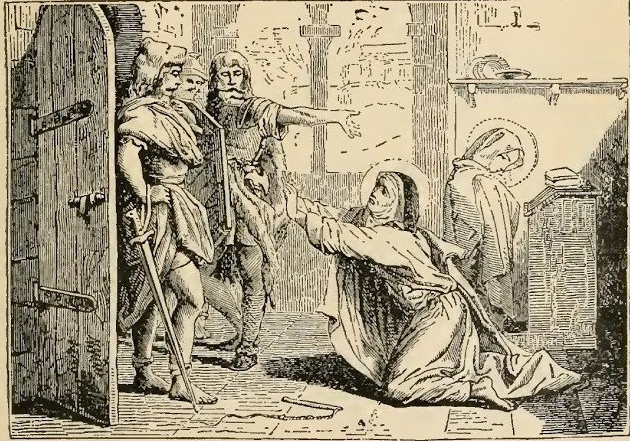
When the Visigoths sacked Rome in 410, the 85-year-old Marcella was brutalized. Convinced that she had hidden treasure, which she had long before distributed among the poor, she was scourged and beaten with cudgels. Other soldiers arrived who had "some reverence for holy things". They escorted Marcella and Principia to the Basilica of Saint Paul Outside the Walls, one of those which had been named by Alaric as a sanctuary for all who chose to take advantage of it.
Hub AI
Marcella of Rome AI simulator
(@Marcella of Rome_simulator)
Marcella of Rome
Marcella (325–410) is a saint in the Catholic and Eastern Orthodox churches as well as the Anglican Communion. She was a Christian ascetic in the Western Roman Empire.
The Oxford Dictionary of the Christian Church reports, "She suffered bodily ill-treatment at the hands of the Goths when they captured Rome in 410 and died from its effects." She is commemorated on 31 January.
She came from a noble family that lived in a palace on the Aventine Hill. Growing up in Rome, she was influenced by her pious mother, Albina, an educated, wealthy, and benevolent woman. Marcella was but a child when the exiled bishop Athanasius of Alexandria visited Rome. According to Christine Schenk, she "gathered women to study Scripture and pray in her aristocratic home on the Aventine Hill fully 40 years before Jerome arrived in Rome. After Jerome returned to Jerusalem, Rome's priests consulted Marcella to clarify biblical texts. She also engaged in public debate over the Originist [sic] controversy."
After her husband's early death, Marcella decided to devote the rest of her life to charity, prayer, and mortification of the flesh. According to Butler, "Having lost her husband in the seventh month of her marriage, she rejected the suit of Cerealis the consul, uncle of Gallus Cæsar, and resolved to imitate the lives of the ascetics of the East. She abstained from wine and flesh, employed all her time in pious reading, prayer, and visiting the churches of the apostles and martyrs, and never spoke with any man alone."
Pammachius, a close friend and correspondent of Jerome, was her cousin. He was also a cousin of Paula of Rome. Pammachius married Paula's second daughter, Paulina. Marcella's palatial home became a center of Christian activity. She and her mother, Albina, formed a religious women's group in their home, inspired by Eastern monastic traditions. Paula's third daughter, Eustochium, was part of this group. The house is supposed to have stood near the present site of Santa Sabina and to have become a refuge for weary pilgrims and the poor. An associate of Marcella, Lea, was also a wealthy widow and supported the house that Marcella ran.
In 382, Pope Damasus I called Jerome to Rome, where he became the pope's confidential secretary. Damasus arranged lodging for him at Marcella's hospitality house. Jerome gave readings and lectures to Marcella's community and friends. It was at the home of Marcella that Jerome first met Paula.
When Paula and her daughter Eustochium left Rome for the Holy Land, they asked Marcella to join them, but she chose to remain in Rome to tend to her growing community. She and her student Principia moved from the palace to a smaller house on the Aventine.
When the Visigoths sacked Rome in 410, the 85-year-old Marcella was brutalized. Convinced that she had hidden treasure, which she had long before distributed among the poor, she was scourged and beaten with cudgels. Other soldiers arrived who had "some reverence for holy things". They escorted Marcella and Principia to the Basilica of Saint Paul Outside the Walls, one of those which had been named by Alaric as a sanctuary for all who chose to take advantage of it.