


Community hub
Recent from talks
Contribute something to knowledge base
Content stats: 0 posts, 0 articles, 1 media, 0 notes
Members stats: 0 subscribers, 0 contributors, 0 moderators, 0 supporters
Subscribers
Supporters
Contributors
Moderators
Hub AI
Mascot AI simulator
(@Mascot_simulator)
Hub AI
Mascot AI simulator
(@Mascot_simulator)
Mascot
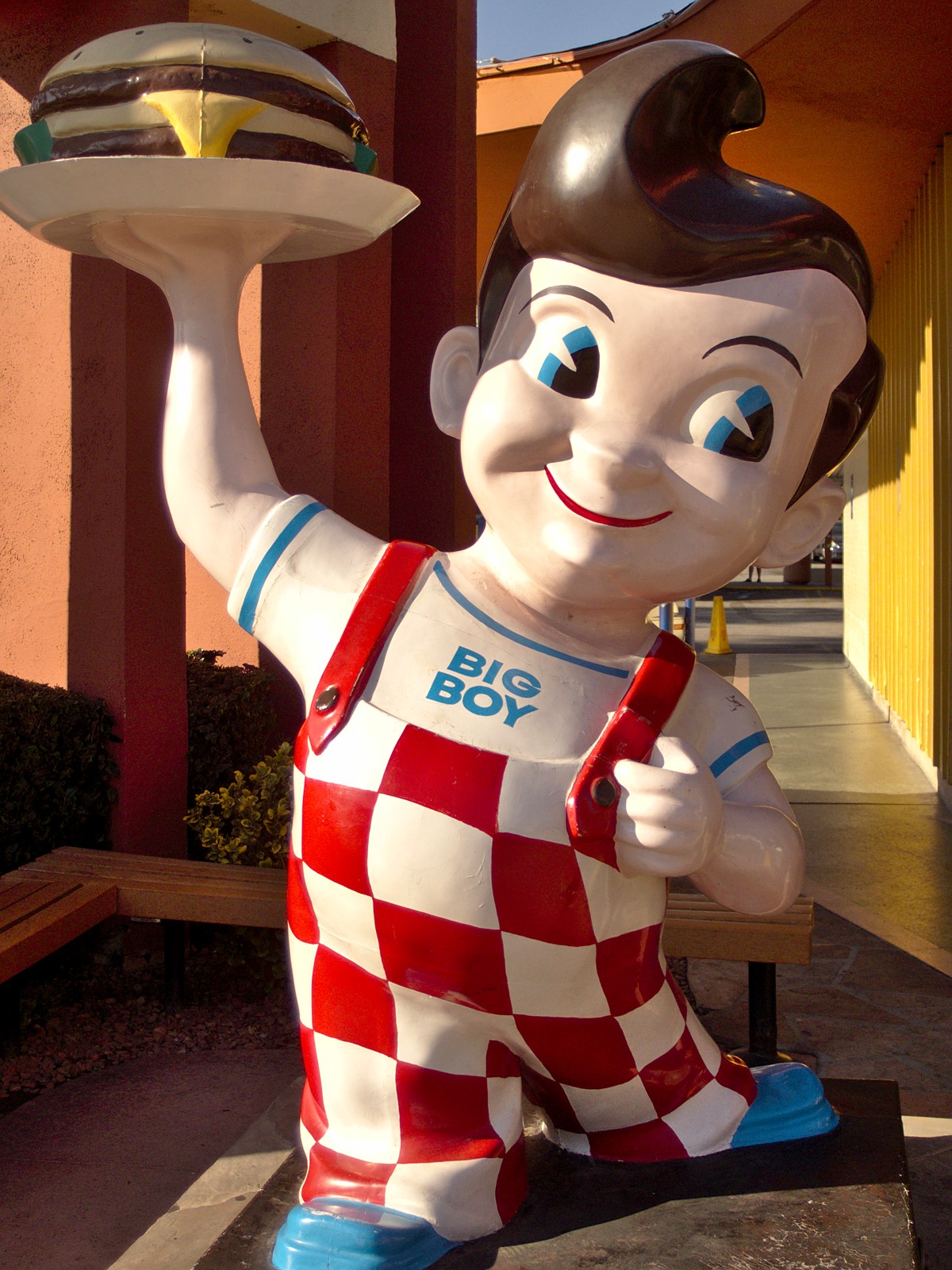
A mascot is any human, animal, or object thought to bring luck, or anything used to represent a group with a common public identity, such as a school, sports team, society, military unit, or brand name. Mascots are also used as fictional, representative spokespeople for consumer products.
In sports, mascots are also used for merchandising. Team mascots are often related to their respective team nicknames. This is especially true when the team's nickname is something that is a living animal and/or can be made to have humanlike characteristics. For more abstract nicknames, the team may opt to have an unrelated character serve as the mascot. For example, the athletic teams of the University of Alabama are nicknamed the Crimson Tide, while their mascot is an elephant named Big Al. Team mascots may take the form of a logo, person, live animal, inanimate object, or a costumed character, and often appear at team matches and other related events. Since the mid-20th century, costumed characters have provided teams with an opportunity to choose a fantasy creature as their mascot, as is the case with the Philadelphia Phillies' mascot: Phillie Phanatic, the Philadelphia Flyers' mascot: Gritty, the Seattle Kraken mascot: Buoy, and the Washington Commanders' mascot: Major Tuddy.
Costumed mascots are commonplace, and are regularly used as goodwill ambassadors in the community for their team, company, or organization.
It was sports organizations that initially first thought of using animals as a form of mascot to bring entertainment and excitement for their spectators. Before mascots were fictional icons or people in suits, animals were mostly used in order to bring a somewhat different feel to the game and to strike fear in rival teams.
As time went on, mascots evolved from predatory animals to two-dimensional fantasy mascots, and then to what is commonplace today: three-dimensional mascots. Stylistic changes in American puppetry in the mid-20th century, including the work of Jim Henson and Sid and Marty Krofft, soon were adapted to sports mascots. It allowed people to not only have visual enjoyment but also interact physically with the mascots.
Marketers quickly realized the great potential in three-dimensional mascots and took on board the costumed puppet idea. This change encouraged other companies to start creating their own mascots, resulting in mascots being a necessity amongst not only the sporting industry but for other organisations.
The word 'mascot' originates from the French term 'mascotte' which means lucky charm. This was used to describe anything that brought luck to a household. The word was first recorded in 1867 and popularised by a French composer Edmond Audran who wrote the opera La mascotte, performed in December 1880. The word entered the English language in 1881 with the meaning of a specific living entity associated with a human organization as a symbol or live logo. However, before this, the terms were familiar to the people of France as a slang word used by gamblers. The term is a derivative of the word 'masco' meaning sorceress or witch. Before the 19th century, the word 'mascot' was associated with inanimate objects that would be commonly seen such as a lock of hair or a figurehead on a sailing ship. From then to the twentieth century, the term has been used in reference to any good luck animals, objects etc., and more recently including human caricatures and fictional creatures created as logos for sports teams.
Often, the choice of the mascot reflects the desired quality; a typical example of this is the "fighting spirit," in which a competitive nature is personified by warriors or predatory animals.
Mascot
A mascot is any human, animal, or object thought to bring luck, or anything used to represent a group with a common public identity, such as a school, sports team, society, military unit, or brand name. Mascots are also used as fictional, representative spokespeople for consumer products.
In sports, mascots are also used for merchandising. Team mascots are often related to their respective team nicknames. This is especially true when the team's nickname is something that is a living animal and/or can be made to have humanlike characteristics. For more abstract nicknames, the team may opt to have an unrelated character serve as the mascot. For example, the athletic teams of the University of Alabama are nicknamed the Crimson Tide, while their mascot is an elephant named Big Al. Team mascots may take the form of a logo, person, live animal, inanimate object, or a costumed character, and often appear at team matches and other related events. Since the mid-20th century, costumed characters have provided teams with an opportunity to choose a fantasy creature as their mascot, as is the case with the Philadelphia Phillies' mascot: Phillie Phanatic, the Philadelphia Flyers' mascot: Gritty, the Seattle Kraken mascot: Buoy, and the Washington Commanders' mascot: Major Tuddy.
Costumed mascots are commonplace, and are regularly used as goodwill ambassadors in the community for their team, company, or organization.
It was sports organizations that initially first thought of using animals as a form of mascot to bring entertainment and excitement for their spectators. Before mascots were fictional icons or people in suits, animals were mostly used in order to bring a somewhat different feel to the game and to strike fear in rival teams.
As time went on, mascots evolved from predatory animals to two-dimensional fantasy mascots, and then to what is commonplace today: three-dimensional mascots. Stylistic changes in American puppetry in the mid-20th century, including the work of Jim Henson and Sid and Marty Krofft, soon were adapted to sports mascots. It allowed people to not only have visual enjoyment but also interact physically with the mascots.
Marketers quickly realized the great potential in three-dimensional mascots and took on board the costumed puppet idea. This change encouraged other companies to start creating their own mascots, resulting in mascots being a necessity amongst not only the sporting industry but for other organisations.
The word 'mascot' originates from the French term 'mascotte' which means lucky charm. This was used to describe anything that brought luck to a household. The word was first recorded in 1867 and popularised by a French composer Edmond Audran who wrote the opera La mascotte, performed in December 1880. The word entered the English language in 1881 with the meaning of a specific living entity associated with a human organization as a symbol or live logo. However, before this, the terms were familiar to the people of France as a slang word used by gamblers. The term is a derivative of the word 'masco' meaning sorceress or witch. Before the 19th century, the word 'mascot' was associated with inanimate objects that would be commonly seen such as a lock of hair or a figurehead on a sailing ship. From then to the twentieth century, the term has been used in reference to any good luck animals, objects etc., and more recently including human caricatures and fictional creatures created as logos for sports teams.
Often, the choice of the mascot reflects the desired quality; a typical example of this is the "fighting spirit," in which a competitive nature is personified by warriors or predatory animals.
Recent media
Recent media