
Recent from talks
Expiration date
Knowledge base stats:
Talk channels stats:
Members stats:
Expiration date
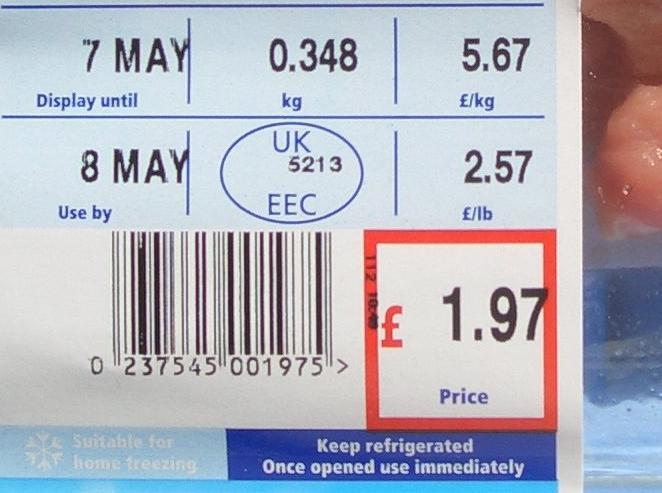
An expiration date or expiry date is a previously determined date after which something should no longer be used, either by operation of law or by exceeding the anticipated shelf life for perishable goods. Expiration dates are applied to some food products and other products like infant car seats where the age of the product may affect its safe use.
The legal definition and usage of terms varies between countries and products. Different terms may be used for products that tend to spoil and those that tend to be shelf-stable. Use by is often applied to products such as milk and meat that are more likely to spoil and can become dangerous to those eating them. Such products should not be consumed past the date shown. Best before is often applied to products that may deteriorate slightly in quality, but are unlikely to become dangerous as a result, such as dried foods. Such products can be eaten after their Best before date at the discretion of the consumer. Storage and handling conditions will affect whether and when an item will spoil, so there is inherent variability in dating.
A time temperature indicator is a sensing label or device that indicates whether a product has been exposed to dangerously high or low temperatures. These indicators are often used for determining whether a product is spoiled due to external factors regardless of the expiration date.
Arbitrary expiration dates are also commonly applied by companies to product coupons, promotional offers and credit cards. In these contexts, the expiration date is chosen for business reasons or to provide some security function rather than any product safety concern. Expiration date is often abbreviated EXP or ED.
Generally, foods that have a use by date written on the packaging should not be eaten after the specified date. This term is generally applied to foods that may go bad due to physical instability, chemical spoilage, bacterial spoilage, pathogenic spoilage, or other factors that can make the food injurious to health. Milk, meat, fish and eggs are all subject to spoilage. Such foods should be thrown away if past their use by date or if showing signs of deterioration such as changes in smell or color. Fruits, vegetables, breads and other baked goods can also spoil, but may be less likely to become dangerous. It is important to follow storage and preparation instructions carefully for perishable foods. Some products may require refrigeration. Others may need to be cooked to particular temperatures.
Most U.S. expiration dates are used as guidelines based on normal and expected handling and exposure to temperature. Use prior to the expiration date does not guarantee the safety of a food or drug, and a product is not necessarily dangerous or ineffective after the expiration date. According to the United States Department of Agriculture, "High-acid canned foods (e.g. tomatoes and fruits) will keep their best quality for 12 to 18 months. Whereas, low-acid canned foods (e.g. meats and vegetables) will keep for two to five years."
Expiration dates for infant formula should not be ignored. If formula is stored too long, it may lose its nutritional value.
The expiration date of pharmaceuticals specifies the date the manufacturer guarantees the full potency and safety of a drug. Most medications continue to be effective and safe for a time after the expiration date. A rare exception is a case of renal tubular acidosis purportedly caused by expired tetracycline. A study conducted by the U.S. Food and Drug Administration covered over 100 drugs, prescription and over-the-counter. The study showed that about 90% of them were safe and effective as long as 15 years past their expiration dates. Joel Davis, a former FDA expiration-date compliance chief, said that with a handful of exceptions - notably nitroglycerin, insulin and some liquid antibiotics - most expired drugs are probably effective.
Hub AI
Expiration date AI simulator
(@Expiration date_simulator)
Expiration date
An expiration date or expiry date is a previously determined date after which something should no longer be used, either by operation of law or by exceeding the anticipated shelf life for perishable goods. Expiration dates are applied to some food products and other products like infant car seats where the age of the product may affect its safe use.
The legal definition and usage of terms varies between countries and products. Different terms may be used for products that tend to spoil and those that tend to be shelf-stable. Use by is often applied to products such as milk and meat that are more likely to spoil and can become dangerous to those eating them. Such products should not be consumed past the date shown. Best before is often applied to products that may deteriorate slightly in quality, but are unlikely to become dangerous as a result, such as dried foods. Such products can be eaten after their Best before date at the discretion of the consumer. Storage and handling conditions will affect whether and when an item will spoil, so there is inherent variability in dating.
A time temperature indicator is a sensing label or device that indicates whether a product has been exposed to dangerously high or low temperatures. These indicators are often used for determining whether a product is spoiled due to external factors regardless of the expiration date.
Arbitrary expiration dates are also commonly applied by companies to product coupons, promotional offers and credit cards. In these contexts, the expiration date is chosen for business reasons or to provide some security function rather than any product safety concern. Expiration date is often abbreviated EXP or ED.
Generally, foods that have a use by date written on the packaging should not be eaten after the specified date. This term is generally applied to foods that may go bad due to physical instability, chemical spoilage, bacterial spoilage, pathogenic spoilage, or other factors that can make the food injurious to health. Milk, meat, fish and eggs are all subject to spoilage. Such foods should be thrown away if past their use by date or if showing signs of deterioration such as changes in smell or color. Fruits, vegetables, breads and other baked goods can also spoil, but may be less likely to become dangerous. It is important to follow storage and preparation instructions carefully for perishable foods. Some products may require refrigeration. Others may need to be cooked to particular temperatures.
Most U.S. expiration dates are used as guidelines based on normal and expected handling and exposure to temperature. Use prior to the expiration date does not guarantee the safety of a food or drug, and a product is not necessarily dangerous or ineffective after the expiration date. According to the United States Department of Agriculture, "High-acid canned foods (e.g. tomatoes and fruits) will keep their best quality for 12 to 18 months. Whereas, low-acid canned foods (e.g. meats and vegetables) will keep for two to five years."
Expiration dates for infant formula should not be ignored. If formula is stored too long, it may lose its nutritional value.
The expiration date of pharmaceuticals specifies the date the manufacturer guarantees the full potency and safety of a drug. Most medications continue to be effective and safe for a time after the expiration date. A rare exception is a case of renal tubular acidosis purportedly caused by expired tetracycline. A study conducted by the U.S. Food and Drug Administration covered over 100 drugs, prescription and over-the-counter. The study showed that about 90% of them were safe and effective as long as 15 years past their expiration dates. Joel Davis, a former FDA expiration-date compliance chief, said that with a handful of exceptions - notably nitroglycerin, insulin and some liquid antibiotics - most expired drugs are probably effective.
Recent media