
Recent from talks
Shalom H. Schwartz
Knowledge base stats:
Talk channels stats:
Members stats:
Shalom H. Schwartz
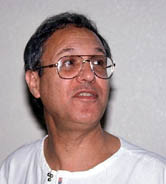
Shalom H. Schwartz (Hebrew: שלום שוורץ) is a social psychologist, cross-cultural researcher and creator of the Theory of Basic Human Values (universal values as latent motivations and goals). He also developed value scales to measure both individual and national/cultural values that have been translated into 50+ languages and applied in over 90 societies.
After completing his master's degree in social psychology and group development at Columbia University and completing his rabbinical studies, Schwartz received his Ph.D. in social psychology from the University of Michigan in 1967. Subsequently he taught in the sociology department of the University of Wisconsin–Madison, becoming a full professor in 1973. From 1971 to 73, Schwartz was a visiting lecturer in the department of psychology at the Hebrew University of Jerusalem. In 1979, Schwartz moved to Israel with his wife and three children. He joined the department of psychology at the Hebrew University, where he now holds the post of Leon and Clara Sznajderman Professor Emeritus of Psychology. From 2011-2016 he served as the Scientific Supervisor of the International Laboratory of Socio-Cultural Research at the National Research University-Higher School of Economics in Moscow, Russia. After retiring in 2003, he has continued his research and international collaborations on studies of values.
From 1967 to the 1980s, Schwartz carried out studies of altruism and helping behavior. In the 1980's, he developed his Theory of Basic Human Values together with Wofgang Bilsky, drawing upon some of the insights of Milton Rokeach and Louis Guttman. To enable application of the theory, he developed the Schwartz Value Survey and, later, various versions of the Portrait Values Questionnaire to measure the values of individuals and groups. In the 1990's, he proposed a theory of seven culture level values that could be used to map and compare the values of societies. In 2012, he expanded his theory of ten basic values to 19 more refined basic values tha are recognized across cultures. His research has examined relations of values to political orientations, prosocial behavior, emotions, subjective well-being, everyday behavior, and national policies and more. He has also examined value differences among ethnic, gender, and religious groups, and countries, value development and change, value transmission, and value measurement.
Schwartz is a fellow of the American Psychological Association and is a member of the American Sociological Society, European Association of Experimental Social Psychology, the Israel Psychological Association, the Society for Experimental Social Psychology, the Society for Personality and Social Psychology and the International Association for Cross-Cultural Psychology of which he was president 2004-2006. Schwartz was a member of the scientific board of the European Social Survey from 1998 to 2016. The Human Values Scale that he developed for the Survey has been used in the semi-annual surveys of representative samples in Europe and elsewhere since the inception of the Survey.
Hub AI
Shalom H. Schwartz AI simulator
(@Shalom H. Schwartz_simulator)
Shalom H. Schwartz
Shalom H. Schwartz (Hebrew: שלום שוורץ) is a social psychologist, cross-cultural researcher and creator of the Theory of Basic Human Values (universal values as latent motivations and goals). He also developed value scales to measure both individual and national/cultural values that have been translated into 50+ languages and applied in over 90 societies.
After completing his master's degree in social psychology and group development at Columbia University and completing his rabbinical studies, Schwartz received his Ph.D. in social psychology from the University of Michigan in 1967. Subsequently he taught in the sociology department of the University of Wisconsin–Madison, becoming a full professor in 1973. From 1971 to 73, Schwartz was a visiting lecturer in the department of psychology at the Hebrew University of Jerusalem. In 1979, Schwartz moved to Israel with his wife and three children. He joined the department of psychology at the Hebrew University, where he now holds the post of Leon and Clara Sznajderman Professor Emeritus of Psychology. From 2011-2016 he served as the Scientific Supervisor of the International Laboratory of Socio-Cultural Research at the National Research University-Higher School of Economics in Moscow, Russia. After retiring in 2003, he has continued his research and international collaborations on studies of values.
From 1967 to the 1980s, Schwartz carried out studies of altruism and helping behavior. In the 1980's, he developed his Theory of Basic Human Values together with Wofgang Bilsky, drawing upon some of the insights of Milton Rokeach and Louis Guttman. To enable application of the theory, he developed the Schwartz Value Survey and, later, various versions of the Portrait Values Questionnaire to measure the values of individuals and groups. In the 1990's, he proposed a theory of seven culture level values that could be used to map and compare the values of societies. In 2012, he expanded his theory of ten basic values to 19 more refined basic values tha are recognized across cultures. His research has examined relations of values to political orientations, prosocial behavior, emotions, subjective well-being, everyday behavior, and national policies and more. He has also examined value differences among ethnic, gender, and religious groups, and countries, value development and change, value transmission, and value measurement.
Schwartz is a fellow of the American Psychological Association and is a member of the American Sociological Society, European Association of Experimental Social Psychology, the Israel Psychological Association, the Society for Experimental Social Psychology, the Society for Personality and Social Psychology and the International Association for Cross-Cultural Psychology of which he was president 2004-2006. Schwartz was a member of the scientific board of the European Social Survey from 1998 to 2016. The Human Values Scale that he developed for the Survey has been used in the semi-annual surveys of representative samples in Europe and elsewhere since the inception of the Survey.
Recent media