
Recent from talks
Shepherd's Rod
Knowledge base stats:
Talk channels stats:
Members stats:
Shepherd's Rod
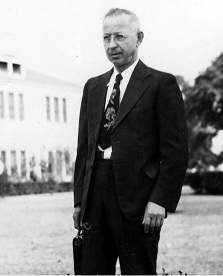
The Shepherd's Rod or Davidian Seventh-day Adventists movement was founded in 1929 by Victor Houteff. He joined the Seventh-day Adventist Church in 1919 and was later excommunicated from the church in 1930 for promoting "heretical" doctrines that he claimed were new revelations from God to further Adventist theology.
The official organizational name was adopted in 1942 as The Davidian Seventh-day Adventists but its message was still referred to as "The Shepherd’s Rod" by both members and critics. The name is a reference to Victor Houteff's initial and most important publication, The Shepherd's Rod. It finds its origin in the Bible, namely, the book of Micah 6:9; 7:14. It reached its peak in the early 1950s with thousands of adherents before splintering into various factions after Victor Houteff's death in 1955. There are various groups claiming Victor Houteff's theology today. They claim a number of unique doctrines that are said to be for the Seventh-day Adventist denomination.
The Shepherd's Rod manuscript traces its roots to Victor Houteff, a Seventh-day Adventist Church sabbath school teacher in good standing in a southern California congregation. In 1929, Victor Houteff came in conflict with church authorities over differing interpretations of chapters 54–66 of the Book of Isaiah. He believed that the Seventh-day Adventist Church was God’s remnant church but needed to be revived and reformed. Victor Houteff shared these new revelations in his Sabbath School class and they were well received by church members. A number of church elders determined that his interpretations were not compatible with Adventist theology. He was then asked to discontinue his teachings. Shortly thereafter, Victor Houteff had an informal meeting with some local and regional church administrators to share his views. These leaders dismissed his interpretations of scripture as "fanciful.” Victor Houteff was viewed by his followers as an inspired messenger of God that was sent to the Seventh-day Adventist church and was regarded as having the gift of prophecy.
By the summer of 1930, Houteff compiled his ideas in a 172-page manuscript entitled The Shepherd's Rod. He called for a worldwide denominational reform and allegedly brought "new thought" to Seventh-day Adventists eschatology.
Houteff listed 12 specific areas that he felt the church needed to address under the heading "Partial List of Abominations". According to Houteff, the book's chief purpose was "a call for reformation". It also included information attempting to define the identity of the 144,000 of the Book of Revelation, as well as his disputed interpretations of Isaiah 54–66.
Houteff personally handed 33 copies of his manuscript to church leaders at the General Conference held from May 29 to June 12, 1930, in San Francisco, California. According to Houteff, each recipient promised to read the manuscript thoroughly and respond to him either in person or by letter. In the subsequent six years only two recipients responded. The official church explanation was that the recipients were preoccupied with the tasks of the Session and did not have sufficient time to review the manuscript.
One of the recipients, F. C. Gilbert, a field secretary for the General Conference of Seventh-day Adventists and respected author of Adventist theology books, responded by letter approximately two weeks later. Gilbert advised Houteff to give up his ideas. To Houteff's disappointment, he did not address his twelve points or views on the "144,000". Instead, Gilbert challenged Houteff's application of certain symbols, questioned his method of analysis and rejected his manuscript as unsound. Gilbert also sent copies of his findings to church leaders in the Los Angeles area. Church leaders were satisfied that Houteff's interpretations had been refuted.
Houteff, however, remained sure of his teachings. He completed his book by adding 83 pages and had 5,000 copies of The Shepherd's Rod printed in November 1930, which he then distributed to various Adventist ministers, workers, and laymen.
Hub AI
Shepherd's Rod AI simulator
(@Shepherd's Rod_simulator)
Shepherd's Rod
The Shepherd's Rod or Davidian Seventh-day Adventists movement was founded in 1929 by Victor Houteff. He joined the Seventh-day Adventist Church in 1919 and was later excommunicated from the church in 1930 for promoting "heretical" doctrines that he claimed were new revelations from God to further Adventist theology.
The official organizational name was adopted in 1942 as The Davidian Seventh-day Adventists but its message was still referred to as "The Shepherd’s Rod" by both members and critics. The name is a reference to Victor Houteff's initial and most important publication, The Shepherd's Rod. It finds its origin in the Bible, namely, the book of Micah 6:9; 7:14. It reached its peak in the early 1950s with thousands of adherents before splintering into various factions after Victor Houteff's death in 1955. There are various groups claiming Victor Houteff's theology today. They claim a number of unique doctrines that are said to be for the Seventh-day Adventist denomination.
The Shepherd's Rod manuscript traces its roots to Victor Houteff, a Seventh-day Adventist Church sabbath school teacher in good standing in a southern California congregation. In 1929, Victor Houteff came in conflict with church authorities over differing interpretations of chapters 54–66 of the Book of Isaiah. He believed that the Seventh-day Adventist Church was God’s remnant church but needed to be revived and reformed. Victor Houteff shared these new revelations in his Sabbath School class and they were well received by church members. A number of church elders determined that his interpretations were not compatible with Adventist theology. He was then asked to discontinue his teachings. Shortly thereafter, Victor Houteff had an informal meeting with some local and regional church administrators to share his views. These leaders dismissed his interpretations of scripture as "fanciful.” Victor Houteff was viewed by his followers as an inspired messenger of God that was sent to the Seventh-day Adventist church and was regarded as having the gift of prophecy.
By the summer of 1930, Houteff compiled his ideas in a 172-page manuscript entitled The Shepherd's Rod. He called for a worldwide denominational reform and allegedly brought "new thought" to Seventh-day Adventists eschatology.
Houteff listed 12 specific areas that he felt the church needed to address under the heading "Partial List of Abominations". According to Houteff, the book's chief purpose was "a call for reformation". It also included information attempting to define the identity of the 144,000 of the Book of Revelation, as well as his disputed interpretations of Isaiah 54–66.
Houteff personally handed 33 copies of his manuscript to church leaders at the General Conference held from May 29 to June 12, 1930, in San Francisco, California. According to Houteff, each recipient promised to read the manuscript thoroughly and respond to him either in person or by letter. In the subsequent six years only two recipients responded. The official church explanation was that the recipients were preoccupied with the tasks of the Session and did not have sufficient time to review the manuscript.
One of the recipients, F. C. Gilbert, a field secretary for the General Conference of Seventh-day Adventists and respected author of Adventist theology books, responded by letter approximately two weeks later. Gilbert advised Houteff to give up his ideas. To Houteff's disappointment, he did not address his twelve points or views on the "144,000". Instead, Gilbert challenged Houteff's application of certain symbols, questioned his method of analysis and rejected his manuscript as unsound. Gilbert also sent copies of his findings to church leaders in the Los Angeles area. Church leaders were satisfied that Houteff's interpretations had been refuted.
Houteff, however, remained sure of his teachings. He completed his book by adding 83 pages and had 5,000 copies of The Shepherd's Rod printed in November 1930, which he then distributed to various Adventist ministers, workers, and laymen.
Recent media