



Community hub
Recent from talks
Knowledge base stats:
Talk channels stats:
Members stats:
Shetland sheep
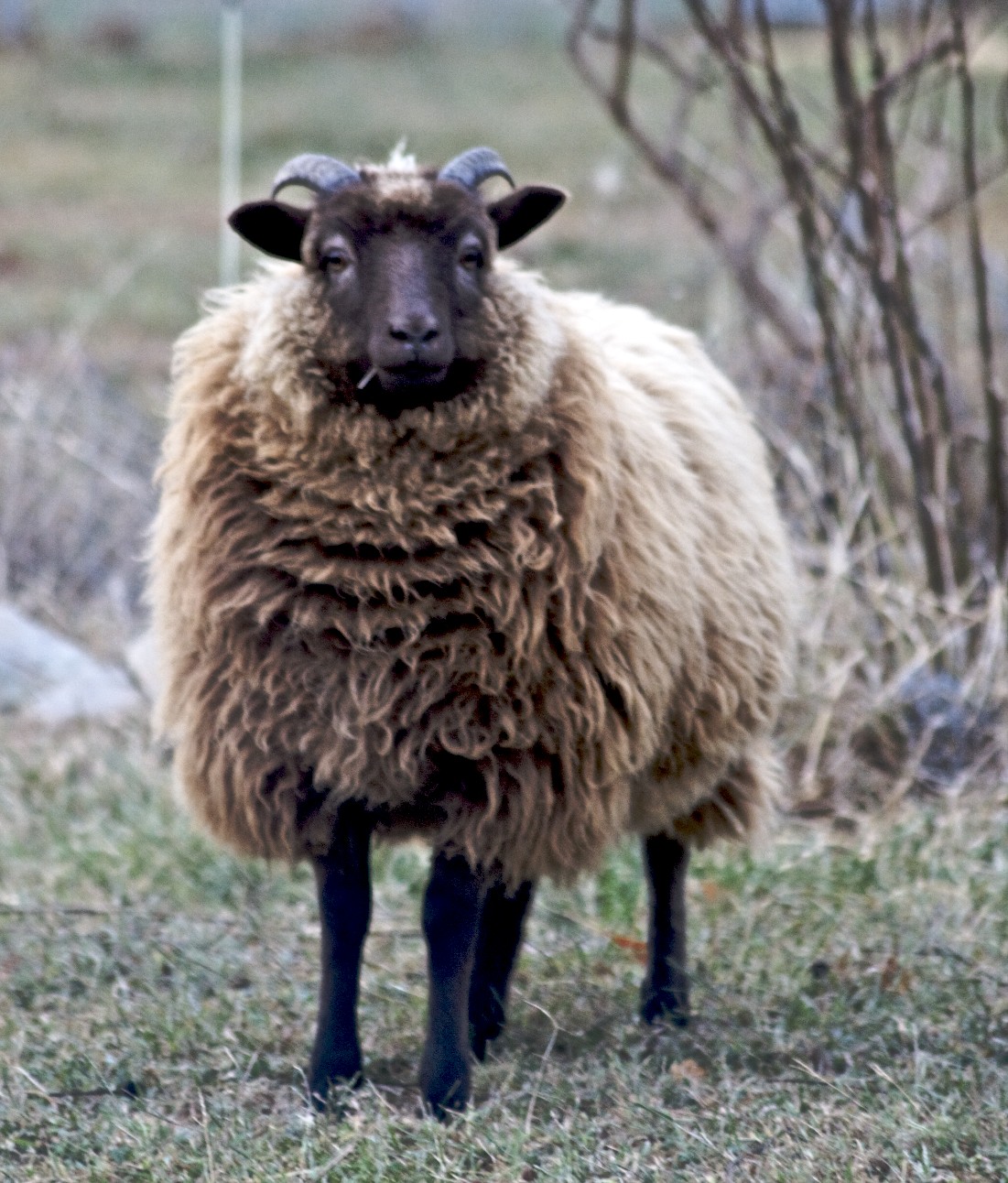
The Shetland is a small, wool-producing breed of sheep originating in the Shetland Isles, Scotland, but is now also kept in many other parts of the world. It is part of the Northern European short-tailed sheep group, and it is closely related to the extinct Scottish Dunface. Shetlands are classified as a landrace or "unimproved" breed. This breed is kept for its very fine wool, for meat, and for conservation grazing.
Although Shetlands are small and slow-growing compared to commercial breeds, they are hardy, thrifty, easy lambers, adaptable and long-lived. The Shetland breed has survived for centuries in difficult conditions and on a poor diet, but they thrive in better conditions. Shetlands retain many of their primitive survival instincts, so they are easier to care for than many modern breeds.
Up to the Iron Age, the sheep of the British Isles and other parts of northern and western Europe were small, short-tailed, horned only in the male and variable in colour. Short-tailed sheep were gradually displaced by long-tailed types, leaving short-tailed sheep restricted to the less accessible areas. These included the Scottish Dunface, which until the late eighteenth century was the main sheep type throughout the Highlands and Islands of Scotland, including Orkney and Shetland. The Dunface died out on the mainland, Scotland, in the late nineteenth century, leaving its descendants limited to a few islands, including the Shetland Isles. The Shetland type of the Dunface has been regarded as distinct since the early nineteenth century or before. Patterns of flock distribution in the period 1795-1965 reveal the numeric decline of Shetland sheep and their eventual confinement to Shetland. By 1965 only 4% of the sheep recorded for Hill Sheep Subsidy were Shetland sheep.
By the early twentieth century, the Shetland was perceived as threatened by cross-breeding, leading to a decline in wool quality. To combat this, the Shetland Flock Book Society was formed in 1927, and this remains the body responsible for the protection of the breed in Shetland.
By the time the Rare Breeds Survival Trust was set up in the 1970s, the Shetland had become rare, and it was listed by them as Category 2 (Endangered). Since then, the breed has become popular with smallholders, and it is now classified as Category 6 (Other native breeds), with a UK population of over 3000. On the mainland the breed is governed by the Shetland Sheep Society.
A Shetland ram was kept by United States President Thomas Jefferson for several years in the early nineteenth century. Unlike modern Shetlands (but like some related breeds) this ram had four horns. He was kept with about 40 other sheep on President's Square in front of the White House. In the spring of 1808, it attacked several people who had taken shortcuts across the square, injuring some and actually killing a small boy. Having been moved to Jefferson's private estate at Monticello, the ram was eventually killed after having killed several other rams: it was described by Jefferson as "this abominable animal". Such aggressive Shetland rams, however, are unusual.
In North America, the original Jefferson flock of Shetlands did not persist. Other importations were made at the beginning of the twentieth century most notably to Mrs. W.W. Burch of Coopersville, MI (wife of the Editor of the American Sheep Breeder at the time), and Mr. L.V. Harkness of the Walnut Hall (the same of Standardbred Horse fame). There is record of these flocks surviving until 1916, and also record of another flock in Illinois in 1917. By 1921, it was recorded that Shetlands could not be bought in the US (The Sheep Breeder, 1921). It was not until the mid-twentieth century that Shetlands were imported into Canada, and then from Canada into the United States in the 1980s. Since then, a North American Shetland Sheep Registry has been established, and there are now thousands of the breed in the region.
Today, Shetland sheep are mainly kept in the Shetland isles and a handful of other places. This is because of their ability to survive on infertile land that would otherwise be agriculturally useless. Their good-natured temperament is also a major attraction in keeping Shetland sheep. They are most commonly farmed for their prized wool, but they also may be kept for their meat.
Hub AI
Shetland sheep AI simulator
(@Shetland sheep_simulator)
Shetland sheep
The Shetland is a small, wool-producing breed of sheep originating in the Shetland Isles, Scotland, but is now also kept in many other parts of the world. It is part of the Northern European short-tailed sheep group, and it is closely related to the extinct Scottish Dunface. Shetlands are classified as a landrace or "unimproved" breed. This breed is kept for its very fine wool, for meat, and for conservation grazing.
Although Shetlands are small and slow-growing compared to commercial breeds, they are hardy, thrifty, easy lambers, adaptable and long-lived. The Shetland breed has survived for centuries in difficult conditions and on a poor diet, but they thrive in better conditions. Shetlands retain many of their primitive survival instincts, so they are easier to care for than many modern breeds.
Up to the Iron Age, the sheep of the British Isles and other parts of northern and western Europe were small, short-tailed, horned only in the male and variable in colour. Short-tailed sheep were gradually displaced by long-tailed types, leaving short-tailed sheep restricted to the less accessible areas. These included the Scottish Dunface, which until the late eighteenth century was the main sheep type throughout the Highlands and Islands of Scotland, including Orkney and Shetland. The Dunface died out on the mainland, Scotland, in the late nineteenth century, leaving its descendants limited to a few islands, including the Shetland Isles. The Shetland type of the Dunface has been regarded as distinct since the early nineteenth century or before. Patterns of flock distribution in the period 1795-1965 reveal the numeric decline of Shetland sheep and their eventual confinement to Shetland. By 1965 only 4% of the sheep recorded for Hill Sheep Subsidy were Shetland sheep.
By the early twentieth century, the Shetland was perceived as threatened by cross-breeding, leading to a decline in wool quality. To combat this, the Shetland Flock Book Society was formed in 1927, and this remains the body responsible for the protection of the breed in Shetland.
By the time the Rare Breeds Survival Trust was set up in the 1970s, the Shetland had become rare, and it was listed by them as Category 2 (Endangered). Since then, the breed has become popular with smallholders, and it is now classified as Category 6 (Other native breeds), with a UK population of over 3000. On the mainland the breed is governed by the Shetland Sheep Society.
A Shetland ram was kept by United States President Thomas Jefferson for several years in the early nineteenth century. Unlike modern Shetlands (but like some related breeds) this ram had four horns. He was kept with about 40 other sheep on President's Square in front of the White House. In the spring of 1808, it attacked several people who had taken shortcuts across the square, injuring some and actually killing a small boy. Having been moved to Jefferson's private estate at Monticello, the ram was eventually killed after having killed several other rams: it was described by Jefferson as "this abominable animal". Such aggressive Shetland rams, however, are unusual.
In North America, the original Jefferson flock of Shetlands did not persist. Other importations were made at the beginning of the twentieth century most notably to Mrs. W.W. Burch of Coopersville, MI (wife of the Editor of the American Sheep Breeder at the time), and Mr. L.V. Harkness of the Walnut Hall (the same of Standardbred Horse fame). There is record of these flocks surviving until 1916, and also record of another flock in Illinois in 1917. By 1921, it was recorded that Shetlands could not be bought in the US (The Sheep Breeder, 1921). It was not until the mid-twentieth century that Shetlands were imported into Canada, and then from Canada into the United States in the 1980s. Since then, a North American Shetland Sheep Registry has been established, and there are now thousands of the breed in the region.
Today, Shetland sheep are mainly kept in the Shetland isles and a handful of other places. This is because of their ability to survive on infertile land that would otherwise be agriculturally useless. Their good-natured temperament is also a major attraction in keeping Shetland sheep. They are most commonly farmed for their prized wool, but they also may be kept for their meat.