


Community hub
Recent from talks
Contribute something to knowledge base
Content stats: 0 posts, 0 articles, 1 media, 0 notes
Members stats: 0 subscribers, 0 contributors, 0 moderators, 0 supporters
Subscribers
Supporters
Contributors
Moderators
Hub AI
Takedown (grappling) AI simulator
(@Takedown (grappling)_simulator)
Hub AI
Takedown (grappling) AI simulator
(@Takedown (grappling)_simulator)
Takedown (grappling)
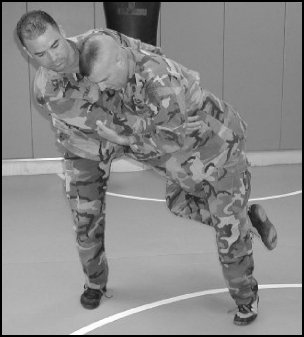
In martial arts and combat sports, a takedown is a technique that involves off-balancing an opponent and bringing them to the ground with the attacker landing on top. The process of quickly advancing on an opponent and attempting a takedown is known as shooting for a takedown, or simply shooting.
In rulesets of many sports, such as judo and sambo, a well-executed throw will end the match (with the idea being that if the match did not happen on a tatami, the one who was thrown would be unable to stand back up) while the match will continue on the ground if a takedown is used instead. Takedowns are featured in all forms of wrestling and judo.
The leg trip is a technique in which the combatant uses their own leg(s) to off-balance an opponent, hence causing the opponent to fall to the ground. Leg trips are often integrated into more complex takedown techniques, and are also important in many throws. Takedown techniques that are pure leg trips usually involve controlling the body of the opponent, and impeding or destabilizing one or both of the opponents legs. Leg trips are featured in for instance freestyle wrestling, judo, sumo, and shuai jiao while being an illegal technique in Greco-Roman wrestling.
The scissor kick takes down an opponent by wrapping one's legs around the opponent.
The single leg takedown (often shortened to single leg or single or single leg shot) involves grabbing one of the legs of the opponent, usually with both hands, and using the position to force the opponent to the ground. Typically, the lower part of the leg is pulled in one direction, while the torso or shoulder is used to press the body or upper part of the leg of the opponent in the other direction.
There are several varieties of single leg takedowns. Some involve picking up and holding the leg by the ankle and are often known as ankle picks, while other varieties include the high crotch, in which the leg is held high up in the opponent's crotch area. The leg can be attacked either across the body ("inside") or from away from the body ("outside"). Single leg takedowns can also be executed in combination with a leg trip to the other leg, which additionally destabilizes the opponent.
Single leg takedowns can be countered by sprawling or by hooking the lifted foot in the crotch of the aggressor (so it cannot be lifted further and to maintain a distance from the aggressor), and, where allowed, in combination with knee strikes to the head of the opponent.
In judo and other martial arts, there are many classifications of different types of single leg takedowns. Variants of the high crotch correspond to sukui nage (掬投, "scoop throw"), where the opponent is lifted up from the ground, while the typical forward pushing single leg takedown is classified as morote gari (双手刈, "both hands scoop"). Some techniques are more specific, for instance kibisu gaeshi (踵返, "heel trip reversal"), which is an ankle pick where the heel is grabbed, scooped up and the opponent is pushed and thrown immediately. In kuchiki taoshi (朽木落, "one hand drop"), the opponent's leg is grabbed, pulled up, and used to push the opponent down to the ground in a split second. The technique was banned in judo competition by the International Judo Federation in 2010 except as a counter or combination.
Takedown (grappling)
In martial arts and combat sports, a takedown is a technique that involves off-balancing an opponent and bringing them to the ground with the attacker landing on top. The process of quickly advancing on an opponent and attempting a takedown is known as shooting for a takedown, or simply shooting.
In rulesets of many sports, such as judo and sambo, a well-executed throw will end the match (with the idea being that if the match did not happen on a tatami, the one who was thrown would be unable to stand back up) while the match will continue on the ground if a takedown is used instead. Takedowns are featured in all forms of wrestling and judo.
The leg trip is a technique in which the combatant uses their own leg(s) to off-balance an opponent, hence causing the opponent to fall to the ground. Leg trips are often integrated into more complex takedown techniques, and are also important in many throws. Takedown techniques that are pure leg trips usually involve controlling the body of the opponent, and impeding or destabilizing one or both of the opponents legs. Leg trips are featured in for instance freestyle wrestling, judo, sumo, and shuai jiao while being an illegal technique in Greco-Roman wrestling.
The scissor kick takes down an opponent by wrapping one's legs around the opponent.
The single leg takedown (often shortened to single leg or single or single leg shot) involves grabbing one of the legs of the opponent, usually with both hands, and using the position to force the opponent to the ground. Typically, the lower part of the leg is pulled in one direction, while the torso or shoulder is used to press the body or upper part of the leg of the opponent in the other direction.
There are several varieties of single leg takedowns. Some involve picking up and holding the leg by the ankle and are often known as ankle picks, while other varieties include the high crotch, in which the leg is held high up in the opponent's crotch area. The leg can be attacked either across the body ("inside") or from away from the body ("outside"). Single leg takedowns can also be executed in combination with a leg trip to the other leg, which additionally destabilizes the opponent.
Single leg takedowns can be countered by sprawling or by hooking the lifted foot in the crotch of the aggressor (so it cannot be lifted further and to maintain a distance from the aggressor), and, where allowed, in combination with knee strikes to the head of the opponent.
In judo and other martial arts, there are many classifications of different types of single leg takedowns. Variants of the high crotch correspond to sukui nage (掬投, "scoop throw"), where the opponent is lifted up from the ground, while the typical forward pushing single leg takedown is classified as morote gari (双手刈, "both hands scoop"). Some techniques are more specific, for instance kibisu gaeshi (踵返, "heel trip reversal"), which is an ankle pick where the heel is grabbed, scooped up and the opponent is pushed and thrown immediately. In kuchiki taoshi (朽木落, "one hand drop"), the opponent's leg is grabbed, pulled up, and used to push the opponent down to the ground in a split second. The technique was banned in judo competition by the International Judo Federation in 2010 except as a counter or combination.
Recent media
Recent media