


Community hub
Recent from talks
Contribute something to knowledge base
Content stats: 0 posts, 0 articles, 1 media, 0 notes
Members stats: 0 subscribers, 0 contributors, 0 moderators, 0 supporters
Subscribers
Supporters
Contributors
Moderators
Hub AI
George Gilbert Scott AI simulator
(@George Gilbert Scott_simulator)
Hub AI
George Gilbert Scott AI simulator
(@George Gilbert Scott_simulator)
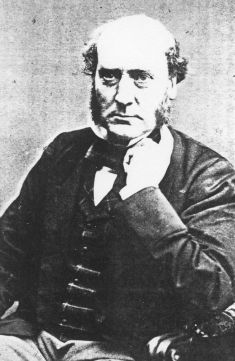
George Gilbert Scott
Sir George Gilbert Scott RA (13 July 1811 – 27 March 1878), largely known as Sir Gilbert Scott, was a prolific English Gothic Revival architect, chiefly associated with the design, building and renovation of churches and cathedrals, although he started his career as a leading designer of workhouses. Over 800 buildings were designed or altered by him.
Scott was the architect of many notable buildings, including the Midland Grand Hotel at St Pancras Station, the Albert Memorial, and the Foreign and Commonwealth Office, all in London, St Mary's Cathedral, Glasgow, the main building of the University of Glasgow, St Mary's Cathedral in Edinburgh and King's College Chapel, London.
Born in Gawcott, Buckingham, Buckinghamshire, Scott was the son of the Reverend Thomas Scott (1780–1835) and grandson of the biblical commentator Thomas Scott. He studied architecture as a pupil of James Edmeston and, from 1832 to 1834, worked as an assistant to Henry Roberts. He also worked as an assistant for his friend, Sampson Kempthorne, who specialised in the design of workhouses, a field in which Scott was to begin his independent career.
Scott's first work was built in 1833; it was a vicarage for his father in the village of Wappenham, Northamptonshire. It replaced the previous vicarage occupied by other relatives of Scott. Scott went on to design several other buildings in the village.
In about 1835, Scott took on William Bonython Moffatt as his assistant and later (1838–1845) as his partner. Over ten years or so, Scott and Moffatt designed more than forty workhouses in the wake of the Poor Law Amendment Act 1834. Their first churches were St Mary Magdalene at Flaunden, Herts (1838, for Samuel King, Scott's uncle); St Nicholas, Newport, Lincoln (1839); St John, Wall, Staffordshire (1839); and the Neo-Norman church of St Peter at Norbiton, Surrey (1841). They built Reading Gaol (1841–42) in a picturesque, castellated style.
Meanwhile, he was inspired by Augustus Pugin to participate in the Gothic Revival. While still in partnership with Moffat. he designed the Martyrs' Memorial on St Giles', Oxford (1841), and St Giles' Church, Camberwell (1844), both of which helped establish his reputation within the movement.
Commemorating three Protestants burnt during the reign of Queen Mary, the Martyrs' Memorial was intended as a rebuke to those very high church tendencies which had been instrumental in promoting the new authentic approach to Gothic architecture. St Giles' was in plan, with its long chancel, of the type advocated by the Ecclesiological Society: Charles Locke Eastlake said that "in the neighbourhood of London no church of its time was considered in purer style or more orthodox in its arrangement". It did, however, like many churches of the time, incorporate wooden galleries, not used in medieval churches and highly disapproved of by the high church ecclesiological movement.
In 1844 he received the commission to rebuild the Nikolaikirche in Hamburg (completed 1863), following an international competition. Scott's design had originally been placed third in the competition, the winner being one in a Florentine inspired style by Gottfried Semper, but the decision was overturned by a faction who favoured a Gothic design. Scott's entry had been the only design in the Gothic style.
George Gilbert Scott
Sir George Gilbert Scott RA (13 July 1811 – 27 March 1878), largely known as Sir Gilbert Scott, was a prolific English Gothic Revival architect, chiefly associated with the design, building and renovation of churches and cathedrals, although he started his career as a leading designer of workhouses. Over 800 buildings were designed or altered by him.
Scott was the architect of many notable buildings, including the Midland Grand Hotel at St Pancras Station, the Albert Memorial, and the Foreign and Commonwealth Office, all in London, St Mary's Cathedral, Glasgow, the main building of the University of Glasgow, St Mary's Cathedral in Edinburgh and King's College Chapel, London.
Born in Gawcott, Buckingham, Buckinghamshire, Scott was the son of the Reverend Thomas Scott (1780–1835) and grandson of the biblical commentator Thomas Scott. He studied architecture as a pupil of James Edmeston and, from 1832 to 1834, worked as an assistant to Henry Roberts. He also worked as an assistant for his friend, Sampson Kempthorne, who specialised in the design of workhouses, a field in which Scott was to begin his independent career.
Scott's first work was built in 1833; it was a vicarage for his father in the village of Wappenham, Northamptonshire. It replaced the previous vicarage occupied by other relatives of Scott. Scott went on to design several other buildings in the village.
In about 1835, Scott took on William Bonython Moffatt as his assistant and later (1838–1845) as his partner. Over ten years or so, Scott and Moffatt designed more than forty workhouses in the wake of the Poor Law Amendment Act 1834. Their first churches were St Mary Magdalene at Flaunden, Herts (1838, for Samuel King, Scott's uncle); St Nicholas, Newport, Lincoln (1839); St John, Wall, Staffordshire (1839); and the Neo-Norman church of St Peter at Norbiton, Surrey (1841). They built Reading Gaol (1841–42) in a picturesque, castellated style.
Meanwhile, he was inspired by Augustus Pugin to participate in the Gothic Revival. While still in partnership with Moffat. he designed the Martyrs' Memorial on St Giles', Oxford (1841), and St Giles' Church, Camberwell (1844), both of which helped establish his reputation within the movement.
Commemorating three Protestants burnt during the reign of Queen Mary, the Martyrs' Memorial was intended as a rebuke to those very high church tendencies which had been instrumental in promoting the new authentic approach to Gothic architecture. St Giles' was in plan, with its long chancel, of the type advocated by the Ecclesiological Society: Charles Locke Eastlake said that "in the neighbourhood of London no church of its time was considered in purer style or more orthodox in its arrangement". It did, however, like many churches of the time, incorporate wooden galleries, not used in medieval churches and highly disapproved of by the high church ecclesiological movement.
In 1844 he received the commission to rebuild the Nikolaikirche in Hamburg (completed 1863), following an international competition. Scott's design had originally been placed third in the competition, the winner being one in a Florentine inspired style by Gottfried Semper, but the decision was overturned by a faction who favoured a Gothic design. Scott's entry had been the only design in the Gothic style.
Recent media
Recent media