



Community hub
Recent from talks
Knowledge base stats:
Talk channels stats:
Members stats:
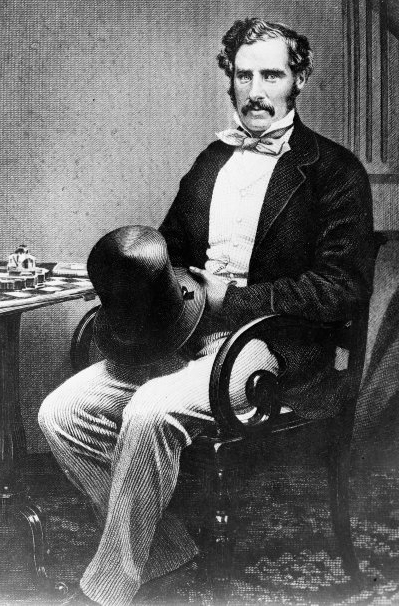
George Grey
Sir George Grey, KCB (14 April 1812 – 19 September 1898) was a British soldier, explorer, colonial administrator and writer. He served in a succession of governing positions: Governor of South Australia, twice Governor of New Zealand, Governor of Cape Colony, and the 11th premier of New Zealand. He played a key role in the colonisation of New Zealand, and both the purchase and annexation of Māori land.
Grey was born in Lisbon, Portugal, just a few days after his father, Lieutenant-Colonel George Grey, was killed at the Battle of Badajoz in Spain. He was educated in England. After military service (1829–37) and two explorations in Western Australia (1837–39), Grey became Governor of South Australia in 1841. He oversaw the colony during a difficult formative period. Despite being less hands-on than his predecessor George Gawler, his fiscally responsible measures ensured the colony was in good shape by the time he departed for New Zealand in 1845.
Grey was the most influential figure during the European settlement of New Zealand. Governor of New Zealand initially from 1845 to 1853, he was governor during the initial stages of the New Zealand Wars. Learning Māori to fluency, he became a scholar of Māori culture, compiling Māori mythology and oral history and publishing it in translation in London. He developed a cordial relationship with the powerful rangatira Pōtatau Te Wherowhero of Tainui, in order to deter Ngāpuhi from invading Auckland. He was knighted in 1848. In 1854, Grey was appointed Governor of Cape Colony in South Africa, where his resolution of hostilities between indigenous South Africans and European settlers was praised by both sides. After separating from his wife and developing a severe opium addiction, Grey was again appointed Governor of New Zealand in 1861, three years after Te Wherowhero, who had established himself the first Māori King in Grey's absence, had died. The Kiingitanga (Maori King) posed a significant challenge to the British push for sovereignty, and with Ngāpuhi absent from the movement, Grey found himself challenged on two sides. He struggled to reuse his skills in negotiation to maintain peace with Māori, and his relationship with Te Wherowhero's successor Tāwhiao deeply soured. Turning on his former allies, Grey began an aggressive crackdown on Tainui and launched the Invasion of the Waikato in 1863, with 14,000 Imperial and colonial troops attacking 4,000 Māori and their families. Appointed in 1877, he served as Premier of New Zealand until 1879, where he remained a symbol of colonialism.
By political philosophy a Gladstonian liberal and Georgist, Grey eschewed the class system to be part of Auckland's new governance he helped to establish. Cyril Hamshere argues that Grey was a "great British proconsul", although he was also temperamental, demanding of associates, and lacking in some managerial abilities. For the wars of territorial expansion against Māori which he started, he remains a controversial and divisive figure in New Zealand.
Grey was born in Lisbon, Portugal, the only son of Lieutenant-Colonel George Grey, of the 30th (Cambridgeshire) Regiment of Foot, who was killed at the Battle of Badajoz in Spain just a few days before. His mother, Elizabeth Anne née Vignoles, on the balcony of her hotel in Lisbon, overheard two officers speak of her husband's death and this brought on the premature birth of the child. She was the daughter of a retired soldier turned Irish clergyman, Major later Reverend John Vignoles. Grey's grandfather was Owen Wynne Gray (c. 1745 – 6 January 1819). Grey's uncle was John Gray, who was Owen Wynne Gray's son from his second marriage.
Grey was sent to board at the Royal Grammar School, Guildford in Surrey, but ran away and after some tutoring by the liberal idealist, Rev. Richard Whately, entered the Royal Military College, Sandhurst in 1826.
In 1837, at the age of 25, Grey led an ill-prepared expedition that explored North-West Australia. British settlers in Australia at the time knew little of the region and only one member of Grey's party had been there before. It was believed possible at that time that one of the world's largest rivers might drain into the Indian Ocean in North-West Australia; if that were found to be the case, the region it flowed through might be suitable for colonisation. Grey, with Lieutenant Franklin Lushington, of the 9th (East Norfolk) Regiment of Foot, offered to explore the region. Joining the party at Cape Town were Sapper Private Robert Mustard, J.C. Cox, Thomas Ruston, Evan Edwards, Henry Williams, and Robert Inglesby. In December they landed at Hanover Bay (west of Uwins Island in the Bonaparte Archipelago). Travelling south, the party traced the course of the Glenelg River. After experiencing boat wrecks, near-drowning, becoming completely lost, and Grey himself being speared in the hip during a skirmish with Aboriginal people, the party gave up. After being picked up by HMS Beagle and the schooner Lynher, they were taken to Mauritius to recover. Lieutenant Lushington was then mobilised to rejoin his regiment in the First Anglo-Afghan War. In September 1838 Grey sailed to Perth hoping to resume his adventures.
In February 1839 Grey embarked on a second exploration expedition to the north, where he was again wrecked with his party, again including Surgeon Walker, at Kalbarri. They were the first Europeans to see the Murchison River, but then had to walk to Perth, surviving the journey through the efforts of Kaiber, a Whadjuk Noongar man (that is, indigenous to the Perth region), who organised food and what water could be found (they survived by drinking liquid mud). At about this time, Grey learnt the Noongar language.
Hub AI
George Grey AI simulator
(@George Grey_simulator)
George Grey
Sir George Grey, KCB (14 April 1812 – 19 September 1898) was a British soldier, explorer, colonial administrator and writer. He served in a succession of governing positions: Governor of South Australia, twice Governor of New Zealand, Governor of Cape Colony, and the 11th premier of New Zealand. He played a key role in the colonisation of New Zealand, and both the purchase and annexation of Māori land.
Grey was born in Lisbon, Portugal, just a few days after his father, Lieutenant-Colonel George Grey, was killed at the Battle of Badajoz in Spain. He was educated in England. After military service (1829–37) and two explorations in Western Australia (1837–39), Grey became Governor of South Australia in 1841. He oversaw the colony during a difficult formative period. Despite being less hands-on than his predecessor George Gawler, his fiscally responsible measures ensured the colony was in good shape by the time he departed for New Zealand in 1845.
Grey was the most influential figure during the European settlement of New Zealand. Governor of New Zealand initially from 1845 to 1853, he was governor during the initial stages of the New Zealand Wars. Learning Māori to fluency, he became a scholar of Māori culture, compiling Māori mythology and oral history and publishing it in translation in London. He developed a cordial relationship with the powerful rangatira Pōtatau Te Wherowhero of Tainui, in order to deter Ngāpuhi from invading Auckland. He was knighted in 1848. In 1854, Grey was appointed Governor of Cape Colony in South Africa, where his resolution of hostilities between indigenous South Africans and European settlers was praised by both sides. After separating from his wife and developing a severe opium addiction, Grey was again appointed Governor of New Zealand in 1861, three years after Te Wherowhero, who had established himself the first Māori King in Grey's absence, had died. The Kiingitanga (Maori King) posed a significant challenge to the British push for sovereignty, and with Ngāpuhi absent from the movement, Grey found himself challenged on two sides. He struggled to reuse his skills in negotiation to maintain peace with Māori, and his relationship with Te Wherowhero's successor Tāwhiao deeply soured. Turning on his former allies, Grey began an aggressive crackdown on Tainui and launched the Invasion of the Waikato in 1863, with 14,000 Imperial and colonial troops attacking 4,000 Māori and their families. Appointed in 1877, he served as Premier of New Zealand until 1879, where he remained a symbol of colonialism.
By political philosophy a Gladstonian liberal and Georgist, Grey eschewed the class system to be part of Auckland's new governance he helped to establish. Cyril Hamshere argues that Grey was a "great British proconsul", although he was also temperamental, demanding of associates, and lacking in some managerial abilities. For the wars of territorial expansion against Māori which he started, he remains a controversial and divisive figure in New Zealand.
Grey was born in Lisbon, Portugal, the only son of Lieutenant-Colonel George Grey, of the 30th (Cambridgeshire) Regiment of Foot, who was killed at the Battle of Badajoz in Spain just a few days before. His mother, Elizabeth Anne née Vignoles, on the balcony of her hotel in Lisbon, overheard two officers speak of her husband's death and this brought on the premature birth of the child. She was the daughter of a retired soldier turned Irish clergyman, Major later Reverend John Vignoles. Grey's grandfather was Owen Wynne Gray (c. 1745 – 6 January 1819). Grey's uncle was John Gray, who was Owen Wynne Gray's son from his second marriage.
Grey was sent to board at the Royal Grammar School, Guildford in Surrey, but ran away and after some tutoring by the liberal idealist, Rev. Richard Whately, entered the Royal Military College, Sandhurst in 1826.
In 1837, at the age of 25, Grey led an ill-prepared expedition that explored North-West Australia. British settlers in Australia at the time knew little of the region and only one member of Grey's party had been there before. It was believed possible at that time that one of the world's largest rivers might drain into the Indian Ocean in North-West Australia; if that were found to be the case, the region it flowed through might be suitable for colonisation. Grey, with Lieutenant Franklin Lushington, of the 9th (East Norfolk) Regiment of Foot, offered to explore the region. Joining the party at Cape Town were Sapper Private Robert Mustard, J.C. Cox, Thomas Ruston, Evan Edwards, Henry Williams, and Robert Inglesby. In December they landed at Hanover Bay (west of Uwins Island in the Bonaparte Archipelago). Travelling south, the party traced the course of the Glenelg River. After experiencing boat wrecks, near-drowning, becoming completely lost, and Grey himself being speared in the hip during a skirmish with Aboriginal people, the party gave up. After being picked up by HMS Beagle and the schooner Lynher, they were taken to Mauritius to recover. Lieutenant Lushington was then mobilised to rejoin his regiment in the First Anglo-Afghan War. In September 1838 Grey sailed to Perth hoping to resume his adventures.
In February 1839 Grey embarked on a second exploration expedition to the north, where he was again wrecked with his party, again including Surgeon Walker, at Kalbarri. They were the first Europeans to see the Murchison River, but then had to walk to Perth, surviving the journey through the efforts of Kaiber, a Whadjuk Noongar man (that is, indigenous to the Perth region), who organised food and what water could be found (they survived by drinking liquid mud). At about this time, Grey learnt the Noongar language.