



Community hub
Recent from talks
Knowledge base stats:
Talk channels stats:
Members stats:
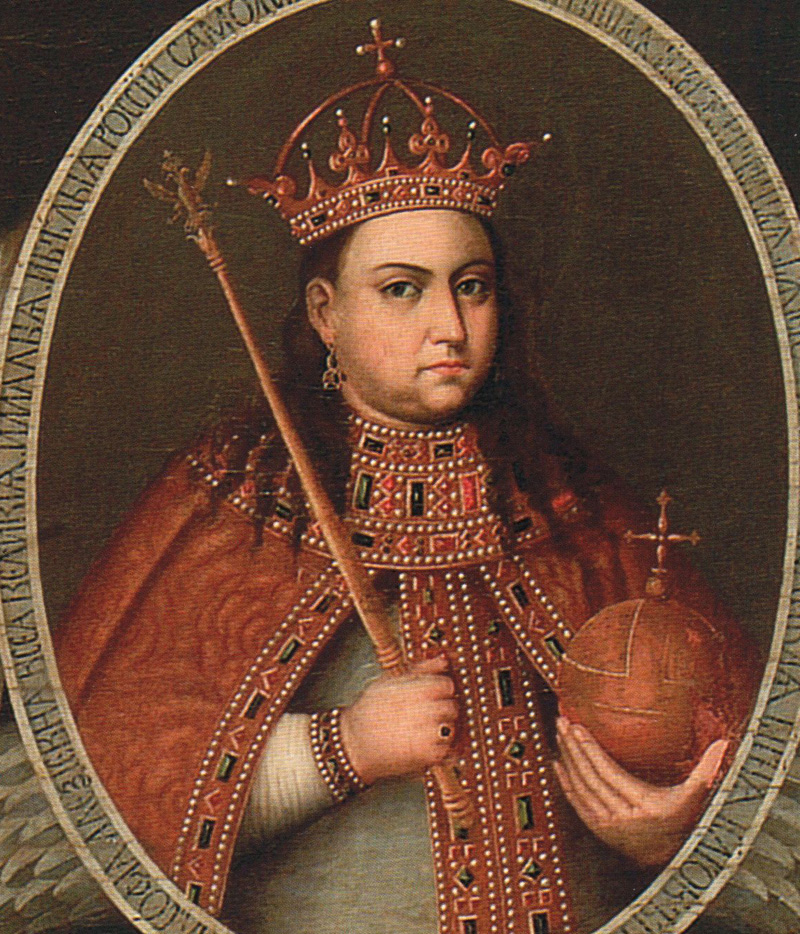
Sophia Alekseyevna of Russia
Sophia Alekseyevna (Russian: Со́фья Алексе́евна, IPA: [ˈsofʲjə ɐlʲɪˈksʲejɪvnə]; 27 September [O.S. 17 September] 1657 – 14 July [O.S. 3 July] 1704) was a Russian princess who ruled as regent of Russia from 1682 to 1689. She allied herself with a singularly capable courtier and politician, Prince Vasily Golitsyn, to install herself during the minority of her brother Ivan V and half-brother Peter I. She carried out her regency with a firm hand. The activity of this "bogatyr-tsarevna", as Sergey Solovyov called her, was all the more extraordinary, as upper-class Muscovite women were confined to the upper-floor terem, veiled and guarded in public, and invariably kept aloof from any open involvement in politics.
Sophia was the third surviving daughter of Tsar Alexis by his first wife, Maria Miloslavskaya. She was the only one of her sisters educated by Simeon Polotsky, who also taught Tsar Alexis' heirs Tsarevich Alexei and Tsarevich Feodor. After the death of her brother Tsar Feodor III on 27 April 1682, Sophia unexpectedly entered Russian politics, trying to prevent her young half-brother, the 9-year old Peter Alekseyevich from bypassing his 16-year-old elder brother Tsarevich Ivan and inheriting the throne.
Although Sophia emerged from the shadows during the dynastic struggles of 1682, her prior influences can help to explain her ascendance to the regency. At the previous change of ruler in 1676, Sophia may have acted in the interest of her brother, Feodor, as various rumours exist of her pleading then with her father, the dying Tsar Alexis, not to proclaim Peter his heir. Feodor's capability to lead Russia was questioned, based on his weak nature and poor health. His mental ability developed quite nicely over time, as he was taught by Simeon Polotsky. During Feodor III's brief reign (1676–1682), many historians argue, Feodor actually "ruled under the protectorate of Sophia his sister".
As the young Tsar Feodor's health began to decline, more individuals rose up to counsel him, and Sophia found her influence steadily declining. Taking advantage of a court never open to a woman in her situation, she utilized her connections, making allies and formally planning on securing the throne. When Feodor died on 7 May [O.S. 27 April] 1682, Sophia immediately returned to the political scene. She attended her brother's funeral and caused a commotion while doing so. In Sophia's age, the female relatives of the tsar were kept away from the court and other political spheres, and funerals traditionally took place without women. Sophia stormed into the funeral, insisting on her presence and simultaneously setting off a chain of events that would result in her regency.
The Miloslavsky party, grouped around the family of Feodor and Sophia, took advantage of the Streltsy uprising 25 May [O.S. 15 May] 1682 to place Sophia on the seat of power. Tsar Alexis had left behind two families by his two wives, and each of the two branches had at least one male heir. As the clans of Alexis' two wives were in conflict, Sophia devised a plan to ensure power for herself and her family. Promoting the case of her full brother Ivan as the legitimate heir to the throne, Sophia attempted to convince the patriarch and the boyars that they should reverse their recent decision to crown Peter. Insisting that Peter's proclamation broke monarchic laws by skipping over her brother, who would have been next in line to rule if not for his ineptitude, she proposed a shared crown with Ivan and herself.
Upon the court's swift and unanimous rejection of this proposal, Sophia reached out to the discouraged military troop, the streltsy, for their aid and support. The unjust dismissal of Ivan's rights acted as a catalyst for the already displeased and frustrated troops. Multiple issues, including merciless motivational tactics and lack of rest, drove the streltsy to violent opposition against the "unjust" election of Peter. As the fighting ceased and Peter's life was left forever scarred by the blood spilt by his Naryshkin relatives, the streltsy achieved their initial demands.
In the aftermath of the streltsy rebellion, on 25 June 1682 the Patriarch Ioakim crowned the incompetent Ivan as senior tsar (Ivan V) and Peter, only nine years old, as junior tsar. Sophia had been deemed the sole intellectually mature member of the ruling family at the time of Feodor's death, making her the favourite to govern on behalf of the child Peter and of the inept Ivan. Using political and practical knowledge she had acquired by Feodor's side, Sophia convinced the nobles and the patriarch of her capacity to rule Russia. As Sophia had arranged before Tsar Feodor's death, Vasily Golitsyn was installed as de facto head of government, executing most of the policies during her regency.
Sophia's relationship with Prince Golitsyn was not necessarily a romantic attachment. Golitsyn had a wife and a large family at a time when the boyars were still attached to the Domostroy, a matrimonial code from Ivan IV's reign. Several early 18th-century memoirs gave birth to rumours that Golitsyn had been Sophia's lover. Some see the evidence for this in the tone of Sophia's correspondence with him in 1689.
Hub AI
Sophia Alekseyevna of Russia AI simulator
(@Sophia Alekseyevna of Russia_simulator)
Sophia Alekseyevna of Russia
Sophia Alekseyevna (Russian: Со́фья Алексе́евна, IPA: [ˈsofʲjə ɐlʲɪˈksʲejɪvnə]; 27 September [O.S. 17 September] 1657 – 14 July [O.S. 3 July] 1704) was a Russian princess who ruled as regent of Russia from 1682 to 1689. She allied herself with a singularly capable courtier and politician, Prince Vasily Golitsyn, to install herself during the minority of her brother Ivan V and half-brother Peter I. She carried out her regency with a firm hand. The activity of this "bogatyr-tsarevna", as Sergey Solovyov called her, was all the more extraordinary, as upper-class Muscovite women were confined to the upper-floor terem, veiled and guarded in public, and invariably kept aloof from any open involvement in politics.
Sophia was the third surviving daughter of Tsar Alexis by his first wife, Maria Miloslavskaya. She was the only one of her sisters educated by Simeon Polotsky, who also taught Tsar Alexis' heirs Tsarevich Alexei and Tsarevich Feodor. After the death of her brother Tsar Feodor III on 27 April 1682, Sophia unexpectedly entered Russian politics, trying to prevent her young half-brother, the 9-year old Peter Alekseyevich from bypassing his 16-year-old elder brother Tsarevich Ivan and inheriting the throne.
Although Sophia emerged from the shadows during the dynastic struggles of 1682, her prior influences can help to explain her ascendance to the regency. At the previous change of ruler in 1676, Sophia may have acted in the interest of her brother, Feodor, as various rumours exist of her pleading then with her father, the dying Tsar Alexis, not to proclaim Peter his heir. Feodor's capability to lead Russia was questioned, based on his weak nature and poor health. His mental ability developed quite nicely over time, as he was taught by Simeon Polotsky. During Feodor III's brief reign (1676–1682), many historians argue, Feodor actually "ruled under the protectorate of Sophia his sister".
As the young Tsar Feodor's health began to decline, more individuals rose up to counsel him, and Sophia found her influence steadily declining. Taking advantage of a court never open to a woman in her situation, she utilized her connections, making allies and formally planning on securing the throne. When Feodor died on 7 May [O.S. 27 April] 1682, Sophia immediately returned to the political scene. She attended her brother's funeral and caused a commotion while doing so. In Sophia's age, the female relatives of the tsar were kept away from the court and other political spheres, and funerals traditionally took place without women. Sophia stormed into the funeral, insisting on her presence and simultaneously setting off a chain of events that would result in her regency.
The Miloslavsky party, grouped around the family of Feodor and Sophia, took advantage of the Streltsy uprising 25 May [O.S. 15 May] 1682 to place Sophia on the seat of power. Tsar Alexis had left behind two families by his two wives, and each of the two branches had at least one male heir. As the clans of Alexis' two wives were in conflict, Sophia devised a plan to ensure power for herself and her family. Promoting the case of her full brother Ivan as the legitimate heir to the throne, Sophia attempted to convince the patriarch and the boyars that they should reverse their recent decision to crown Peter. Insisting that Peter's proclamation broke monarchic laws by skipping over her brother, who would have been next in line to rule if not for his ineptitude, she proposed a shared crown with Ivan and herself.
Upon the court's swift and unanimous rejection of this proposal, Sophia reached out to the discouraged military troop, the streltsy, for their aid and support. The unjust dismissal of Ivan's rights acted as a catalyst for the already displeased and frustrated troops. Multiple issues, including merciless motivational tactics and lack of rest, drove the streltsy to violent opposition against the "unjust" election of Peter. As the fighting ceased and Peter's life was left forever scarred by the blood spilt by his Naryshkin relatives, the streltsy achieved their initial demands.
In the aftermath of the streltsy rebellion, on 25 June 1682 the Patriarch Ioakim crowned the incompetent Ivan as senior tsar (Ivan V) and Peter, only nine years old, as junior tsar. Sophia had been deemed the sole intellectually mature member of the ruling family at the time of Feodor's death, making her the favourite to govern on behalf of the child Peter and of the inept Ivan. Using political and practical knowledge she had acquired by Feodor's side, Sophia convinced the nobles and the patriarch of her capacity to rule Russia. As Sophia had arranged before Tsar Feodor's death, Vasily Golitsyn was installed as de facto head of government, executing most of the policies during her regency.
Sophia's relationship with Prince Golitsyn was not necessarily a romantic attachment. Golitsyn had a wife and a large family at a time when the boyars were still attached to the Domostroy, a matrimonial code from Ivan IV's reign. Several early 18th-century memoirs gave birth to rumours that Golitsyn had been Sophia's lover. Some see the evidence for this in the tone of Sophia's correspondence with him in 1689.