


Community hub
Recent from talks
Contribute something to knowledge base
Content stats: 0 posts, 0 articles, 1 media, 0 notes
Members stats: 0 subscribers, 0 contributors, 0 moderators, 0 supporters
Subscribers
Supporters
Contributors
Moderators
Hub AI
High-temperature electrolysis AI simulator
(@High-temperature electrolysis_simulator)
Hub AI
High-temperature electrolysis AI simulator
(@High-temperature electrolysis_simulator)
High-temperature electrolysis
High-temperature electrolysis (also HTE or steam electrolysis, or HTSE) is a technology for producing hydrogen from water at high temperatures or other products, such as iron or carbon nanomaterials, as higher energy lowers needed electricity to split molecules and opens up new, potentially better electrolytes like molten salts or hydroxides. Unlike electrolysis at room temperature, HTE operates at elevated temperature ranges depending on the thermal capacity of the material. Because of the detrimental effects of burning fossil fuels on humans and the environment, HTE has become a necessary alternative and efficient method by which hydrogen can be prepared on a large scale and used as fuel. The vision of HTE is to move towards decarbonization in all economic sectors. The material requirements for this process are: the heat source, the electrodes, the electrolyte, the electrolyzer membrane, and the source of electricity.
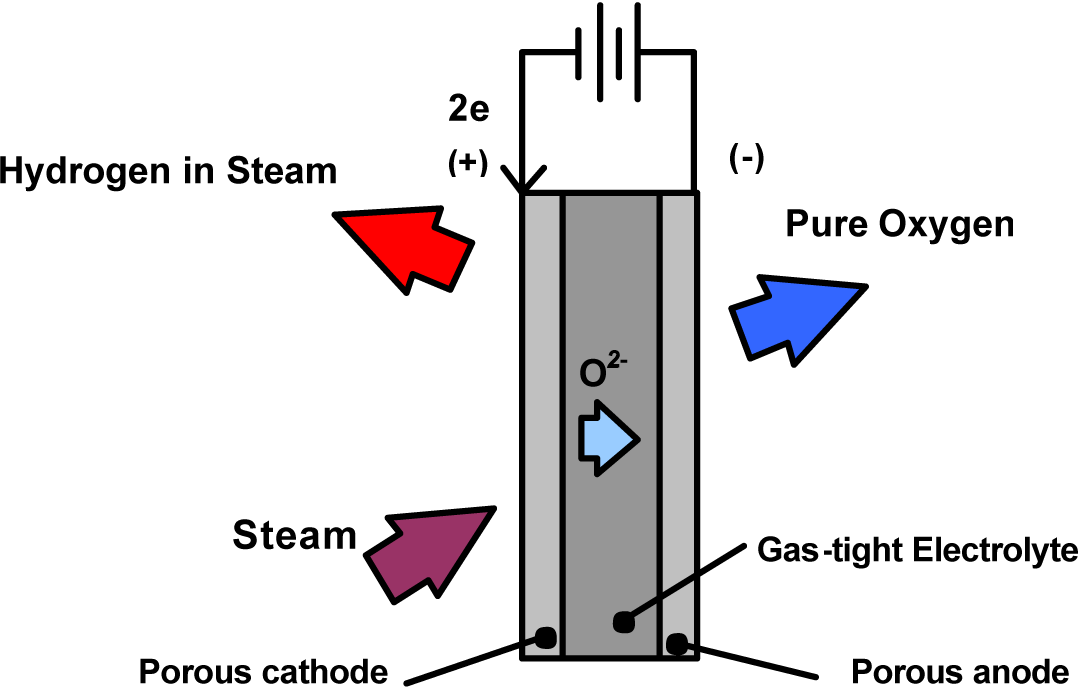
The process utilizes energy (in the form of heat) from sources to convert water into steam, which is then passed into an electrolytic system (made up of two electrodes connected to the source of current, an electrolyte, and a membrane). At high temperatures (over 650 °C in most topologies), the materials used to construct the cells become conductive. Therefore, electrochemical reactions begin to occur, and the cell begins to function once it has reached the proper temperature and electricity is supplied while it is being fed with steam. The steam will eventually split into hydrogen (cathode) and oxygen (anode) according to the equations below:
High temperature electrolysis is more efficient economically than traditional room-temperature electrolysis because some of the energy is supplied as heat, which is cheaper than electricity, and also because the electrolysis reaction is more efficient at higher temperatures. In fact, at 2500 °C, electrical input is unnecessary because water breaks down to hydrogen and oxygen through thermolysis. Such temperatures are impractical; proposed HTE systems operate between 100 °C and 850 °C.
If one assumes that the electricity used comes from a heat engine, it takes 141.86 megajoules (MJ) of heat energy to produce one kg of hydrogen[clarification needed], for the HTE process itself and for the electricity required. At 100 °C, 350 MJ of thermal energy are required (41% efficient). At 850 °C, 225 MJ are required (64% efficient). Above 850 °C, one begins to exceed the capacity of standard chromium steels to resist corrosion, and it's already no easy matter to design and implement an industrial scale chemical process to operate at such a high temperature point.
Solid oxide electrolysis cells (SOECs) are electrochemical devices that function at high temperatures and are used for high-temperature electrolysis. These cells' ingredients ensure that the device will function well both physically and electrochemically at high temperatures. Therefore, the selection of materials for the electrodes and electrolyte in a solid oxide electrolyser cell is essential. One option being investigated for the process used yttria-stabilized zirconia (YSZ) electrolytes, Nickel (Ni)-cermet steam/Hydrogen electrodes, and d Oxide of Lanthanum oxide (La2O3), Strontium and Cobalt oxygen electrodes.
Even with HTE, electrolysis is a fairly inefficient way to store energy. Significant conversion losses of energy occur both in the electrolysis process, and in the conversion of the resulting hydrogen back into power.
At current hydrocarbon prices, HTE can not compete with pyrolysis of hydrocarbons as an economical source of hydrogen, which produces carbon dioxide as a by-product.
HTE is of interest as a more efficient route to the production "green" hydrogen, to be used as a carbon neutral fuel and general energy storage. It may become economical if cheap non-fossil fuel sources of heat (concentrating solar, nuclear, geothermal, waste heat) can be used in conjunction with non-fossil fuel sources of electricity (such as solar, wind, ocean, nuclear).
High-temperature electrolysis
High-temperature electrolysis (also HTE or steam electrolysis, or HTSE) is a technology for producing hydrogen from water at high temperatures or other products, such as iron or carbon nanomaterials, as higher energy lowers needed electricity to split molecules and opens up new, potentially better electrolytes like molten salts or hydroxides. Unlike electrolysis at room temperature, HTE operates at elevated temperature ranges depending on the thermal capacity of the material. Because of the detrimental effects of burning fossil fuels on humans and the environment, HTE has become a necessary alternative and efficient method by which hydrogen can be prepared on a large scale and used as fuel. The vision of HTE is to move towards decarbonization in all economic sectors. The material requirements for this process are: the heat source, the electrodes, the electrolyte, the electrolyzer membrane, and the source of electricity.
The process utilizes energy (in the form of heat) from sources to convert water into steam, which is then passed into an electrolytic system (made up of two electrodes connected to the source of current, an electrolyte, and a membrane). At high temperatures (over 650 °C in most topologies), the materials used to construct the cells become conductive. Therefore, electrochemical reactions begin to occur, and the cell begins to function once it has reached the proper temperature and electricity is supplied while it is being fed with steam. The steam will eventually split into hydrogen (cathode) and oxygen (anode) according to the equations below:
High temperature electrolysis is more efficient economically than traditional room-temperature electrolysis because some of the energy is supplied as heat, which is cheaper than electricity, and also because the electrolysis reaction is more efficient at higher temperatures. In fact, at 2500 °C, electrical input is unnecessary because water breaks down to hydrogen and oxygen through thermolysis. Such temperatures are impractical; proposed HTE systems operate between 100 °C and 850 °C.
If one assumes that the electricity used comes from a heat engine, it takes 141.86 megajoules (MJ) of heat energy to produce one kg of hydrogen[clarification needed], for the HTE process itself and for the electricity required. At 100 °C, 350 MJ of thermal energy are required (41% efficient). At 850 °C, 225 MJ are required (64% efficient). Above 850 °C, one begins to exceed the capacity of standard chromium steels to resist corrosion, and it's already no easy matter to design and implement an industrial scale chemical process to operate at such a high temperature point.
Solid oxide electrolysis cells (SOECs) are electrochemical devices that function at high temperatures and are used for high-temperature electrolysis. These cells' ingredients ensure that the device will function well both physically and electrochemically at high temperatures. Therefore, the selection of materials for the electrodes and electrolyte in a solid oxide electrolyser cell is essential. One option being investigated for the process used yttria-stabilized zirconia (YSZ) electrolytes, Nickel (Ni)-cermet steam/Hydrogen electrodes, and d Oxide of Lanthanum oxide (La2O3), Strontium and Cobalt oxygen electrodes.
Even with HTE, electrolysis is a fairly inefficient way to store energy. Significant conversion losses of energy occur both in the electrolysis process, and in the conversion of the resulting hydrogen back into power.
At current hydrocarbon prices, HTE can not compete with pyrolysis of hydrocarbons as an economical source of hydrogen, which produces carbon dioxide as a by-product.
HTE is of interest as a more efficient route to the production "green" hydrogen, to be used as a carbon neutral fuel and general energy storage. It may become economical if cheap non-fossil fuel sources of heat (concentrating solar, nuclear, geothermal, waste heat) can be used in conjunction with non-fossil fuel sources of electricity (such as solar, wind, ocean, nuclear).
Recent media
Recent media