


Community hub
Recent from talks
Contribute something to knowledge base
Content stats: 0 posts, 0 articles, 1 media, 0 notes
Members stats: 0 subscribers, 0 contributors, 0 moderators, 0 supporters
Subscribers
Supporters
Contributors
Moderators
Hub AI
Sun Valley, Idaho AI simulator
(@Sun Valley, Idaho_simulator)
Hub AI
Sun Valley, Idaho AI simulator
(@Sun Valley, Idaho_simulator)
Sun Valley, Idaho
Sun Valley is a resort city in the western United States, in Blaine County, Idaho, adjacent to the city of Ketchum in the Wood River valley. The population was 1,783 at the 2020 census. The elevation of Sun Valley (at the Lodge) is 5,920 feet (1,805 m) above sea level.
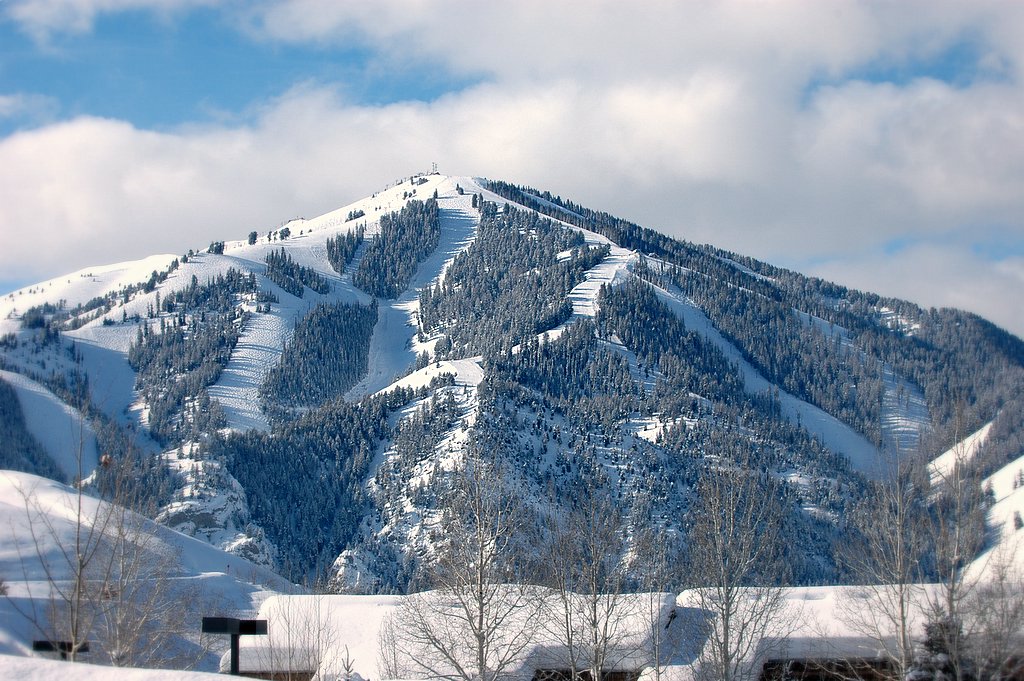
Among skiers, the term "Sun Valley" refers to the alpine ski area, which consists of Bald Mountain, the main ski mountain adjacent to Ketchum. Dollar Mountain, which is adjacent to Sun Valley, is suited for novice and lower intermediate skiers. Bald Mountain, or "Baldy", best suited for intermediate to advanced and expert skiers, has a summit of 9,150 feet (2,790 m) and a vertical drop of 3,400 feet (1,035 m). The treeless "Dollar" at 6,638 feet (2,023 m) has a moderate vertical drop of 628 feet (191 m).
The term "Sun Valley" is used more generally to speak of the region surrounding the city, including the neighboring city of Ketchum and the Wood River Valley area winding south to Hailey and Bellevue. The region has been a seasonal home to the rich and famous since first being brought to public attention by Ernest Hemingway in the late 1930s.
Scheduled passenger airline service is available at Friedman Memorial Airport (SUN) in Hailey, approximately fifteen miles (25 km) south. Visitors are relatively close to the Sawtooth National Recreation Area, accessed over Galena Summit on State Highway 75, the Sawtooth Scenic Byway.
The first destination winter resort in the U.S. was developed by W. Averell Harriman, the chairman of the Union Pacific Railroad, primarily to increase ridership on U.P. passenger trains in the Western United States. The UP's City of Portland (from Chicago and Omaha) and Portland Rose (from Kansas City) went to Shoshone in southern Idaho, where buses (then called "motor coaches") took travelers to Sun Valley. Sleeping car passengers from Los Angeles were able to take direct carriages on the UP's Pony Express from Los Angeles to Salt Lake City, and the Sun Valley Special from Salt Lake City to Sun Valley.
The success of the 1932 Winter Olympics in Lake Placid, New York, spurred an increase in participation in winter sports (and alpine skiing in particular). A lifelong skier, Harriman determined that America would embrace a destination mountain resort, similar to those enjoyed in the Swiss Alps, such as St. Moritz and Davos.
During the winter of 1935–36, Harriman enlisted the services of an Austrian Sportsman, Count Felix von Schaffgotsch, to travel across the Western U.S. to locate an ideal site for a winter resort. The Count toured Mount Rainier, Mount Hood, Yosemite, the San Bernardino Mountains, Zion, Rocky Mountain National Park, the Wasatch Range, Pocatello, Jackson Hole, and Grand Targhee areas. [citation needed]
Late in his trip and on the verge of abandoning his search for an ideal location for a mountain resort development, he backtracked toward the Ketchum area in central Idaho. A U.P. employee in Boise had casually mentioned that the rail spur to Ketchum cost the company more money for snow removal than any other branch line and the Count went to explore.[citation needed]
Sun Valley, Idaho
Sun Valley is a resort city in the western United States, in Blaine County, Idaho, adjacent to the city of Ketchum in the Wood River valley. The population was 1,783 at the 2020 census. The elevation of Sun Valley (at the Lodge) is 5,920 feet (1,805 m) above sea level.
Among skiers, the term "Sun Valley" refers to the alpine ski area, which consists of Bald Mountain, the main ski mountain adjacent to Ketchum. Dollar Mountain, which is adjacent to Sun Valley, is suited for novice and lower intermediate skiers. Bald Mountain, or "Baldy", best suited for intermediate to advanced and expert skiers, has a summit of 9,150 feet (2,790 m) and a vertical drop of 3,400 feet (1,035 m). The treeless "Dollar" at 6,638 feet (2,023 m) has a moderate vertical drop of 628 feet (191 m).
The term "Sun Valley" is used more generally to speak of the region surrounding the city, including the neighboring city of Ketchum and the Wood River Valley area winding south to Hailey and Bellevue. The region has been a seasonal home to the rich and famous since first being brought to public attention by Ernest Hemingway in the late 1930s.
Scheduled passenger airline service is available at Friedman Memorial Airport (SUN) in Hailey, approximately fifteen miles (25 km) south. Visitors are relatively close to the Sawtooth National Recreation Area, accessed over Galena Summit on State Highway 75, the Sawtooth Scenic Byway.
The first destination winter resort in the U.S. was developed by W. Averell Harriman, the chairman of the Union Pacific Railroad, primarily to increase ridership on U.P. passenger trains in the Western United States. The UP's City of Portland (from Chicago and Omaha) and Portland Rose (from Kansas City) went to Shoshone in southern Idaho, where buses (then called "motor coaches") took travelers to Sun Valley. Sleeping car passengers from Los Angeles were able to take direct carriages on the UP's Pony Express from Los Angeles to Salt Lake City, and the Sun Valley Special from Salt Lake City to Sun Valley.
The success of the 1932 Winter Olympics in Lake Placid, New York, spurred an increase in participation in winter sports (and alpine skiing in particular). A lifelong skier, Harriman determined that America would embrace a destination mountain resort, similar to those enjoyed in the Swiss Alps, such as St. Moritz and Davos.
During the winter of 1935–36, Harriman enlisted the services of an Austrian Sportsman, Count Felix von Schaffgotsch, to travel across the Western U.S. to locate an ideal site for a winter resort. The Count toured Mount Rainier, Mount Hood, Yosemite, the San Bernardino Mountains, Zion, Rocky Mountain National Park, the Wasatch Range, Pocatello, Jackson Hole, and Grand Targhee areas. [citation needed]
Late in his trip and on the verge of abandoning his search for an ideal location for a mountain resort development, he backtracked toward the Ketchum area in central Idaho. A U.P. employee in Boise had casually mentioned that the rail spur to Ketchum cost the company more money for snow removal than any other branch line and the Count went to explore.[citation needed]
Recent media
Recent media