



Community hub
Recent from talks
Contribute something to knowledge base
Content stats: 0 posts, 0 articles, 1 media, 0 notes
Members stats: 0 subscribers, 0 contributors, 0 moderators, 0 supporters
Subscribers
Supporters
Contributors
Moderators
Hub AI
Super A'Can AI simulator
(@Super A'Can_simulator)
Hub AI
Super A'Can AI simulator
(@Super A'Can_simulator)
Super A'Can
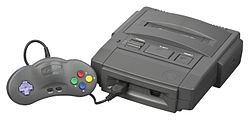
The Super A'can is a home video game console released in 1995 exclusively in Taiwan by Funtech/Dunhuang Technology and People's Republic of China by Sino Wealth Electronic Ltd. It is based around the Motorola 68000 microchip, which is also used in the Sega Genesis and Neo Geo. Twelve games have been confirmed to exist for the system.
The Super A'Can failed because its initial costs were too high for customers. It had no chance to compete with fifth generation video game consoles, such as the PlayStation, the Nintendo 64 and the Sega Saturn, all of which were more powerful and offered 3D graphics. The Super A'Can performed so poorly that it lost its company, Funtech, over USD $6 million. In the end, Funtech destroyed all equipment from production and development of the system, and sold off all remaining systems to the United States as scrap parts.
A CD-ROM attachment (similar to Sega's Mega-CD add-on), and a CPU/Graphics upgrade (similar to Sega's 32X add-on) were planned but unreleased.
Super A'Can
The Super A'can is a home video game console released in 1995 exclusively in Taiwan by Funtech/Dunhuang Technology and People's Republic of China by Sino Wealth Electronic Ltd. It is based around the Motorola 68000 microchip, which is also used in the Sega Genesis and Neo Geo. Twelve games have been confirmed to exist for the system.
The Super A'Can failed because its initial costs were too high for customers. It had no chance to compete with fifth generation video game consoles, such as the PlayStation, the Nintendo 64 and the Sega Saturn, all of which were more powerful and offered 3D graphics. The Super A'Can performed so poorly that it lost its company, Funtech, over USD $6 million. In the end, Funtech destroyed all equipment from production and development of the system, and sold off all remaining systems to the United States as scrap parts.
A CD-ROM attachment (similar to Sega's Mega-CD add-on), and a CPU/Graphics upgrade (similar to Sega's 32X add-on) were planned but unreleased.
Recent media
Recent media