
Recent from talks
Šuppiluliuma II
Knowledge base stats:
Talk channels stats:
Members stats:
Šuppiluliuma II
Šuppiluliuma II (/ˌsʌpɪlʌliˈuːmə/), the son of Tudḫaliya IV, was the last certain great king of the New Kingdom of the Hittite Empire, contemporary with Tukulti-Ninurta I of the Middle Assyrian Empire. His reign began around 1207 BC (short chronology) and ended at an unknown later date.
His name is usually spelled Šuppiluliama in contemporary primary sources, though modern scholars generally adopt the spelling used by his ancestor Šuppiluliuma I.
A younger son of the Hittite great king Tudḫaliya IV, Šuppiluliuma II succeeded his elder brother, Arnuwanda III, on the throne in c. 1207 BC. The new king exacted oaths of allegiance from his court and subjects, advertising his loyalty to his deceased older brother and his own legitimacy in the absence of any heirs of his predecessor. Without providing specifics, the surviving texts suggest a context of disloyalty and potential challenges to the throne by members of the extended royal family.
Šuppiluliuma II inherited what seems to have been a precarious situation inside and outside his kingdom. A royal official (titled "king's son"), Piḫawalwi, was charged with writing to the vassal king of Ugarit, Ibiranu, to chastise him for failing to demonstrate his respects to Šuppiluliuma II. The vassal king of Carchemish, Talmi-Teššub, a member of the Hittite royal house, was apparently bound with a new treaty to the Hittite great king and left in charge of affairs in Syria; he would later supervise a divorce settlement between the great king's daughter Eḫli-Nikkal and King Ammurapi of Ugarit. Šuppiluliuma II corresponded with the contemporary king of Assyria, presumably Tukulti-Ninurta I, but the tablets are not well preserved.
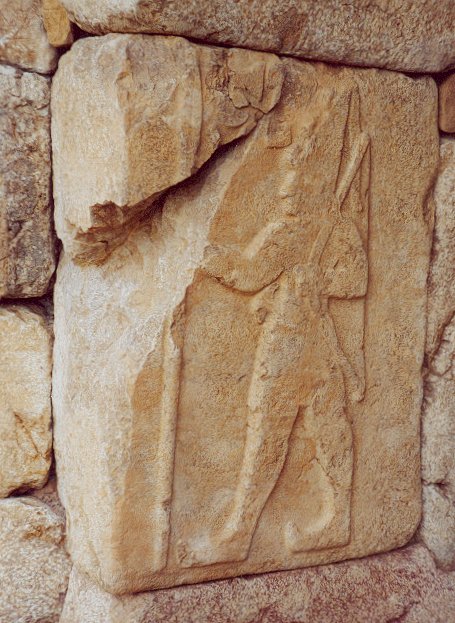
Military campaigns during the reign of Šuppiluliuma II are known from two inscriptions in Hieroglyphic Luwian. They record wars against former vassal Tarḫuntašša, and against Alašiya (Cyprus). One inscription is found at the base of Nişantepe in the Upper City of Hattusa; the other is located on the northern corner of the East Pond (Pond 1), in what is known as Chamber 2. This served as a water reservoir for Hattusa and is described as a symbolic entrance to the Netherworld.
The Chamber 2 reliefs and inscription are historically important since they record the political instability which plagued Hatti during Šuppiluliuma II's reign. The inscriptions relate the great king's conquests of the lands of Wiyanawanda, Tamina, Maša (Mysia?), Lukka (Lycia and/or Lycaonia?), and Ikuna (Konya?), all of them in or near the territory of the Lukka in southwestern Anatolia. Following these successes, the inscription relates that Šuppiluliuma II attacked the hostile regime in Tarḫuntašša, a Hittite city that had briefly served as the Empire's political capital during the reign of Muwatalli II; Tarḫuntašša was defeated, sacked, and annexed by the great king. Inscriptions of an obscure great king Ḫartapu, son of a great king Muršili, with stylistic similarity to those of Tudḫaliya IV, found west of Konya, offer a possible identification for Šuppiluliuma II's enemy in Tarḫuntašša, if the Muršili in question could be equated with Muršili III (Urḫi-Teššub).
Reasserting Hittite central control over southern Anatolia and its coasts might have been more than a matter of pride, as suggested by references to urgent grain shipments from Merneptah, the king of Egypt, and from Mukiš in northern Syria. This and other indicators suggest a famine in Anatolia or more broadly the Eastern Mediterranean region in the late 13th century BC.
Following an earlier invasion of Alašiya (Cyprus) during the reign of his father, a fleet under the command of Šuppiluliuma II defeated either the Cypriots or a group of the so-called Sea Peoples who had established themselves on the island, the first recorded naval battle in history. According to some historians (Claude Schaeffer, Horst Nowacki, Wolfgang Lefèvre), this and following victories in Cyprus were probably won by using Ugaritic ships.
Hub AI
Šuppiluliuma II AI simulator
(@Šuppiluliuma II_simulator)
Šuppiluliuma II
Šuppiluliuma II (/ˌsʌpɪlʌliˈuːmə/), the son of Tudḫaliya IV, was the last certain great king of the New Kingdom of the Hittite Empire, contemporary with Tukulti-Ninurta I of the Middle Assyrian Empire. His reign began around 1207 BC (short chronology) and ended at an unknown later date.
His name is usually spelled Šuppiluliama in contemporary primary sources, though modern scholars generally adopt the spelling used by his ancestor Šuppiluliuma I.
A younger son of the Hittite great king Tudḫaliya IV, Šuppiluliuma II succeeded his elder brother, Arnuwanda III, on the throne in c. 1207 BC. The new king exacted oaths of allegiance from his court and subjects, advertising his loyalty to his deceased older brother and his own legitimacy in the absence of any heirs of his predecessor. Without providing specifics, the surviving texts suggest a context of disloyalty and potential challenges to the throne by members of the extended royal family.
Šuppiluliuma II inherited what seems to have been a precarious situation inside and outside his kingdom. A royal official (titled "king's son"), Piḫawalwi, was charged with writing to the vassal king of Ugarit, Ibiranu, to chastise him for failing to demonstrate his respects to Šuppiluliuma II. The vassal king of Carchemish, Talmi-Teššub, a member of the Hittite royal house, was apparently bound with a new treaty to the Hittite great king and left in charge of affairs in Syria; he would later supervise a divorce settlement between the great king's daughter Eḫli-Nikkal and King Ammurapi of Ugarit. Šuppiluliuma II corresponded with the contemporary king of Assyria, presumably Tukulti-Ninurta I, but the tablets are not well preserved.
Military campaigns during the reign of Šuppiluliuma II are known from two inscriptions in Hieroglyphic Luwian. They record wars against former vassal Tarḫuntašša, and against Alašiya (Cyprus). One inscription is found at the base of Nişantepe in the Upper City of Hattusa; the other is located on the northern corner of the East Pond (Pond 1), in what is known as Chamber 2. This served as a water reservoir for Hattusa and is described as a symbolic entrance to the Netherworld.
The Chamber 2 reliefs and inscription are historically important since they record the political instability which plagued Hatti during Šuppiluliuma II's reign. The inscriptions relate the great king's conquests of the lands of Wiyanawanda, Tamina, Maša (Mysia?), Lukka (Lycia and/or Lycaonia?), and Ikuna (Konya?), all of them in or near the territory of the Lukka in southwestern Anatolia. Following these successes, the inscription relates that Šuppiluliuma II attacked the hostile regime in Tarḫuntašša, a Hittite city that had briefly served as the Empire's political capital during the reign of Muwatalli II; Tarḫuntašša was defeated, sacked, and annexed by the great king. Inscriptions of an obscure great king Ḫartapu, son of a great king Muršili, with stylistic similarity to those of Tudḫaliya IV, found west of Konya, offer a possible identification for Šuppiluliuma II's enemy in Tarḫuntašša, if the Muršili in question could be equated with Muršili III (Urḫi-Teššub).
Reasserting Hittite central control over southern Anatolia and its coasts might have been more than a matter of pride, as suggested by references to urgent grain shipments from Merneptah, the king of Egypt, and from Mukiš in northern Syria. This and other indicators suggest a famine in Anatolia or more broadly the Eastern Mediterranean region in the late 13th century BC.
Following an earlier invasion of Alašiya (Cyprus) during the reign of his father, a fleet under the command of Šuppiluliuma II defeated either the Cypriots or a group of the so-called Sea Peoples who had established themselves on the island, the first recorded naval battle in history. According to some historians (Claude Schaeffer, Horst Nowacki, Wolfgang Lefèvre), this and following victories in Cyprus were probably won by using Ugaritic ships.
Recent media