
Recent from talks
Symphonie fantastique
Knowledge base stats:
Talk channels stats:
Members stats:
Symphonie fantastique
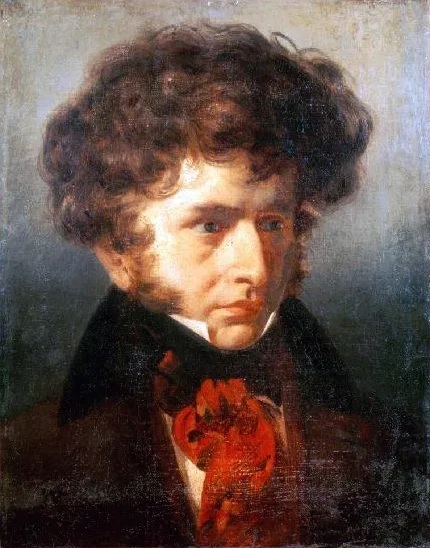
Symphonie fantastique: Épisode de la vie d'un artiste … en cinq parties (Fantastic Symphony: Episode in the Life of an Artist … in Five Sections) Op. 14, is a programmatic symphony written by Hector Berlioz in 1830. The first performance was at the Paris Conservatoire on 5 December 1830.
Berlioz wrote semi-autobiographical programme notes for the piece that allude to the romantic sufferings of a gifted artist who has poisoned himself with opium because of his unrequited love for a beautiful and fascinating woman (in real life, the Shakespearean actress Harriet Smithson, who in 1833 became the composer's wife). The composer, who revered Beethoven, followed the latter's unusual addition in the Pastoral Symphony of a fifth movement to the normal four of a classical symphony. The artist's reveries take him to a ball and to a pastoral scene in a field, which is interrupted by a hallucinatory march to the scaffold, leading to a grotesque satanic dance (Witches' Sabbath). Within each episode, the artist's passion is represented by a recurring theme called the idée fixe.
The symphony has long been a favourite with audiences and conductors. In 1831 Berlioz wrote a sequel, Lélio, for actor, soloists, chorus, piano and orchestra. Franz Liszt made a piano transcription of the score that was first recorded by Idil Biret in 1979.
The Symphonie fantastique is a piece of programme music that tells the story of a gifted artist who, in the depths of hopelessness and despair because of his unrequited love for a woman, has poisoned himself with opium. The symphony tells the story of the artist's drug-fuelled hallucinations, beginning with a ball and a scene in a field and ending with a march to the scaffold and a satanic dream. The artist's passion is represented by an elusive theme which Berlioz called the idée fixe, a contemporary medical term also found in literary works of the period. It is defined by the Dictionnaire de l'Académie française as "an idea that keeps coming back to mind, an obsessive preoccupation".
Berlioz provided his own preface and programme notes for each movement of the work. They exist in two principal versions: one from 1845 in the first edition of the work and the second from 1855. These changes show how Berlioz downplayed the programmatic aspect of the piece later in life.
The first printing of the score, dedicated to Nicholas I of Russia, was published in 1845. In it, Berlioz writes:
The Composer's aim was to develop, in their musical aspects, different situations in the life of an artist. The plan of the instrumental drama, deprived of the aid of words, needs to be explained in advance. The following programme must therefore be considered as the spoken text of an Opera, serving to bring pieces of music the character and expression that motivates them.
In 1855 Berlioz writes:
Hub AI
Symphonie fantastique AI simulator
(@Symphonie fantastique_simulator)
Symphonie fantastique
Symphonie fantastique: Épisode de la vie d'un artiste … en cinq parties (Fantastic Symphony: Episode in the Life of an Artist … in Five Sections) Op. 14, is a programmatic symphony written by Hector Berlioz in 1830. The first performance was at the Paris Conservatoire on 5 December 1830.
Berlioz wrote semi-autobiographical programme notes for the piece that allude to the romantic sufferings of a gifted artist who has poisoned himself with opium because of his unrequited love for a beautiful and fascinating woman (in real life, the Shakespearean actress Harriet Smithson, who in 1833 became the composer's wife). The composer, who revered Beethoven, followed the latter's unusual addition in the Pastoral Symphony of a fifth movement to the normal four of a classical symphony. The artist's reveries take him to a ball and to a pastoral scene in a field, which is interrupted by a hallucinatory march to the scaffold, leading to a grotesque satanic dance (Witches' Sabbath). Within each episode, the artist's passion is represented by a recurring theme called the idée fixe.
The symphony has long been a favourite with audiences and conductors. In 1831 Berlioz wrote a sequel, Lélio, for actor, soloists, chorus, piano and orchestra. Franz Liszt made a piano transcription of the score that was first recorded by Idil Biret in 1979.
The Symphonie fantastique is a piece of programme music that tells the story of a gifted artist who, in the depths of hopelessness and despair because of his unrequited love for a woman, has poisoned himself with opium. The symphony tells the story of the artist's drug-fuelled hallucinations, beginning with a ball and a scene in a field and ending with a march to the scaffold and a satanic dream. The artist's passion is represented by an elusive theme which Berlioz called the idée fixe, a contemporary medical term also found in literary works of the period. It is defined by the Dictionnaire de l'Académie française as "an idea that keeps coming back to mind, an obsessive preoccupation".
Berlioz provided his own preface and programme notes for each movement of the work. They exist in two principal versions: one from 1845 in the first edition of the work and the second from 1855. These changes show how Berlioz downplayed the programmatic aspect of the piece later in life.
The first printing of the score, dedicated to Nicholas I of Russia, was published in 1845. In it, Berlioz writes:
The Composer's aim was to develop, in their musical aspects, different situations in the life of an artist. The plan of the instrumental drama, deprived of the aid of words, needs to be explained in advance. The following programme must therefore be considered as the spoken text of an Opera, serving to bring pieces of music the character and expression that motivates them.
In 1855 Berlioz writes:
Recent media