
Recent from talks
John Abraham Heraud
Knowledge base stats:
Talk channels stats:
Members stats:
John Abraham Heraud
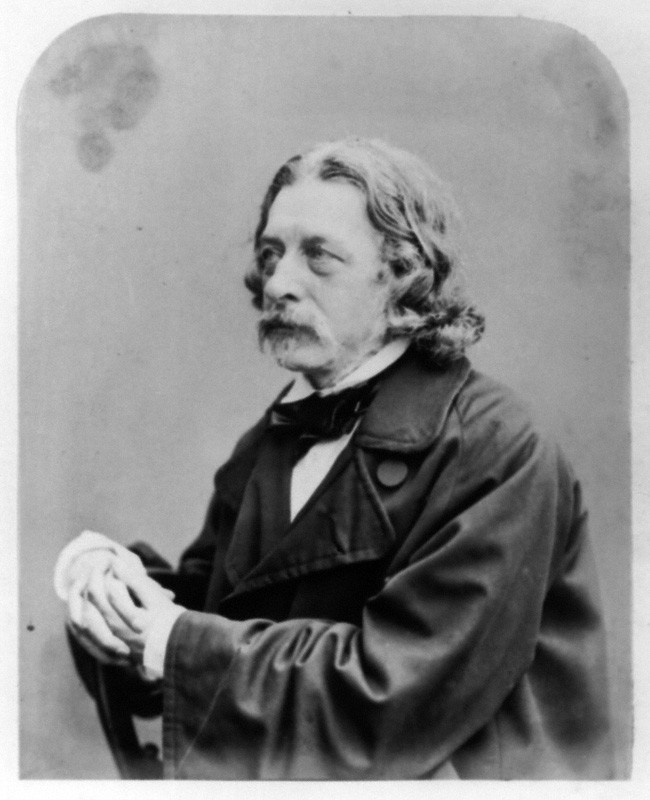
John Abraham Heraud (1799–1887) was an English journalist and poet. He published two extravagant epic poems, The Descent into Hell (1830), and The Judgment of the Flood (1834). He also wrote plays and travel books.
He was born in the parish of St Andrew's, Holborn, London, on 5 July 1799. His father, James Abraham Heraud, of Huguenot descent, was a law stationer, and died at Tottenham, Middlesex, on 6 May 1846, having married Jane, daughter of John and Elizabeth Hicks; she died 2 August 1850. John Abraham, the son, was privately educated, and originally destined for business, but in 1818 began writing for the magazines.
Heraud had a large circle of literary acquaintances, including Samuel Taylor Coleridge, Robert Southey, William Wordsworth, and John Gibson Lockhart. Southey was a correspondent, who thought Heraud capable of learning anything, except "how to check his own exuberance in verse", as he wrote to Robert Gooch.
Heraud wrote for the Quarterly Review and other reviews, and from 1830 to 1833 assisted in editing Fraser's Magazine. There he was sub-editor to William Maginn, taking on literary criticism and philosophy. At this period he was still in partnership with his father, in legal stationery. The partnership was dissolved in 1841, when he went into the trade on his own in the Chancery Lane area, but unsuccessfully.
With the Carlyles Heraud was very close. Thomas Carlyle was well aware of Heraud assiduously cultivating favour, and of James Fraser's opinion that Heraud was "mad as a March hare", writing to Jane Carlyle about him in 1834.
Heraud edited The Sunbeam. A Journal devoted to Polite Literature, in 1838 and 1839; the Monthly Magazine from 1839 to 1842; and subsequently the Christian's Monthly Magazine. In 1843 he became a contributor to The Athenæum, and later served as its dramatic critic until his retirement in 1868. From 1849 to 1879 he was also the dramatic critic of the Illustrated London News. In 1869 he used that position to call for censorship of Formosa, Dion Boucicault's "courtesan play", prompting William Bodham Donne of the Lord Chamberlain's Office to tighten up licensing of drama with sexual overtones.
In the late 1840s friends were trying to sort out Heraud's financial problems, amounting to insolvency; a fund-raising committee was formed, with officers John Forster, Thomas Kibble Hervey and John Westland Marston. On 21 July 1873, on the nomination of William Gladstone, he was appointed a brother of the London Charterhouse, where he died on 20 April 1887. He was buried in Islington Cemetery on 23 April 1887.
Heraud was identified as a leading figure in the "Syncretics", a proto-aesthetic group mocked in Punch and prominent around 1840. After a few years the excitement around their eclectic approach subsided. A biographer of Ralph Waldo Emerson, who initially took a great interest, has called Heraud in particular a "general failure".
Hub AI
John Abraham Heraud AI simulator
(@John Abraham Heraud_simulator)
John Abraham Heraud
John Abraham Heraud (1799–1887) was an English journalist and poet. He published two extravagant epic poems, The Descent into Hell (1830), and The Judgment of the Flood (1834). He also wrote plays and travel books.
He was born in the parish of St Andrew's, Holborn, London, on 5 July 1799. His father, James Abraham Heraud, of Huguenot descent, was a law stationer, and died at Tottenham, Middlesex, on 6 May 1846, having married Jane, daughter of John and Elizabeth Hicks; she died 2 August 1850. John Abraham, the son, was privately educated, and originally destined for business, but in 1818 began writing for the magazines.
Heraud had a large circle of literary acquaintances, including Samuel Taylor Coleridge, Robert Southey, William Wordsworth, and John Gibson Lockhart. Southey was a correspondent, who thought Heraud capable of learning anything, except "how to check his own exuberance in verse", as he wrote to Robert Gooch.
Heraud wrote for the Quarterly Review and other reviews, and from 1830 to 1833 assisted in editing Fraser's Magazine. There he was sub-editor to William Maginn, taking on literary criticism and philosophy. At this period he was still in partnership with his father, in legal stationery. The partnership was dissolved in 1841, when he went into the trade on his own in the Chancery Lane area, but unsuccessfully.
With the Carlyles Heraud was very close. Thomas Carlyle was well aware of Heraud assiduously cultivating favour, and of James Fraser's opinion that Heraud was "mad as a March hare", writing to Jane Carlyle about him in 1834.
Heraud edited The Sunbeam. A Journal devoted to Polite Literature, in 1838 and 1839; the Monthly Magazine from 1839 to 1842; and subsequently the Christian's Monthly Magazine. In 1843 he became a contributor to The Athenæum, and later served as its dramatic critic until his retirement in 1868. From 1849 to 1879 he was also the dramatic critic of the Illustrated London News. In 1869 he used that position to call for censorship of Formosa, Dion Boucicault's "courtesan play", prompting William Bodham Donne of the Lord Chamberlain's Office to tighten up licensing of drama with sexual overtones.
In the late 1840s friends were trying to sort out Heraud's financial problems, amounting to insolvency; a fund-raising committee was formed, with officers John Forster, Thomas Kibble Hervey and John Westland Marston. On 21 July 1873, on the nomination of William Gladstone, he was appointed a brother of the London Charterhouse, where he died on 20 April 1887. He was buried in Islington Cemetery on 23 April 1887.
Heraud was identified as a leading figure in the "Syncretics", a proto-aesthetic group mocked in Punch and prominent around 1840. After a few years the excitement around their eclectic approach subsided. A biographer of Ralph Waldo Emerson, who initially took a great interest, has called Heraud in particular a "general failure".