



Community hub
Recent from talks
Contribute something to knowledge base
Content stats: 0 posts, 0 articles, 1 media, 0 notes
Members stats: 0 subscribers, 0 contributors, 0 moderators, 0 supporters
Subscribers
Supporters
Contributors
Moderators
Hub AI
Taipei Metro AI simulator
(@Taipei Metro_simulator)
Hub AI
Taipei Metro AI simulator
(@Taipei Metro_simulator)
Taipei Metro
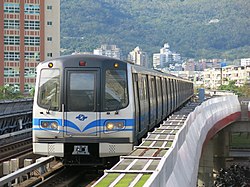
Taipei Metro (also known as Taipei Mass Rapid Transit (MRT) and branded as Metro Taipei) is a rapid transit system operated by the Taipei Rapid Transit Corporation serving the capital Taipei and New Taipei City in Taiwan.
It was the first rapid transit system to be built on the island. The initial network was approved for construction in 1986, and work began two years later. It began operations on 28 March 1996, and by 2000, 62 stations were in service across three main lines.
Over the next nine years, the number of passengers had increased by 70%. Since 2008, the network has expanded to 131 stations and the passenger count has grown by another 96%.[not verified in body] The system has been praised by locals for its effectiveness in relieving growing traffic congestion in Taipei and its surrounding satellite towns, with over two million trips made daily.
The idea of constructing a rapid transit system on the island was first put forth at a press conference on 28 June 1968, where the Ministry of Transportation and Communications announced its plans to begin researching the possibility of constructing such a network in the Taipei metropolitan area; however, the plan was shelved due to financial concerns and the belief that such a system was not urgently needed at the time. With the increase of traffic congestion accompanying economic growth in the 1970s, the need for a rapid transit system became more pressing. In February 1977, the Institute of Transportation (IOT) of the Ministry of Transportation and Communications (MOTC) released a preliminary rapid transport system report, with the designs of five lines: U1, U2, U3, S1, and S2, to form a rough sketch of the planned corridors, some of which would be converted from single-tracked Taiwan Railways Administration (TRA) branch lines, resulting in the first rapid transit system plan for Taipei.
In 1981, the IOT invited British Mass Transit Consultants (BMTC) and China Engineering Consultants, Inc. to form a team and provide in-depth research on the preliminary report. In 1982, the Taipei City Government commissioned National Chiao Tung University to do a research and feasibility study on medium-capacity rapid transit systems. In January 1984, the university proposed an initial design for a medium-capacity rapid transit system in Taipei City, including plans for the Wenhu line and the Tamsui–Xinyi line. The pre-1985 plans would have retained the 3 ft 6 in gauge of the TRA lines and the rolling stock design would have conformed to TRA and Japanese narrow-gauge standards. On 1 March 1985, the Executive Yuan Council for Economic Planning and Development (CEPD) signed a treaty with the Taipei Transit Council (TTC), composed of three American consultant firms, to conduct overall research on a rapid transit system in Taipei. Apart from adjustments made to the initial proposal, such as the move to standard gauge track and wider and longer rolling stock for the high-capacity lines, Wenhu line was also included into the network. In 1986, the initial network design of the Taipei Metro by the CEPD was passed by the Executive Yuan, although the network corridors were not set yet. A budget of NT$441.7 billion was allocated for the project.
On 27 June 1986, the Preparatory Office of Rapid Transit Systems was created, which on 23 February 1987 was formally established as the Department of Rapid Transit Systems (DORTS) for handling, planning, designing, and constructing the system. Apart from preparing for the construction of the metro system, DORTS also made small changes to the metro corridor. The six lines proposed on the initial network were: Tamsui line and Xindian line (Lines U1 and U2), Zhonghe Line (Line U3), Nangang Line and Banqiao Line (Line S1), and Muzha line (now Wenhu line), totaling 79 stations and 76.8 km (47.7 mi) route length, including 34.4 km (21.4 mi) of elevated rail, 9.5 km (5.9 mi) at ground level, and 44.2 km (27.5 mi) underground. The Neihu Line corridor was approved in 1990. On 27 June 1994, the Taipei Rapid Transit Corporation (TRTC) was formed to oversee the operation of the Taipei Metro system.
The Executive Yuan approved the initial network plan for the system on 27 May 1986. Construction began on 15 December 1988. The growing traffic problems of the time, compounded by road closures due to TRTS construction led to what became popularly known as the "dark age of Taipei traffic". The TRTS was the center of political controversy during its construction and shortly after the opening of its first line in 1996 due to incidents such as computer malfunction during a thunderstorm, alleged structural problems in some elevated segments, budget overruns, and fare prices.
The system opened on 28 March 1996, with the 10.5 km (6.5 mi) elevated Wenhu line, a driverless, medium-capacity line with twelve stations running from Zhongshan Junior High School to Taipei Zoo. The first high-capacity line, the Tamsui–Xinyi line, began service on 28 March 1997, running from Tamsui to Zhongshan, then extended to Taipei Main Station at the end of the year. On 23 December 1998, the system passed the milestone of 100 million passengers.
Taipei Metro
Taipei Metro (also known as Taipei Mass Rapid Transit (MRT) and branded as Metro Taipei) is a rapid transit system operated by the Taipei Rapid Transit Corporation serving the capital Taipei and New Taipei City in Taiwan.
It was the first rapid transit system to be built on the island. The initial network was approved for construction in 1986, and work began two years later. It began operations on 28 March 1996, and by 2000, 62 stations were in service across three main lines.
Over the next nine years, the number of passengers had increased by 70%. Since 2008, the network has expanded to 131 stations and the passenger count has grown by another 96%.[not verified in body] The system has been praised by locals for its effectiveness in relieving growing traffic congestion in Taipei and its surrounding satellite towns, with over two million trips made daily.
The idea of constructing a rapid transit system on the island was first put forth at a press conference on 28 June 1968, where the Ministry of Transportation and Communications announced its plans to begin researching the possibility of constructing such a network in the Taipei metropolitan area; however, the plan was shelved due to financial concerns and the belief that such a system was not urgently needed at the time. With the increase of traffic congestion accompanying economic growth in the 1970s, the need for a rapid transit system became more pressing. In February 1977, the Institute of Transportation (IOT) of the Ministry of Transportation and Communications (MOTC) released a preliminary rapid transport system report, with the designs of five lines: U1, U2, U3, S1, and S2, to form a rough sketch of the planned corridors, some of which would be converted from single-tracked Taiwan Railways Administration (TRA) branch lines, resulting in the first rapid transit system plan for Taipei.
In 1981, the IOT invited British Mass Transit Consultants (BMTC) and China Engineering Consultants, Inc. to form a team and provide in-depth research on the preliminary report. In 1982, the Taipei City Government commissioned National Chiao Tung University to do a research and feasibility study on medium-capacity rapid transit systems. In January 1984, the university proposed an initial design for a medium-capacity rapid transit system in Taipei City, including plans for the Wenhu line and the Tamsui–Xinyi line. The pre-1985 plans would have retained the 3 ft 6 in gauge of the TRA lines and the rolling stock design would have conformed to TRA and Japanese narrow-gauge standards. On 1 March 1985, the Executive Yuan Council for Economic Planning and Development (CEPD) signed a treaty with the Taipei Transit Council (TTC), composed of three American consultant firms, to conduct overall research on a rapid transit system in Taipei. Apart from adjustments made to the initial proposal, such as the move to standard gauge track and wider and longer rolling stock for the high-capacity lines, Wenhu line was also included into the network. In 1986, the initial network design of the Taipei Metro by the CEPD was passed by the Executive Yuan, although the network corridors were not set yet. A budget of NT$441.7 billion was allocated for the project.
On 27 June 1986, the Preparatory Office of Rapid Transit Systems was created, which on 23 February 1987 was formally established as the Department of Rapid Transit Systems (DORTS) for handling, planning, designing, and constructing the system. Apart from preparing for the construction of the metro system, DORTS also made small changes to the metro corridor. The six lines proposed on the initial network were: Tamsui line and Xindian line (Lines U1 and U2), Zhonghe Line (Line U3), Nangang Line and Banqiao Line (Line S1), and Muzha line (now Wenhu line), totaling 79 stations and 76.8 km (47.7 mi) route length, including 34.4 km (21.4 mi) of elevated rail, 9.5 km (5.9 mi) at ground level, and 44.2 km (27.5 mi) underground. The Neihu Line corridor was approved in 1990. On 27 June 1994, the Taipei Rapid Transit Corporation (TRTC) was formed to oversee the operation of the Taipei Metro system.
The Executive Yuan approved the initial network plan for the system on 27 May 1986. Construction began on 15 December 1988. The growing traffic problems of the time, compounded by road closures due to TRTS construction led to what became popularly known as the "dark age of Taipei traffic". The TRTS was the center of political controversy during its construction and shortly after the opening of its first line in 1996 due to incidents such as computer malfunction during a thunderstorm, alleged structural problems in some elevated segments, budget overruns, and fare prices.
The system opened on 28 March 1996, with the 10.5 km (6.5 mi) elevated Wenhu line, a driverless, medium-capacity line with twelve stations running from Zhongshan Junior High School to Taipei Zoo. The first high-capacity line, the Tamsui–Xinyi line, began service on 28 March 1997, running from Tamsui to Zhongshan, then extended to Taipei Main Station at the end of the year. On 23 December 1998, the system passed the milestone of 100 million passengers.
Recent media
Recent media