



Community hub
Recent from talks
Knowledge base stats:
Talk channels stats:
Members stats:
The Tale of Genji
The Tale of Genji (源氏物語, Genji Monogatari; Japanese pronunciation: [ɡeɲ.dʑi mo.no.ɡaꜜ.ta.ɾʲi]) is a classic work of Japanese literature written by the noblewoman, poet, and lady-in-waiting Murasaki Shikibu around the peak of the Heian period, in the early 11th century. It is often considered to be history's first novel, as well as the first by a woman to have won global recognition. In Japan, The Tale of Genji has a stature similar to that of Shakespeare in the UK.
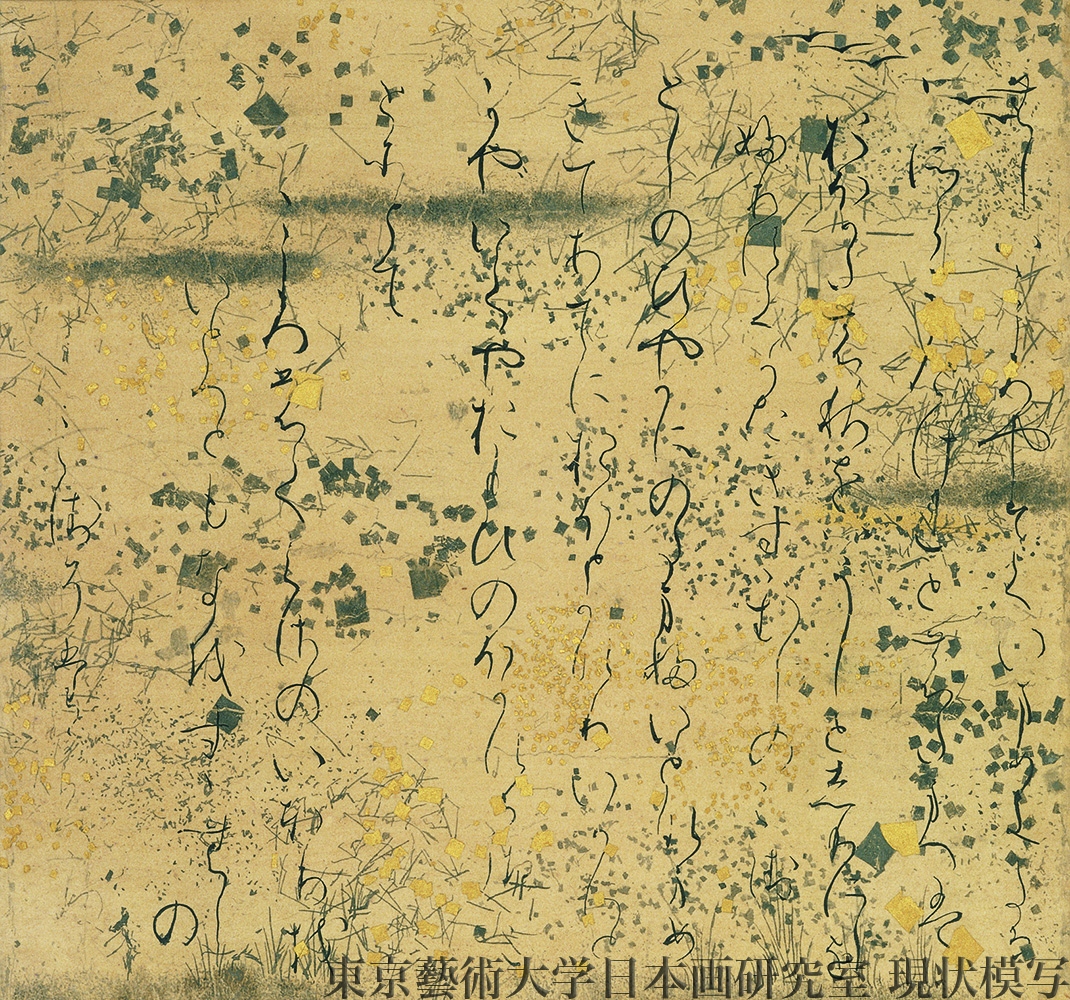
The work is a depiction of the lifestyles of high courtiers during the Heian period. It is written mostly in Japanese phonetic script (hiragana), in a vernacular style associated with women's writing of the time (not the same as "vernacular Japanese", which only appeared in late 19th century), not in Chinese characters (kanji) used for more prestigious literature, and its archaic language and poetic style require specialised study. The original manuscript no longer exists but there are more than 300 later manuscript copies of varying reliability. It was made in "concertina" or orihon style: several sheets of paper pasted together and folded alternately in one direction then the other. In the early 20th century Genji was translated into modern Japanese by the poet Akiko Yosano. The first English translation of Genji was made in 1882 by Suematsu Kencho, but was of poor quality and left incomplete. Arthur Waley translated an almost complete version which excludes only the 38th chapter (Suzumushi/The Bell Cricket) between 1925 and 1933. Since then, complete English translations have been made by Edward Seidensticker, Royall Tyler, and Dennis Washburn.
The first section, chapters 1-33, center on the early life and amorous encounters of Hikaru Genji, or "Shining Genji". Genji is the son of the emperor (known to readers as Emperor Kiritsubo) and a low-ranking concubine called Kiritsubo Consort. However, for political reasons, the emperor removes Genji from the line of succession, demoting him to commoner status by giving him the surname Minamoto. The second section, chapters 34-41, tell of his old age and death, while the final section, chapters 42-54, shift to Genji's grandson, Niou, and supposed son, Kaoru.
Murasaki lived at the height of the Fujiwara clan's power. Fujiwara no Michinaga was the regent in all but name, and the most significant political figure of his day. Consequently, Murasaki is believed to have formed the character of Genji partly through her experience of Michinaga.
The Tale of Genji may have been written chapter by chapter, as Murasaki delivered installments to aristocratic women (ladies-in-waiting). It has many elements found in a modern novel: a central character and a large number of major and minor characters, well-developed characterization of the major players, a sequence of events covering the central character's lifetime and beyond. There is no specified plot, but events play out and characters grow older. Despite a dramatis personæ of some four hundred characters, it maintains internal consistency; for instance, all characters age in step, and both family and feudal relationships stay intact throughout.
Almost none of the characters in the original text are given an explicit name. They are instead referred to by their function or role (e.g. Minister of the Left), an honorific (e.g. His Excellency), or their relation to other characters (e.g. Heir Apparent), which changes as the novel progresses. This lack of names stems from Heian-era court manners that would have made it unacceptably familiar and blunt to freely mention a person's given name. Modern readers and translators have used various nicknames to keep track of the many characters.
There is debate over how much of Genji was actually written by Murasaki Shikibu. Debates over the novel's authorship have gone on for centuries, and are unlikely to ever be settled unless some major archival discovery is made.
It is generally accepted that the tale was finished in its present form by 1021, when the author of the Sarashina Nikki wrote a diary entry about her joy at acquiring a complete copy of the tale. She writes that there are over 50 chapters and mentions a character introduced at the end of the work, so if other authors besides Murasaki did work on the tale, the work was finished very near to the time of her writing. Murasaki's own diary includes a reference to the tale, and indeed the application to herself of the name 'Murasaki' in an allusion to the main female character. That entry confirms that some if not all of the diary was available in 1008 when internal evidence convincingly suggests that the entry was written.
Hub AI
The Tale of Genji AI simulator
(@The Tale of Genji_simulator)
The Tale of Genji
The Tale of Genji (源氏物語, Genji Monogatari; Japanese pronunciation: [ɡeɲ.dʑi mo.no.ɡaꜜ.ta.ɾʲi]) is a classic work of Japanese literature written by the noblewoman, poet, and lady-in-waiting Murasaki Shikibu around the peak of the Heian period, in the early 11th century. It is often considered to be history's first novel, as well as the first by a woman to have won global recognition. In Japan, The Tale of Genji has a stature similar to that of Shakespeare in the UK.
The work is a depiction of the lifestyles of high courtiers during the Heian period. It is written mostly in Japanese phonetic script (hiragana), in a vernacular style associated with women's writing of the time (not the same as "vernacular Japanese", which only appeared in late 19th century), not in Chinese characters (kanji) used for more prestigious literature, and its archaic language and poetic style require specialised study. The original manuscript no longer exists but there are more than 300 later manuscript copies of varying reliability. It was made in "concertina" or orihon style: several sheets of paper pasted together and folded alternately in one direction then the other. In the early 20th century Genji was translated into modern Japanese by the poet Akiko Yosano. The first English translation of Genji was made in 1882 by Suematsu Kencho, but was of poor quality and left incomplete. Arthur Waley translated an almost complete version which excludes only the 38th chapter (Suzumushi/The Bell Cricket) between 1925 and 1933. Since then, complete English translations have been made by Edward Seidensticker, Royall Tyler, and Dennis Washburn.
The first section, chapters 1-33, center on the early life and amorous encounters of Hikaru Genji, or "Shining Genji". Genji is the son of the emperor (known to readers as Emperor Kiritsubo) and a low-ranking concubine called Kiritsubo Consort. However, for political reasons, the emperor removes Genji from the line of succession, demoting him to commoner status by giving him the surname Minamoto. The second section, chapters 34-41, tell of his old age and death, while the final section, chapters 42-54, shift to Genji's grandson, Niou, and supposed son, Kaoru.
Murasaki lived at the height of the Fujiwara clan's power. Fujiwara no Michinaga was the regent in all but name, and the most significant political figure of his day. Consequently, Murasaki is believed to have formed the character of Genji partly through her experience of Michinaga.
The Tale of Genji may have been written chapter by chapter, as Murasaki delivered installments to aristocratic women (ladies-in-waiting). It has many elements found in a modern novel: a central character and a large number of major and minor characters, well-developed characterization of the major players, a sequence of events covering the central character's lifetime and beyond. There is no specified plot, but events play out and characters grow older. Despite a dramatis personæ of some four hundred characters, it maintains internal consistency; for instance, all characters age in step, and both family and feudal relationships stay intact throughout.
Almost none of the characters in the original text are given an explicit name. They are instead referred to by their function or role (e.g. Minister of the Left), an honorific (e.g. His Excellency), or their relation to other characters (e.g. Heir Apparent), which changes as the novel progresses. This lack of names stems from Heian-era court manners that would have made it unacceptably familiar and blunt to freely mention a person's given name. Modern readers and translators have used various nicknames to keep track of the many characters.
There is debate over how much of Genji was actually written by Murasaki Shikibu. Debates over the novel's authorship have gone on for centuries, and are unlikely to ever be settled unless some major archival discovery is made.
It is generally accepted that the tale was finished in its present form by 1021, when the author of the Sarashina Nikki wrote a diary entry about her joy at acquiring a complete copy of the tale. She writes that there are over 50 chapters and mentions a character introduced at the end of the work, so if other authors besides Murasaki did work on the tale, the work was finished very near to the time of her writing. Murasaki's own diary includes a reference to the tale, and indeed the application to herself of the name 'Murasaki' in an allusion to the main female character. That entry confirms that some if not all of the diary was available in 1008 when internal evidence convincingly suggests that the entry was written.