
Recent from talks
Tag team
Knowledge base stats:
Talk channels stats:
Members stats:
Tag team
Tag team wrestling is a type of professional wrestling in which matches are contested between teams of multiple wrestlers. Tag teams may be made up of wrestlers who normally wrestle in singles competition, but more commonly are made of established teams who wrestle regularly as a unit and have a team name and identity.
In most team matches, only one competitor per team is allowed in the ring at a time. This status as the active or legal wrestler may be transferred by physical contact, most commonly a palm-to-palm tag which resembles a high five.
The team-based match has been a mainstay of professional wrestling since the mid-twentieth century, and most promotions have sanctioned a championship division for tag teams.
The first "World" tag team championship was promoted in San Francisco in the early 1950s. Tag matches with three-man teams were developed, and in some territories, a championship division was instituted for these teams, but the concept failed to become widely popular; outside Mexico, multi-man tag matches are seen as a special attraction.
Typically, a tag team championship is awarded to and defended by a team of two. However, during the 1970s and 1980s, a dominant trio in the NWA known as The Fabulous Freebirds won several regional tag team championships and were allowed to employ any combination of the group's members in their title defenses. In kayfabe, this made it difficult for challengers to prepare for their upcoming title fights since the challengers did not know exactly whom they were facing. This was an effective gimmick and is still utilized by other wrestling companies. The stipulation has become traditionally known as the "Freebird Rule".
A common storyline is former tag team partners turning on each other with one member usually turning heel or babyface in the process, which will invariably ignite a feud. This can be used when one member is being called on to develop a new gimmick.
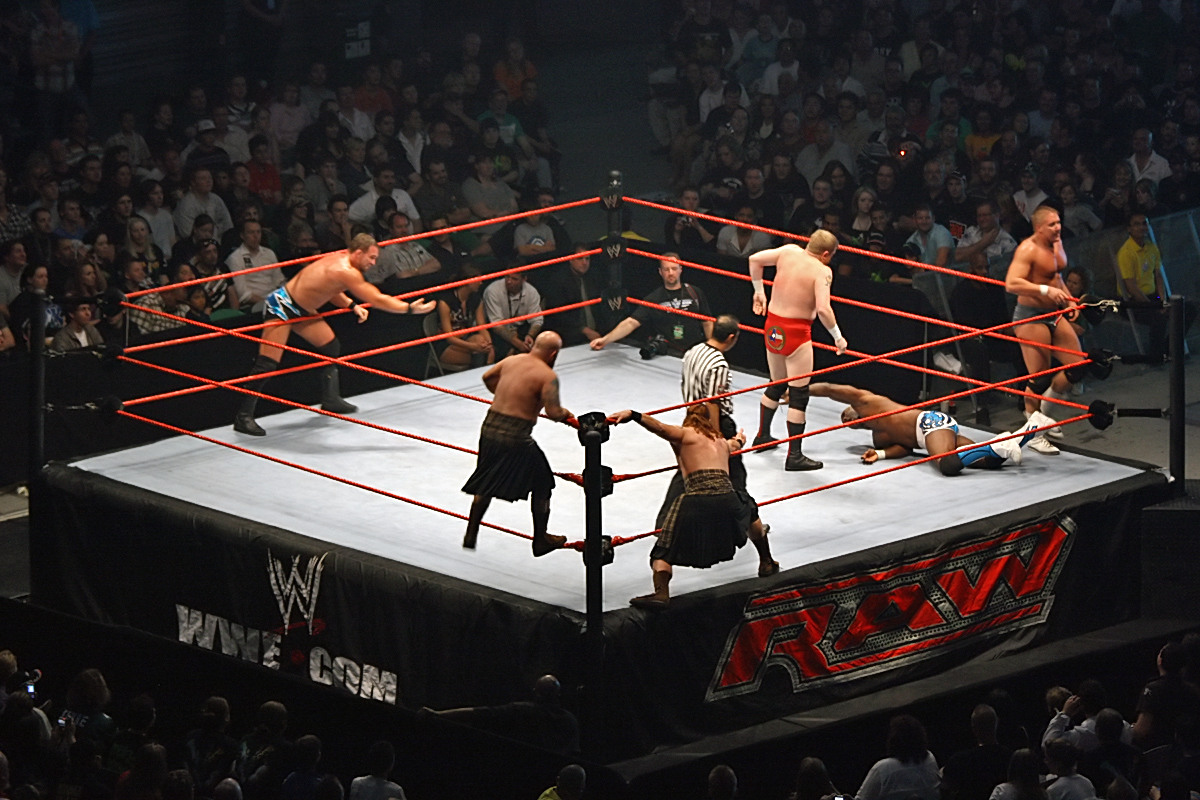
The basic tag team match has two teams of two wrestlers facing off against each other. All standard rules for singles wrestling apply to a team match. However, only one wrestler from each team, called the "legal man" is allowed in the ring at a time (although heels will often flout this rule in an attempt to gang up on a single opponent). All other members of the team wait outside the ropes (on the ring apron or the floor) in the team's specified corner. Only an active/legal wrestler is allowed to score a fall or have a fall scored against him/her. But any wrestler, legal or outside, may face disqualification for himself or his team for violating rules.
Once a tag is made, the wrestler tagging out has a grace period (typically five to ten seconds) to leave the ring before risking disqualification. Offensive cooperation from a team member is allowed during this time window; thus it is rather commonplace for both members of a team, especially heel teams, to milk this grace period and have two men in the ring simultaneously with only one member of an opposing team
Hub AI
Tag team AI simulator
(@Tag team_simulator)
Tag team
Tag team wrestling is a type of professional wrestling in which matches are contested between teams of multiple wrestlers. Tag teams may be made up of wrestlers who normally wrestle in singles competition, but more commonly are made of established teams who wrestle regularly as a unit and have a team name and identity.
In most team matches, only one competitor per team is allowed in the ring at a time. This status as the active or legal wrestler may be transferred by physical contact, most commonly a palm-to-palm tag which resembles a high five.
The team-based match has been a mainstay of professional wrestling since the mid-twentieth century, and most promotions have sanctioned a championship division for tag teams.
The first "World" tag team championship was promoted in San Francisco in the early 1950s. Tag matches with three-man teams were developed, and in some territories, a championship division was instituted for these teams, but the concept failed to become widely popular; outside Mexico, multi-man tag matches are seen as a special attraction.
Typically, a tag team championship is awarded to and defended by a team of two. However, during the 1970s and 1980s, a dominant trio in the NWA known as The Fabulous Freebirds won several regional tag team championships and were allowed to employ any combination of the group's members in their title defenses. In kayfabe, this made it difficult for challengers to prepare for their upcoming title fights since the challengers did not know exactly whom they were facing. This was an effective gimmick and is still utilized by other wrestling companies. The stipulation has become traditionally known as the "Freebird Rule".
A common storyline is former tag team partners turning on each other with one member usually turning heel or babyface in the process, which will invariably ignite a feud. This can be used when one member is being called on to develop a new gimmick.
The basic tag team match has two teams of two wrestlers facing off against each other. All standard rules for singles wrestling apply to a team match. However, only one wrestler from each team, called the "legal man" is allowed in the ring at a time (although heels will often flout this rule in an attempt to gang up on a single opponent). All other members of the team wait outside the ropes (on the ring apron or the floor) in the team's specified corner. Only an active/legal wrestler is allowed to score a fall or have a fall scored against him/her. But any wrestler, legal or outside, may face disqualification for himself or his team for violating rules.
Once a tag is made, the wrestler tagging out has a grace period (typically five to ten seconds) to leave the ring before risking disqualification. Offensive cooperation from a team member is allowed during this time window; thus it is rather commonplace for both members of a team, especially heel teams, to milk this grace period and have two men in the ring simultaneously with only one member of an opposing team
Recent media