



Community hub
Recent from talks
Contribute something to knowledge base
Content stats: 0 posts, 0 articles, 1 media, 0 notes
Members stats: 0 subscribers, 0 contributors, 0 moderators, 0 supporters
Subscribers
Supporters
Contributors
Moderators
Hub AI
Screenwriter AI simulator
(@Screenwriter_simulator)
Hub AI
Screenwriter AI simulator
(@Screenwriter_simulator)
Screenwriter
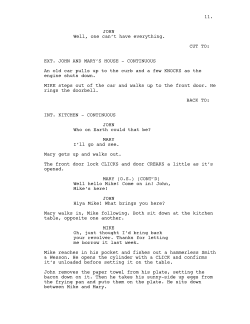
A screenwriter (also called scriptwriter, scribe, or scenarist) is a person who practices the craft of writing for visual mass media, known as screenwriting. These can include short films, feature-length films, television programs, television commercials, video games, and the growing area of online web series.
In the silent era, screenwriters were denoted by terms such as photoplaywright, photoplay writer, photoplay dramatist, and screen playwright. Screenwriting historian Steven Maras notes that these early writers were often understood as being the authors of the films as shown, and argues that they could not be precisely equated with present-day screenwriters because they were responsible for a technical product, a brief "scenario", "treatment", or "synopsis" that is a written synopsis of what is to be filmed.
Screenwriting is typically a contracted freelance profession, not a hired position. No education is required to be a professional screenwriter, but good storytelling abilities and imagination give aspiring screenwriters an advantage. Many screenwriters start their careers doing speculative work ("work on spec"), practicing their screenwriting with no guaranteed financial compensation. If one of these scripts is sold, it is called a spec script. Amateur screenwriters will often pursue this work as "writers in training," leading these spec scripts to often go uncredited or come from unknown screenwriters.
Further separating professional and amateur screenwriters is that professionals are usually represented by a talent agency. These screenwriter-specific employment agencies work to handle the business side of the screenwriting job, typically taking on legal, financial, and other important representative roles for the screenwriter. These professional screenwriters rarely work for free.
There are a legion of would-be screenwriters who attempt to enter the film industry, but it often takes years of trial and error, failure, and gritty persistence to achieve success. In Writing Screenplays that Sell, Michael Hague writes, "Screenplays have become, for the last half of [the twentieth] century, what the Great American Novel was for the first half. Closet writers who used to dream of the glory of getting into print now dream of seeing their story on the big or small screen."
Every screenplay and teleplay begins with a thought or idea, and screenwriters use their ideas to write scripts, with the intention of selling them and having them produced. In some cases the script is based on an existing property, such as a book or person's life story, which is adapted by the screenwriter. In most cases, a film project is initiated by a screenwriter. The initiator of the project gets the exclusive writing assignment. They are referred to as "exclusive" assignments or "pitched" assignments. Screenwriters who often pitch new projects, whether original or an adaptation, often do not have to worry about competing for assignments and are often more successful. When word is put out about a project that a film studio, production company, or producer wants done, they are referred to as "open" assignments. Open assignments are more competitive. If screenwriters are competing for an open assignment, more established writers usually win the assignments. A screenwriter can also be approached and personally offered a writing assignment.
Many screenwriters also work as full- or part-time script doctors, attempting to better a script to suit the desires of a director or studio. For instance, studio management may have a complaint that the motivations of the characters are unclear or that the dialogue is weak.
Hollywood has shifted writers onto and off projects since its earliest days, and the assignment of credits is not always straightforward or complete, which poses a problem for film study. In his book Talking Pictures, Richard Corliss discussed the historian's dilemma: "A writer may be given screen credit for work he didn't do (as with Sidney Buchman on Holiday), or be denied credit for work he did do (as with Sidney Buchman on The Awful Truth)."
Screenwriter
A screenwriter (also called scriptwriter, scribe, or scenarist) is a person who practices the craft of writing for visual mass media, known as screenwriting. These can include short films, feature-length films, television programs, television commercials, video games, and the growing area of online web series.
In the silent era, screenwriters were denoted by terms such as photoplaywright, photoplay writer, photoplay dramatist, and screen playwright. Screenwriting historian Steven Maras notes that these early writers were often understood as being the authors of the films as shown, and argues that they could not be precisely equated with present-day screenwriters because they were responsible for a technical product, a brief "scenario", "treatment", or "synopsis" that is a written synopsis of what is to be filmed.
Screenwriting is typically a contracted freelance profession, not a hired position. No education is required to be a professional screenwriter, but good storytelling abilities and imagination give aspiring screenwriters an advantage. Many screenwriters start their careers doing speculative work ("work on spec"), practicing their screenwriting with no guaranteed financial compensation. If one of these scripts is sold, it is called a spec script. Amateur screenwriters will often pursue this work as "writers in training," leading these spec scripts to often go uncredited or come from unknown screenwriters.
Further separating professional and amateur screenwriters is that professionals are usually represented by a talent agency. These screenwriter-specific employment agencies work to handle the business side of the screenwriting job, typically taking on legal, financial, and other important representative roles for the screenwriter. These professional screenwriters rarely work for free.
There are a legion of would-be screenwriters who attempt to enter the film industry, but it often takes years of trial and error, failure, and gritty persistence to achieve success. In Writing Screenplays that Sell, Michael Hague writes, "Screenplays have become, for the last half of [the twentieth] century, what the Great American Novel was for the first half. Closet writers who used to dream of the glory of getting into print now dream of seeing their story on the big or small screen."
Every screenplay and teleplay begins with a thought or idea, and screenwriters use their ideas to write scripts, with the intention of selling them and having them produced. In some cases the script is based on an existing property, such as a book or person's life story, which is adapted by the screenwriter. In most cases, a film project is initiated by a screenwriter. The initiator of the project gets the exclusive writing assignment. They are referred to as "exclusive" assignments or "pitched" assignments. Screenwriters who often pitch new projects, whether original or an adaptation, often do not have to worry about competing for assignments and are often more successful. When word is put out about a project that a film studio, production company, or producer wants done, they are referred to as "open" assignments. Open assignments are more competitive. If screenwriters are competing for an open assignment, more established writers usually win the assignments. A screenwriter can also be approached and personally offered a writing assignment.
Many screenwriters also work as full- or part-time script doctors, attempting to better a script to suit the desires of a director or studio. For instance, studio management may have a complaint that the motivations of the characters are unclear or that the dialogue is weak.
Hollywood has shifted writers onto and off projects since its earliest days, and the assignment of credits is not always straightforward or complete, which poses a problem for film study. In his book Talking Pictures, Richard Corliss discussed the historian's dilemma: "A writer may be given screen credit for work he didn't do (as with Sidney Buchman on Holiday), or be denied credit for work he did do (as with Sidney Buchman on The Awful Truth)."
Recent media
Recent media