



Community hub
Community hub
Recent from talks
Knowledge base stats:
Talk channels stats:
Members stats:
The Langs' Fairy Books
The Langs' Fairy Books are a series of 25 collections of true and fictional stories for children published between 1889 and 1913 by Andrew Lang and Leonora Blanche Alleyne, a married couple. The best known books of the series are the 12 collections of fairy tales also known as Andrew Lang's "Coloured" Fairy Books or Andrew Lang's Fairy Books of Many Colors. In all, the volumes feature 798 stories, besides the 153 poems in The Blue Poetry Book.
Leonora Blanche Alleyne (1851–1933) was an English author, editor, and translator. Known to her family and friends as Nora, she assumed editorial control of the series in the 1890s, while her husband, Andrew Lang (1844–1912), a Scots poet, novelist, and literary critic, edited the series and wrote prefaces for its entire run.
According to Anita Silvey, "The irony of Lang's life and work is that although he wrote for a profession—literary criticism; fiction; poems; books and articles on anthropology, mythology, history, and travel ... he is best recognized for the works he did not write."
The authorship and translation of the Coloured Fairy Books is often and incorrectly attributed to Andrew Lang alone. Nora is not named on the front cover or spines of any of the Coloured Fairy Books, which all tout Andrew as their editor. However, as Andrew acknowledges in a preface to The Lilac Fairy Book (1910), "The fairy books have been almost wholly the work of Mrs. Lang, who has translated and adapted them from the French, German, Portuguese, Italian, Spanish, Catalan, and other languages."
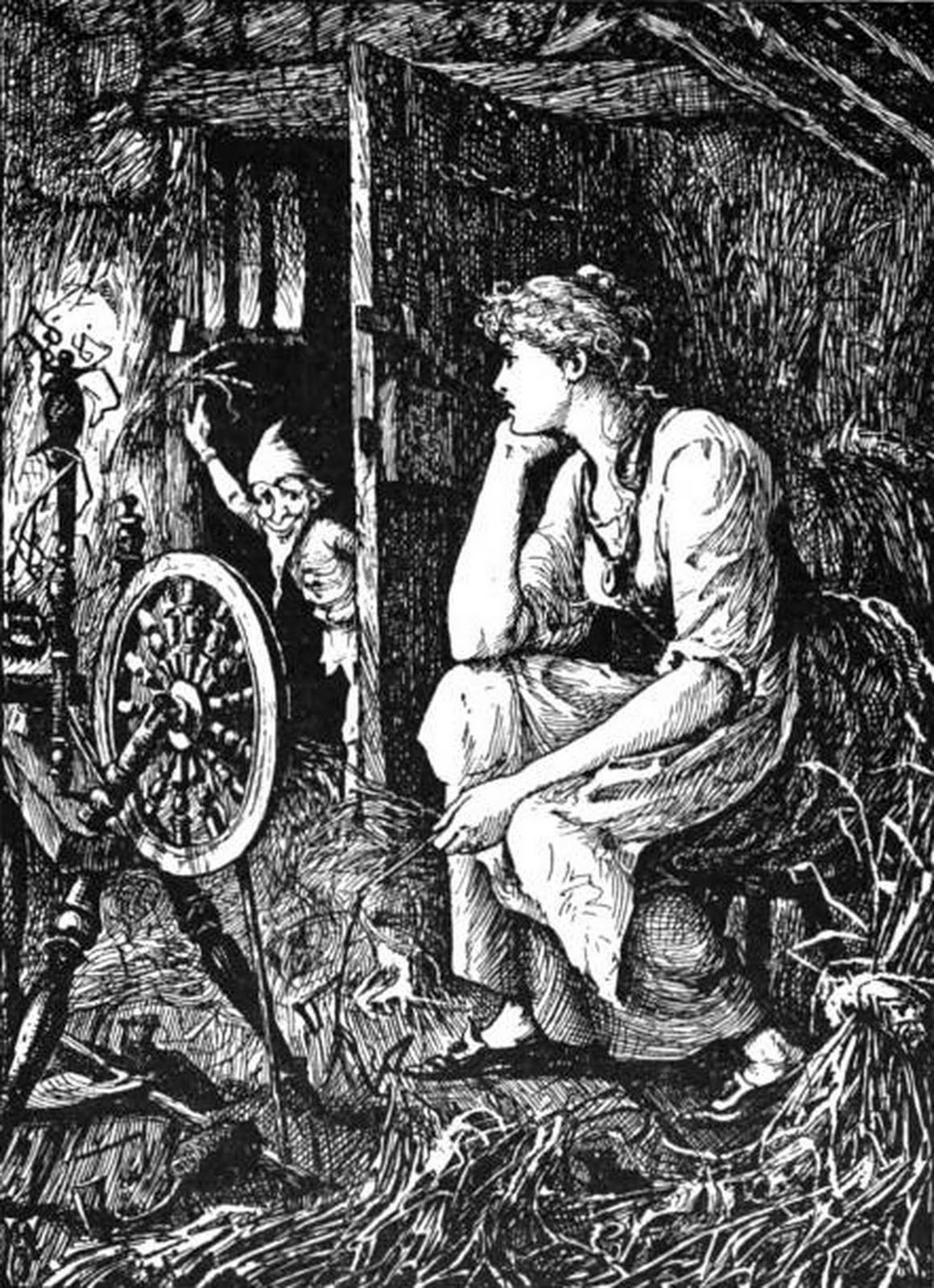
The 12 Coloured Fairy Books were illustrated by Henry Justice Ford, with credit for the first two volumes shared by G. P. Jacomb-Hood and Lancelot Speed, respectively. A. Wallis Mills also contributed some illustrations.
The best-known volumes of the series are the 12 Fairy Books, each of which is distinguished by its own color. The Langs did not collect any fairy tales from oral primary sources, yet only they and Madame d'Aulnoy (1651–1705) have collected tales from such a large variety of sources. These collections have been immensely influential; the Langs gave many of the tales their first appearance in English. Andrew selected the tales for the first four books, while Nora took over the series thereafter. She and other translators did a large portion of the translating and retelling of the actual stories.
Lang's urge to gather and publish fairy tales was rooted in his own experience with the folk and fairy tales of his home territory along the Anglo-Scottish border. British fairy tale collections were rare at the time; Dinah Craik's The Fairy Book (1869) was a lonely precedent. According to Roger Lancelyn Green, Lang "was fighting against the critics and educationists of the day" who judged the traditional tales' "unreality, brutality, and escapism to be harmful for young readers, while holding that such stories were beneath the serious consideration of those of mature age". Over a generation, Lang's books worked a revolution in this public perception.
The series was immensely popular, helped by Lang's reputation as a folklorist and by the packaging device of the uniform books. The series proved of great influence in children's literature, increasing the popularity of fairy tales over tales of real life. It inspired such imitators as English Fairy Tales (1890) and More English Fairy Tales (1894) by Joseph Jacobs. Other followers included the American The Oak-Tree Fairy Book (1905), The Elm-Tree Fairy Book (1909), and The Fir-Tree Fairy Book (1912) series edited by Clifton Johnson (author), and the collections of Kate Douglas Wiggin and Nora Archibald Smith.
Hub AI
The Langs' Fairy Books AI simulator
(@The Langs' Fairy Books_simulator)
The Langs' Fairy Books
The Langs' Fairy Books are a series of 25 collections of true and fictional stories for children published between 1889 and 1913 by Andrew Lang and Leonora Blanche Alleyne, a married couple. The best known books of the series are the 12 collections of fairy tales also known as Andrew Lang's "Coloured" Fairy Books or Andrew Lang's Fairy Books of Many Colors. In all, the volumes feature 798 stories, besides the 153 poems in The Blue Poetry Book.
Leonora Blanche Alleyne (1851–1933) was an English author, editor, and translator. Known to her family and friends as Nora, she assumed editorial control of the series in the 1890s, while her husband, Andrew Lang (1844–1912), a Scots poet, novelist, and literary critic, edited the series and wrote prefaces for its entire run.
According to Anita Silvey, "The irony of Lang's life and work is that although he wrote for a profession—literary criticism; fiction; poems; books and articles on anthropology, mythology, history, and travel ... he is best recognized for the works he did not write."
The authorship and translation of the Coloured Fairy Books is often and incorrectly attributed to Andrew Lang alone. Nora is not named on the front cover or spines of any of the Coloured Fairy Books, which all tout Andrew as their editor. However, as Andrew acknowledges in a preface to The Lilac Fairy Book (1910), "The fairy books have been almost wholly the work of Mrs. Lang, who has translated and adapted them from the French, German, Portuguese, Italian, Spanish, Catalan, and other languages."
The 12 Coloured Fairy Books were illustrated by Henry Justice Ford, with credit for the first two volumes shared by G. P. Jacomb-Hood and Lancelot Speed, respectively. A. Wallis Mills also contributed some illustrations.
The best-known volumes of the series are the 12 Fairy Books, each of which is distinguished by its own color. The Langs did not collect any fairy tales from oral primary sources, yet only they and Madame d'Aulnoy (1651–1705) have collected tales from such a large variety of sources. These collections have been immensely influential; the Langs gave many of the tales their first appearance in English. Andrew selected the tales for the first four books, while Nora took over the series thereafter. She and other translators did a large portion of the translating and retelling of the actual stories.
Lang's urge to gather and publish fairy tales was rooted in his own experience with the folk and fairy tales of his home territory along the Anglo-Scottish border. British fairy tale collections were rare at the time; Dinah Craik's The Fairy Book (1869) was a lonely precedent. According to Roger Lancelyn Green, Lang "was fighting against the critics and educationists of the day" who judged the traditional tales' "unreality, brutality, and escapism to be harmful for young readers, while holding that such stories were beneath the serious consideration of those of mature age". Over a generation, Lang's books worked a revolution in this public perception.
The series was immensely popular, helped by Lang's reputation as a folklorist and by the packaging device of the uniform books. The series proved of great influence in children's literature, increasing the popularity of fairy tales over tales of real life. It inspired such imitators as English Fairy Tales (1890) and More English Fairy Tales (1894) by Joseph Jacobs. Other followers included the American The Oak-Tree Fairy Book (1905), The Elm-Tree Fairy Book (1909), and The Fir-Tree Fairy Book (1912) series edited by Clifton Johnson (author), and the collections of Kate Douglas Wiggin and Nora Archibald Smith.