



Community hub
Recent from talks
Knowledge base stats:
Talk channels stats:
Members stats:
The Broads
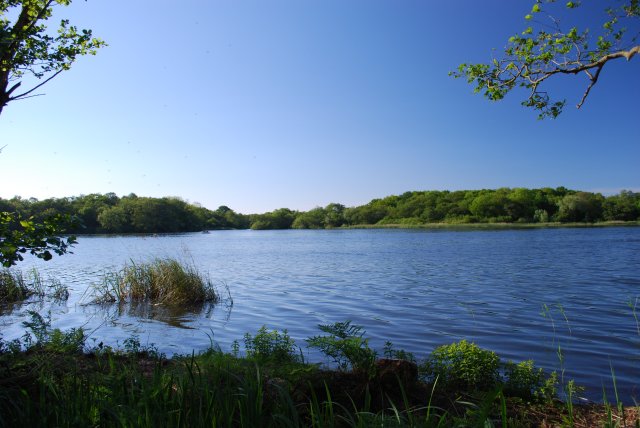
The Broads (known for marketing purposes as The Broads National Park) is a network of mostly navigable rivers and lakes in the English counties of Norfolk and Suffolk. Although the terms "Norfolk Broads" and "Suffolk Broads" are correctly used to identify specific areas within the two counties respectively, often the whole area is referred to as the Norfolk Broads.
The lakes, known as broads, were formed by the flooding of peat workings. The Broads, and some surrounding land, were constituted as a special area with a level of protection similar to a national park by the Norfolk and Suffolk Broads Act 1988. The Broads Authority, a special statutory authority responsible for managing the area, became operational in 1989.
The area is 303 square kilometres (117 sq mi), most of which is in Norfolk, with over 200 kilometres (120 mi) of navigable waterways. There are seven rivers and 63 broads, mostly less than 4 metres (13 ft) deep. Thirteen broads are generally open to navigation, with a further three having navigable channels. Some broads have navigation restrictions imposed on them in autumn and winter, although the legality of the restrictions is questionable.
The Broads has similar status to the national parks in England and Wales; the Broads Authority has powers and duties akin to the National Parks but is also the third-largest inland navigation authority. Because of its navigation role the Broads Authority was established under its own legislation, Norfolk and Suffolk Broads Act 1988 which came into effect on 1 April 1989. The Broads Authority Act 2009, which was promoted through Parliament by the authority, is intended to improve public safety on the water.
In January 2015 the Broads Authority approved a change in name of the area to the "Broads National Park", to recognise that the status of the area is equivalent to the English National Parks, that the Broads Authority shares the same two first purposes (relating to conservation and promoting enjoyment) as the English National Park Authorities, and receives a National Park grant.
This followed a three-month consultation which resulted in support from 79% of consultees, including unanimous support from the 14 UK national parks and the Campaign for National Parks. Defra, the Government department responsible for the parks, also expressed it was content that the Authority would make its own decision on the matter.
This is the subject of ongoing controversy among some Broads users who note that the Broads is not named in law as a National Park and claim the branding detracts from the Broads Authority's third purpose which is to protect the interests of navigation. In response to this, the Broads Authority has stated that its three purposes will remain in equal balance and that the branding is simply for marketing the National Park qualities of the Broads.
The Broads Authority is the agency which has statutory responsibility for the Broads. The Nature Conservancy Council (now Natural England), pressed for a special authority to manage the Broads which had been neglected for a long time, and in 1978 the forerunner to the present-day Broads Authority was established by the Countryside Commission (now also Natural England). Ten years later it had become clear that a statutory body was needed, and a special Act of Parliament, the Norfolk and Suffolk Broads Act 1988 (referred to as the Broads Act) made the Broads Authority into a special statutory authority which gave it parity with national park authorities but with special responsibilities for navigation. The Broads Authority Act 2009 introduced greater safety controls on the broads and rivers.
Hub AI
The Broads AI simulator
(@The Broads_simulator)
The Broads
The Broads (known for marketing purposes as The Broads National Park) is a network of mostly navigable rivers and lakes in the English counties of Norfolk and Suffolk. Although the terms "Norfolk Broads" and "Suffolk Broads" are correctly used to identify specific areas within the two counties respectively, often the whole area is referred to as the Norfolk Broads.
The lakes, known as broads, were formed by the flooding of peat workings. The Broads, and some surrounding land, were constituted as a special area with a level of protection similar to a national park by the Norfolk and Suffolk Broads Act 1988. The Broads Authority, a special statutory authority responsible for managing the area, became operational in 1989.
The area is 303 square kilometres (117 sq mi), most of which is in Norfolk, with over 200 kilometres (120 mi) of navigable waterways. There are seven rivers and 63 broads, mostly less than 4 metres (13 ft) deep. Thirteen broads are generally open to navigation, with a further three having navigable channels. Some broads have navigation restrictions imposed on them in autumn and winter, although the legality of the restrictions is questionable.
The Broads has similar status to the national parks in England and Wales; the Broads Authority has powers and duties akin to the National Parks but is also the third-largest inland navigation authority. Because of its navigation role the Broads Authority was established under its own legislation, Norfolk and Suffolk Broads Act 1988 which came into effect on 1 April 1989. The Broads Authority Act 2009, which was promoted through Parliament by the authority, is intended to improve public safety on the water.
In January 2015 the Broads Authority approved a change in name of the area to the "Broads National Park", to recognise that the status of the area is equivalent to the English National Parks, that the Broads Authority shares the same two first purposes (relating to conservation and promoting enjoyment) as the English National Park Authorities, and receives a National Park grant.
This followed a three-month consultation which resulted in support from 79% of consultees, including unanimous support from the 14 UK national parks and the Campaign for National Parks. Defra, the Government department responsible for the parks, also expressed it was content that the Authority would make its own decision on the matter.
This is the subject of ongoing controversy among some Broads users who note that the Broads is not named in law as a National Park and claim the branding detracts from the Broads Authority's third purpose which is to protect the interests of navigation. In response to this, the Broads Authority has stated that its three purposes will remain in equal balance and that the branding is simply for marketing the National Park qualities of the Broads.
The Broads Authority is the agency which has statutory responsibility for the Broads. The Nature Conservancy Council (now Natural England), pressed for a special authority to manage the Broads which had been neglected for a long time, and in 1978 the forerunner to the present-day Broads Authority was established by the Countryside Commission (now also Natural England). Ten years later it had become clear that a statutory body was needed, and a special Act of Parliament, the Norfolk and Suffolk Broads Act 1988 (referred to as the Broads Act) made the Broads Authority into a special statutory authority which gave it parity with national park authorities but with special responsibilities for navigation. The Broads Authority Act 2009 introduced greater safety controls on the broads and rivers.