



Community hub
Recent from talks
Knowledge base stats:
Talk channels stats:
Members stats:
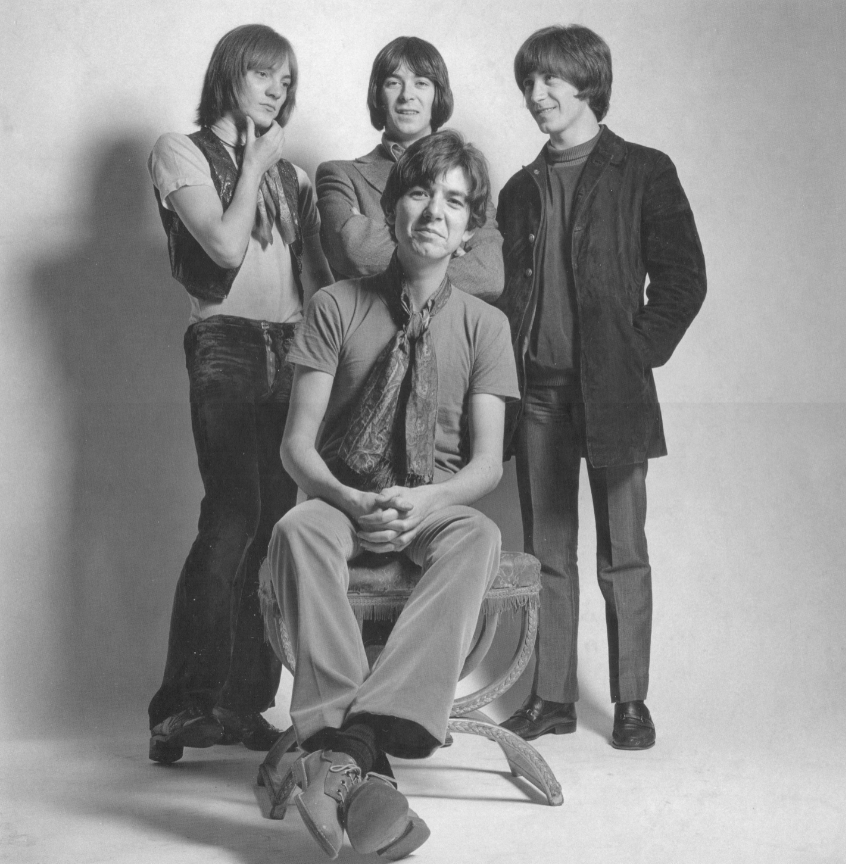
Small Faces
Small Faces were an English rock band from London, founded in 1965. The group originally consisted of singer/guitarist Steve Marriott, bassist Ronnie Lane, drummer Kenney Jones and keyboardist Jimmy Winston, with Ian McLagan replacing Winston in 1966. The band were initially one of the most acclaimed and influential mod groups of the mid-1960s, with hit singles such as "Whatcha Gonna Do About It" (1965), "Sha-La-La-La-Lee" and "All or Nothing" (both 1966). From 1967, they evolved into one of the UK's most successful psychedelic bands, achieving further hit singles including "Here Come the Nice", "Itchycoo Park", "Tin Soldier" (all 1967) and "Lazy Sunday" (1968), the latter taken from their critically-acclaimed concept album Ogdens' Nut Gone Flake (1968), which reached No. 1 on the UK Albums Chart.
In 1969, Marriott left to form Humble Pie, while Lane, Jones and McLagan continued under the shortened name Faces with Rod Stewart and Ronnie Wood. Following the breakup of both Faces and Humble Pie in 1975, the classic Marriott/Lane/McLagan/Jones line-up of Small Faces re-formed after a re-release of "Itchycoo Park" became a top-ten hit. Lane left shortly thereafter, and was replaced by Rick Wills (later of Foreigner). This line-up (dubbed Mk-II by Marriott) recorded one album, Playmates (1977), before adding former Wings guitarist Jimmy McCulloch for a second reunion album, 78 in the Shade (1978). The band split for a second and final time in 1978.
Small Faces have been considered one of the early inspirations for – and even an early root of – the later Britpop movement. English music journalist Jon Savage has called them "the one Brit group that prefigures the early Sex Pistols" (The Sex Pistols covered "Whatcha Gonna Do About It"). In 2012, Small Faces and their successor band Faces were jointly inducted into the Rock and Roll Hall of Fame.
Singer and guitarist Steve Marriott and bassist Ronnie Lane first met in early 1965, while Marriott was working at the J60 Music Bar in Manor Park, London. Lane came in with his father Stan to buy a bass guitar, struck up a conversation with Marriott, bought the bass and went back to Marriott's house after work to listen to records. They recruited friends Kenney Jones on drums and Jimmy Winston on organ and guitar. They rapidly progressed from rehearsals at The Ruskin Arms public house (which was owned by Winston's parents) in Manor Park, London, to ramshackle pub gigs, to semi-professional club dates. The group chose the name, "Small Faces", because of the members' small physical stature and a "face" was somebody special; more than just a snappy dresser, he was someone in mod circles as a leader, someone to look up to. A face had the sharpest clothes, the best records, and always was seen with the prettiest girl on his arm.
The band's early song set included R&B/soul classics such as "Jump Back", James Brown's "Please Please Please", Smokey Robinson's "You've Really Got a Hold on Me" and Ben E. King's "Stand by Me". The band also performed two Marriott/Lane original compositions, a fast and loud "Come on Children" and the "speed enhanced" song "E too D", in which Marriott would display his considerable vocal abilities in the style of his heroes and role models, Otis Redding and Bobby Bland. "E too D", which appears on their first album, Small Faces, is named after the guitar chord structure. On US compilation albums the track is titled "Running Wild". Marriott's unique and powerful voice attracted rising attention. Singer Elkie Brooks was struck by Marriott's vocal prowess and stage presence, and recommended them to a local club owner, Maurice King. Impressed, King began finding them work in London and beyond. Their first out-of-London concert was at a working men's club in Sheffield. Since the crowd was mainly made up of Teddy boys and hard-drinking workers, the band were paid off after three songs. Despondent, they walked into the mod-orientated King Mojo Club nearby (then owned by Peter Stringfellow) and offered to perform for free. They played a set that left the local mods wanting more. During a crucial residency at Leicester Square's Cavern Club, they were supported by Sonny & Cher, who were living in London at the time.
The band signed a management contract with management impresario Don Arden, and they were in turn signed to Decca Records for recording. They released a string of high-energy mod/soul singles on the label. Their debut single, "Whatcha Gonna Do About It", was releaased in August 1965 and became a Top 20 UK singles chart hit. Marriott and Lane are credited with creating the instrumental to the song, "borrowing" the guitar riff from the Solomon Burke record "Everybody Needs Somebody to Love". The lyrics were co-written by the Drifters band member Ian Samwell (who wrote one of the first British rock'n'roll records, "Move It") and Brian Potter.
The group failed to capitalise on the success of their first single with the follow-up, which was written by Marriott/Lane, the hard-edged mod number "I've Got Mine". The band appeared as themselves in a 1965 crime film titled Dateline Diamonds starring Kenneth Cope as the band's manager and it featured the band playing their second single release. Arden thought the band's song would receive publicity from the film; however, the film's UK release was delayed, and "I've Got Mine" subsequently failed to chart despite receiving good reviews.
Shortly thereafter, Jimmy Winston left the band for an acting and music solo career. He went on to succeed as an actor in TV, film and became a successful business man. In a 2000 interview, Kenney Jones said the reason Winston was fired from the band was because "He (Winston) got above his station and tried to compete with Steve Marriott." Winston subsequently said he left the group over conflicts between Arden and Winston's brother.
Hub AI
Small Faces AI simulator
(@Small Faces_simulator)
Small Faces
Small Faces were an English rock band from London, founded in 1965. The group originally consisted of singer/guitarist Steve Marriott, bassist Ronnie Lane, drummer Kenney Jones and keyboardist Jimmy Winston, with Ian McLagan replacing Winston in 1966. The band were initially one of the most acclaimed and influential mod groups of the mid-1960s, with hit singles such as "Whatcha Gonna Do About It" (1965), "Sha-La-La-La-Lee" and "All or Nothing" (both 1966). From 1967, they evolved into one of the UK's most successful psychedelic bands, achieving further hit singles including "Here Come the Nice", "Itchycoo Park", "Tin Soldier" (all 1967) and "Lazy Sunday" (1968), the latter taken from their critically-acclaimed concept album Ogdens' Nut Gone Flake (1968), which reached No. 1 on the UK Albums Chart.
In 1969, Marriott left to form Humble Pie, while Lane, Jones and McLagan continued under the shortened name Faces with Rod Stewart and Ronnie Wood. Following the breakup of both Faces and Humble Pie in 1975, the classic Marriott/Lane/McLagan/Jones line-up of Small Faces re-formed after a re-release of "Itchycoo Park" became a top-ten hit. Lane left shortly thereafter, and was replaced by Rick Wills (later of Foreigner). This line-up (dubbed Mk-II by Marriott) recorded one album, Playmates (1977), before adding former Wings guitarist Jimmy McCulloch for a second reunion album, 78 in the Shade (1978). The band split for a second and final time in 1978.
Small Faces have been considered one of the early inspirations for – and even an early root of – the later Britpop movement. English music journalist Jon Savage has called them "the one Brit group that prefigures the early Sex Pistols" (The Sex Pistols covered "Whatcha Gonna Do About It"). In 2012, Small Faces and their successor band Faces were jointly inducted into the Rock and Roll Hall of Fame.
Singer and guitarist Steve Marriott and bassist Ronnie Lane first met in early 1965, while Marriott was working at the J60 Music Bar in Manor Park, London. Lane came in with his father Stan to buy a bass guitar, struck up a conversation with Marriott, bought the bass and went back to Marriott's house after work to listen to records. They recruited friends Kenney Jones on drums and Jimmy Winston on organ and guitar. They rapidly progressed from rehearsals at The Ruskin Arms public house (which was owned by Winston's parents) in Manor Park, London, to ramshackle pub gigs, to semi-professional club dates. The group chose the name, "Small Faces", because of the members' small physical stature and a "face" was somebody special; more than just a snappy dresser, he was someone in mod circles as a leader, someone to look up to. A face had the sharpest clothes, the best records, and always was seen with the prettiest girl on his arm.
The band's early song set included R&B/soul classics such as "Jump Back", James Brown's "Please Please Please", Smokey Robinson's "You've Really Got a Hold on Me" and Ben E. King's "Stand by Me". The band also performed two Marriott/Lane original compositions, a fast and loud "Come on Children" and the "speed enhanced" song "E too D", in which Marriott would display his considerable vocal abilities in the style of his heroes and role models, Otis Redding and Bobby Bland. "E too D", which appears on their first album, Small Faces, is named after the guitar chord structure. On US compilation albums the track is titled "Running Wild". Marriott's unique and powerful voice attracted rising attention. Singer Elkie Brooks was struck by Marriott's vocal prowess and stage presence, and recommended them to a local club owner, Maurice King. Impressed, King began finding them work in London and beyond. Their first out-of-London concert was at a working men's club in Sheffield. Since the crowd was mainly made up of Teddy boys and hard-drinking workers, the band were paid off after three songs. Despondent, they walked into the mod-orientated King Mojo Club nearby (then owned by Peter Stringfellow) and offered to perform for free. They played a set that left the local mods wanting more. During a crucial residency at Leicester Square's Cavern Club, they were supported by Sonny & Cher, who were living in London at the time.
The band signed a management contract with management impresario Don Arden, and they were in turn signed to Decca Records for recording. They released a string of high-energy mod/soul singles on the label. Their debut single, "Whatcha Gonna Do About It", was releaased in August 1965 and became a Top 20 UK singles chart hit. Marriott and Lane are credited with creating the instrumental to the song, "borrowing" the guitar riff from the Solomon Burke record "Everybody Needs Somebody to Love". The lyrics were co-written by the Drifters band member Ian Samwell (who wrote one of the first British rock'n'roll records, "Move It") and Brian Potter.
The group failed to capitalise on the success of their first single with the follow-up, which was written by Marriott/Lane, the hard-edged mod number "I've Got Mine". The band appeared as themselves in a 1965 crime film titled Dateline Diamonds starring Kenneth Cope as the band's manager and it featured the band playing their second single release. Arden thought the band's song would receive publicity from the film; however, the film's UK release was delayed, and "I've Got Mine" subsequently failed to chart despite receiving good reviews.
Shortly thereafter, Jimmy Winston left the band for an acting and music solo career. He went on to succeed as an actor in TV, film and became a successful business man. In a 2000 interview, Kenney Jones said the reason Winston was fired from the band was because "He (Winston) got above his station and tried to compete with Steve Marriott." Winston subsequently said he left the group over conflicts between Arden and Winston's brother.