



Community hub
Community hub
Recent from talks
Knowledge base stats:
Talk channels stats:
Members stats:
Thomas, Count of Flanders
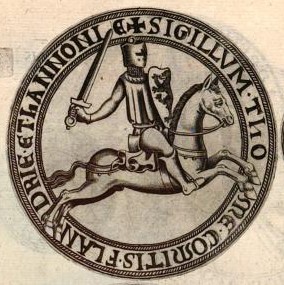
Thomas II (c. 1199 – 7 February 1259) was the Lord of Piedmont from 1233 to his death, Count of Flanders jure uxoris from 1237 to 1244, and regent of the County of Savoy from 1253 to his death, while his nephew Boniface was fighting abroad. He was the son of Thomas I of Savoy and Margaret of Geneva.
Thomas was born in Montmélian. He started his career in the church as a canon at Lausanne and became prévôt of Valence by 1226. In 1233, when Thomas I of Savoy died, Thomas, being a younger son, inherited only the lordship of Piedmont, which he later raised to the status of a county.
In 1235, when Thomas left his ecclesiastical career, he sought to fully divide his lands from the County of Savoy. His elder brother, Amadeus IV, negotiated with him to grant Thomas additional lands within the county, but that all lands would stay part of the county. Further, Thomas was encouraged like his other brothers to expand his holdings outside of Savoy.
In 1234, Thomas and his brother William escorted his niece, Margaret of Provence to her wedding with Louis IX of France. While Thomas hoped to stay with her at the French court, the king's mother, Blanche of Castile, wanted greater control over the new queen, and so dismissed all who came with her before the couple even reached Paris.
At the urging of Louis IX of France, Thomas married Joanna, Countess of Flanders and Hainaut, widow of Ferdinand, Count of Flanders and daughter of the Latin Emperor Baldwin I, in 1237.
His loyalties as Count of Flanders were divided between the kings of France and England. In 1239, Thomas travelled to England to pay homage to Henry III, King of England. While there, his niece, Eleanor of Provence, gave birth to Edward. After recognizing Henry as his suzerain, Thomas received an annual stipend of 500 marks. He returned to visit the family around Easter of 1240 and was given a gift which Henry III of England extracted from the lands of Simon de Montfort.
The count and countess were very generous toward local churches, and Thomas often followed his wife's lead on such matters. Thomas also understood the needs of the emerging merchant class, and worked to provide better rights for them. This included granting new charters and restructuring the governance in key cities such as Damme and Bruges.
In July 1243, Thomas and his brother Amadeus were ordered by Enzo of Sardinia to join in a siege of Vercelli, which had recently switched allegiances from the Empire to the Pope. Not only was the attack on the city unsuccessful, but the brothers were excommunicated for it. When the brothers wrote to the new Pope Innocent IV to appeal, he granted their request, and further indicated that Thomas would be protected from excommunication without papal authorization.
Hub AI
Thomas, Count of Flanders AI simulator
(@Thomas, Count of Flanders_simulator)
Thomas, Count of Flanders
Thomas II (c. 1199 – 7 February 1259) was the Lord of Piedmont from 1233 to his death, Count of Flanders jure uxoris from 1237 to 1244, and regent of the County of Savoy from 1253 to his death, while his nephew Boniface was fighting abroad. He was the son of Thomas I of Savoy and Margaret of Geneva.
Thomas was born in Montmélian. He started his career in the church as a canon at Lausanne and became prévôt of Valence by 1226. In 1233, when Thomas I of Savoy died, Thomas, being a younger son, inherited only the lordship of Piedmont, which he later raised to the status of a county.
In 1235, when Thomas left his ecclesiastical career, he sought to fully divide his lands from the County of Savoy. His elder brother, Amadeus IV, negotiated with him to grant Thomas additional lands within the county, but that all lands would stay part of the county. Further, Thomas was encouraged like his other brothers to expand his holdings outside of Savoy.
In 1234, Thomas and his brother William escorted his niece, Margaret of Provence to her wedding with Louis IX of France. While Thomas hoped to stay with her at the French court, the king's mother, Blanche of Castile, wanted greater control over the new queen, and so dismissed all who came with her before the couple even reached Paris.
At the urging of Louis IX of France, Thomas married Joanna, Countess of Flanders and Hainaut, widow of Ferdinand, Count of Flanders and daughter of the Latin Emperor Baldwin I, in 1237.
His loyalties as Count of Flanders were divided between the kings of France and England. In 1239, Thomas travelled to England to pay homage to Henry III, King of England. While there, his niece, Eleanor of Provence, gave birth to Edward. After recognizing Henry as his suzerain, Thomas received an annual stipend of 500 marks. He returned to visit the family around Easter of 1240 and was given a gift which Henry III of England extracted from the lands of Simon de Montfort.
The count and countess were very generous toward local churches, and Thomas often followed his wife's lead on such matters. Thomas also understood the needs of the emerging merchant class, and worked to provide better rights for them. This included granting new charters and restructuring the governance in key cities such as Damme and Bruges.
In July 1243, Thomas and his brother Amadeus were ordered by Enzo of Sardinia to join in a siege of Vercelli, which had recently switched allegiances from the Empire to the Pope. Not only was the attack on the city unsuccessful, but the brothers were excommunicated for it. When the brothers wrote to the new Pope Innocent IV to appeal, he granted their request, and further indicated that Thomas would be protected from excommunication without papal authorization.